Object Lessons: The Television Buddha

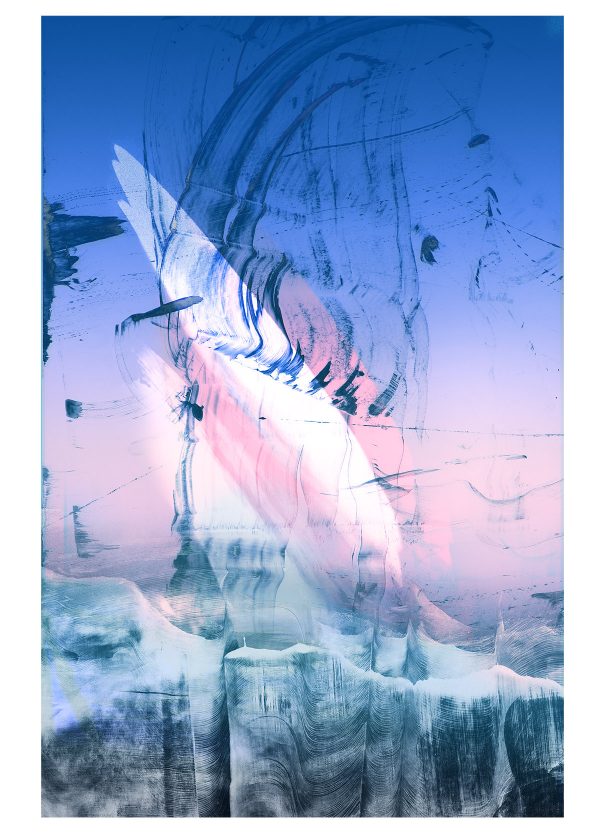
Television_Buddha_Digital_Collage

The Television Buddha © Iskra Johnson

The Black Buddha, otherwise known as the “television Buddha” sat for years on my step-grandmother’s TV, his head unironically posed between two silver antennae. Even as a child who had not yet been taught the niceties of good taste I could tell that this statue, although hollow like my milk chocolate Easter bunny, was a Prince among objects. Where the black paint had rubbed away copper glinted. His robes had the sharp cast and sheen only found in metal, and when I picked him up and set him down I could tell he belonged to a different family of dolls.

At some point in my late teens, after reading a book or two by Alan Watts and becoming instantly hip and knowing, which I eagerly confused with being enlightened, it occurred to me that this object belonged in my life. Did I steal it? Did I stand in front of the television as though mesmerized by the cheap print of VanGogh sunflowers and off-handedly tuck the Buddha into my coat? I have a vague memory of light on a dusty window, of the pine tree outside, of family noise and clatter and a moment of rationalization. I hope I asked.

This Buddha has gone with me to every room I have lived in, presided over my inkstone and rice paper and the copying of sutras and 4 AM yoga sessions and detours into Gurdjieff, Guru Mai, and Yogananda. He has never gained or lost weight, or criticized me for being delusional, or asked for water, or offered a word of advice. For years at a time I have not actually looked at him; I’ve even lost him on occasion– buried in a box under the bed. Then I will find him and the fact of him starts all over again. The Buddha is a resonant object, and my mind changes when I look at him.

I puzzle over this quite a bit. What is this alchemy of the object? The historical and real person of Siddhartha, who became the Buddha, never asked to be made into a figurine. In fact the Buddha himself discouraged this as dangerous close-cousin to the worship of idols. Only the image of his footsteps was allowed or perhaps the trace of a wave on the shore, or a hand.  Yet today I doubt that any Buddhist anywhere meditates without some image in their mind of –not the breathing, sweating actual human being — but the statue.  Leave it to the Greeks to ruin a good thing, the void and the imagination, and to supplant it with idealized form. And now you can buy a guy in a robe with snails on his head anywhere, online next to blinking ads for a flat belly, or in an import store or from a catalogue full of clocks that wake you up with the sound of the ocean.

Through hundreds of years and thousands of places of manufacture, the significant details of the sitting Buddha rarely change. The graceful sloping of the shoulders, the relaxed ease and the simultaneous sense of absolute focus, the circuit of small spheres along the head. And form is important. The shape of the saints is common, but it is not ordinary. The power of shape is a mystery, devotional practice equally so.

Buddha_Garden_Statue

The Standard Concrete Garden Buddha

I have a second Buddha, a pale gray version mass produced and bought at a nursery twenty years ago. He has sat long enough in my garden to acquire the iridescent sheen of actual snails across his knees. Together both statues, indoor and outdoor, do a fine job of gentle reproach as I plunder time and waste it in mindless daily orbit. You would think two would be enough. However, I was seized this spring with a sudden overwhelming desire for a new Buddha, something life-size. I became completely obsessed with the idea that a statue was waiting for me and I had to find it right now. So abandoning my other obligations for a day I scoured every Asian import store in the city. The closest I came to my imagined find was a graceful, stupefyingly beautiful Thai god (god of what, I’m not sure) made of fragile wood and $15,000.87 out of my price range. As I started to leave the shop, my obsession defeated, I noticed the chairs. Simple, magnetically so, projecting a deadpan stoic humor and covered with the patina of decades in an outdoor cinema. If one wanted a reminder to “sit” what could be more potent than a chair, after all? I sat. In spite of the barracks-style severity the chair was surprisingly comfortable. And you can bargain for chairs, although you would never bargain for a Buddha.

The-Sitting-Chair

The Sitting Chair © Iskra Johnson

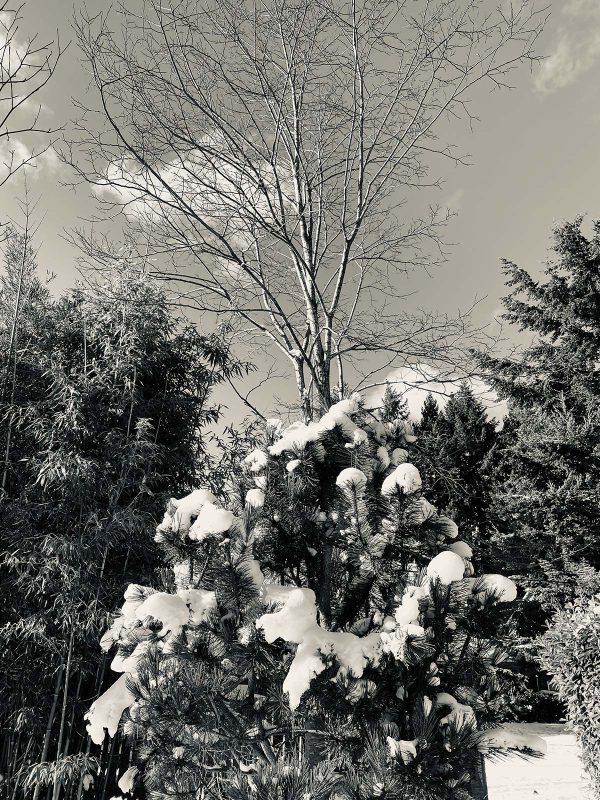
This is my new garden statue, for now. It lives in the bamboo reminding me to be still, to just sit.

__________________________________________

This is the first in an upcoming series of essays on Buddhist iconography in art and daily life. I will be featuring interviews with artists who work in a variety of contemplative paths, ranging from traditional devotional art to contemporary improvisations, in media ranging from painting and drawing to sculpture, music and video. If you are interested in the subject of the object as a source of contemplation you may want to visit the section of my blog that focuses on response to the book “A History of the World in 100 Objects.”

Leave a Comment

“100 Objects” Part Two: Art as Devotional Practice

I have slowly been working my way through “A History of the World in 100 Objects” (see previous post.) I have given up the idea of dutiful chronological study and instead I choose chapters at random. Last night I landed on “Gold Coins of Kumaragupta” and found a passage on Hindu worship that struck me on multiple levels:

Hindus will see a deity, on the whole, as God present. God can manifest anywhere, so the physical manifestation of the image is considered to be a great aid in gaining the presence of God. By going to the temple, you see this image that is the presence. Or you can have the image in your own home — Hindus will invite God to come into this deity-form, they will wake god up in the morning with an offering of sweets. The deity wil have been put to bed in a bed the night before, raised up, it will be bathed in warm water, ghee, honey, yoghurt, and then dressed in handmade dresses — usually made of silk — and garlanded with beautiful flowers and then set up for worship for the day. It’s a very interesting process of practicing the presence of God.

–Shaunaka Rishi Das, Hindu cleric and Director of the Oxford Centre for Hindu Studies

There is a wonderful poignance to this image of bathing the deity, of feeding it sweets, of dressing it — such tenderness. It made me think, where do I practice this in my own life? And do I practice this in my work?

In the process of designing the new and revised version of my website I have been going through my archives and deciding what to add in, keep or delete. After sleeping on the passage above, I remembered a series I had done a long time ago which reflects this same devotional impulse, although not in a Hindu frame of reference. For about a year I painted hundreds of small studies of African fetish figures. I used books on African sculpture as my reference, and did my studies the way I would practice kanji, repeating them over and over again, on different papers and with different paints and inks, trying to allow the “figure” to become part of me. The practice became a mobius of energy between myself and the ritual object. The koan was “what is the self?”

Devotional-Figures

Devotional Figures, watercolor on paper, Iskra johnson

The figures fell into fifteen or twenty different tribal archetypes including a woman holding her head, her body or her baby, a figure holding a mirror, a figure holding a drum, and a recurring double figure, two conjoined in various ways. The paintings’ very smallness helped me to keep the practice devotional. I wasn’t creating anything for a “wall.” But I was inviting the gods into my house. It is good to remember to open that door.

Statue-Studies

Statue Studies, gouache on paper, © Iskra Johnson

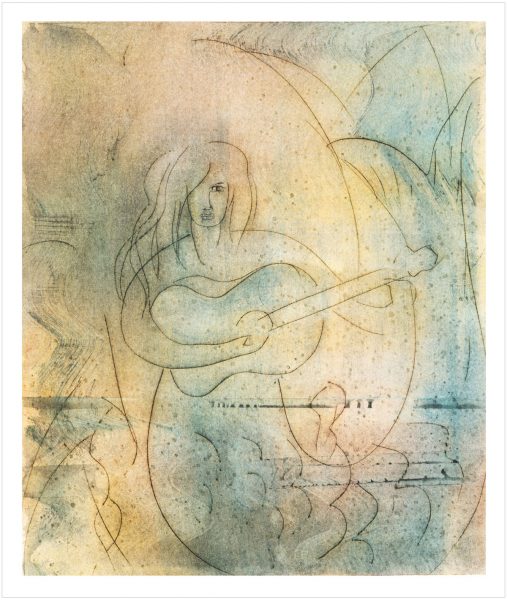
Muse

Muse, watercolor on paper, ©Iskra Johnson


Leave a Comment

Winter Journey to the Yucatan

Sometimes you go to an unexpected place. Here are some recent images from a visit to QuintanaRoo and the lovely village of Akumal on Mexico’s Caribbean coast.

The-Bright-WIndow

Relic-Shadow

Aloe_AkumalAll Photos © Iskra Johnson

1 Comment

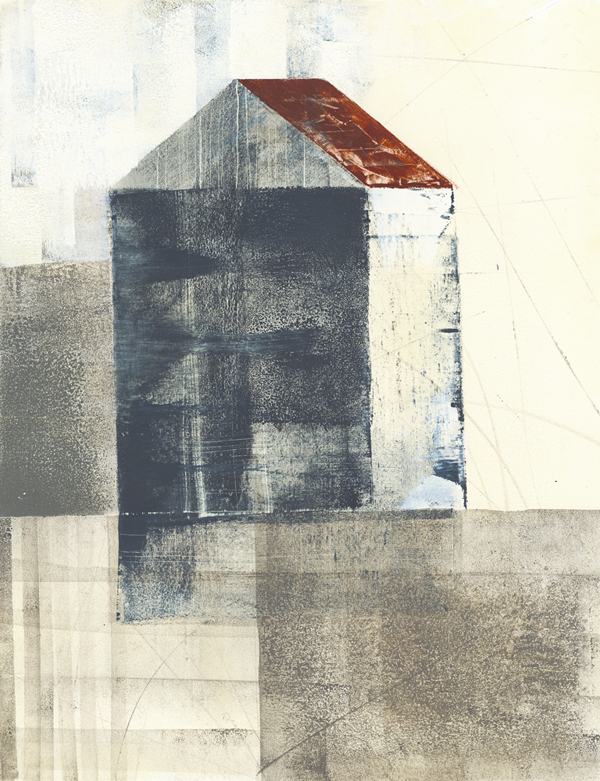
Sleep Studies: Paintings Inspired by the Ex Voto


Ex Voto for a Non Believer, Iskra

Ex Voto for a Non-Believer, © Iskra Johnson

Years ago I spent a month traveling in Mexico, where I picked up a very old ex voto painting on tin.  This traditional form of devotional painting shows the narrative of a spiritual or mortal crisis and its resolution.  On the earth, people pray, more often than not someone lies sick in bed, and in the heavens a saint floats, all ears to the prayer scrawled in Spanish across the picture plane.  The bed frame has always haunted me as an object of power in its own right.  Unlike the chair so often depicted by artists as a stand-in for human attitude and contemplation, the bed usually has no arms, and often neither foot nor head.  It sits unadorned, a naked platform on which to project our own memories, dramas and introspections.

This series of paintings started with the desire to experience the ex voto on my own terms and in my own culture.  I do not believe in the saints.  The only apparition that ever appeared in answer to my skyward yearnings was the GoodYear blimp, which revealed its private message to me in red neon in 1972: “Drink Coca Cola.”  I’ve been looking beyond to the rosy sunset for years, wondering.  I do not believe in the saints, but I do believe in their shape.  I have always found consolation in the forms of devotional art, as though even in cultures and belief systems foreign to my own the abstract language itself has meaning.

As I worked on these images the forms evolved back and forth between story, recognizable symbol and abstraction.  My working method starts with careful sketching of composition, stencils and color study, and then I throw up my hands and go with whatever the painting seems to be asking me to do.  All of these images are original paintings created with printing ink applied directly to paper without a press.To see more in this series go to Sleep Studies.

1 Comment