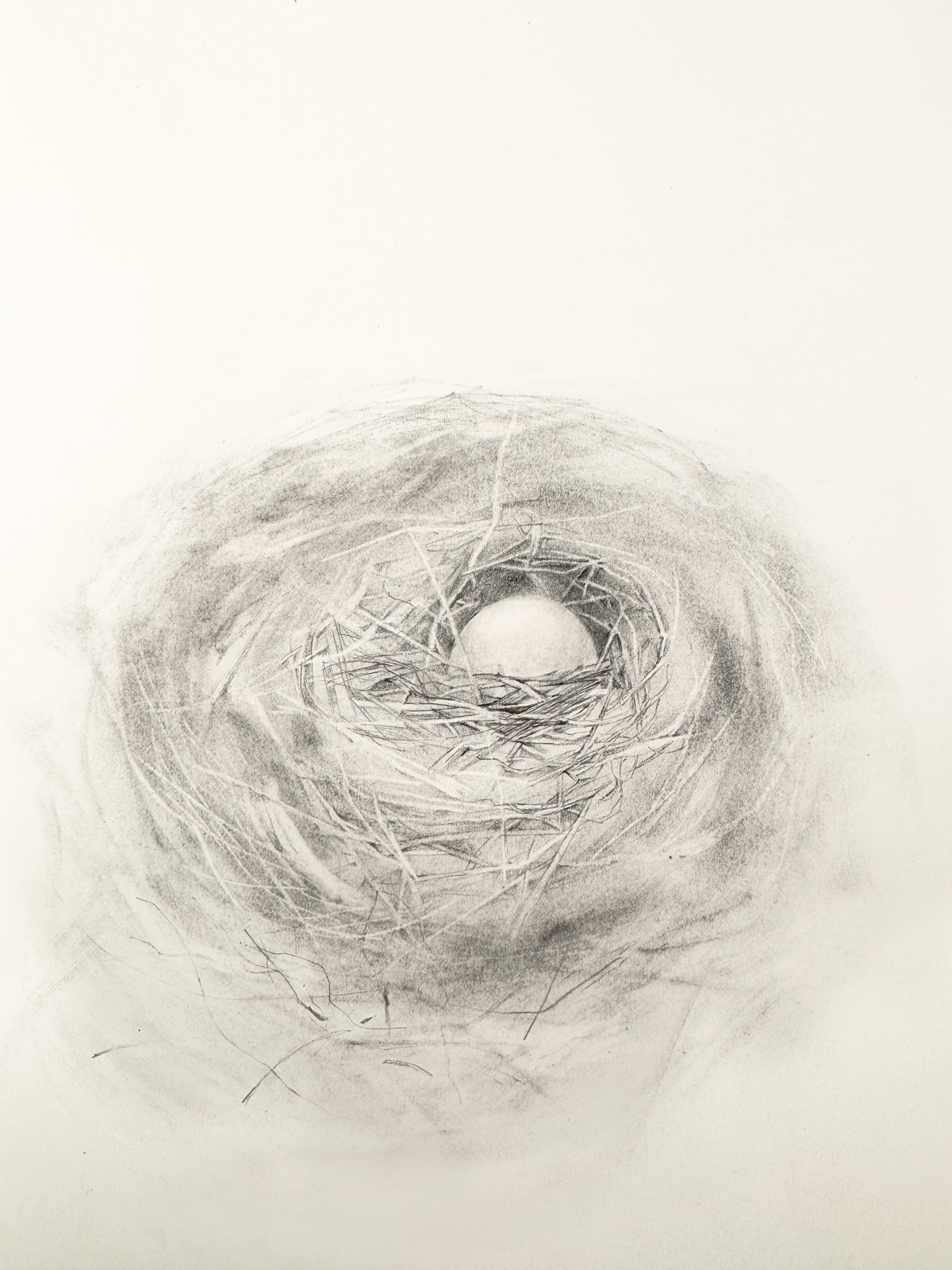
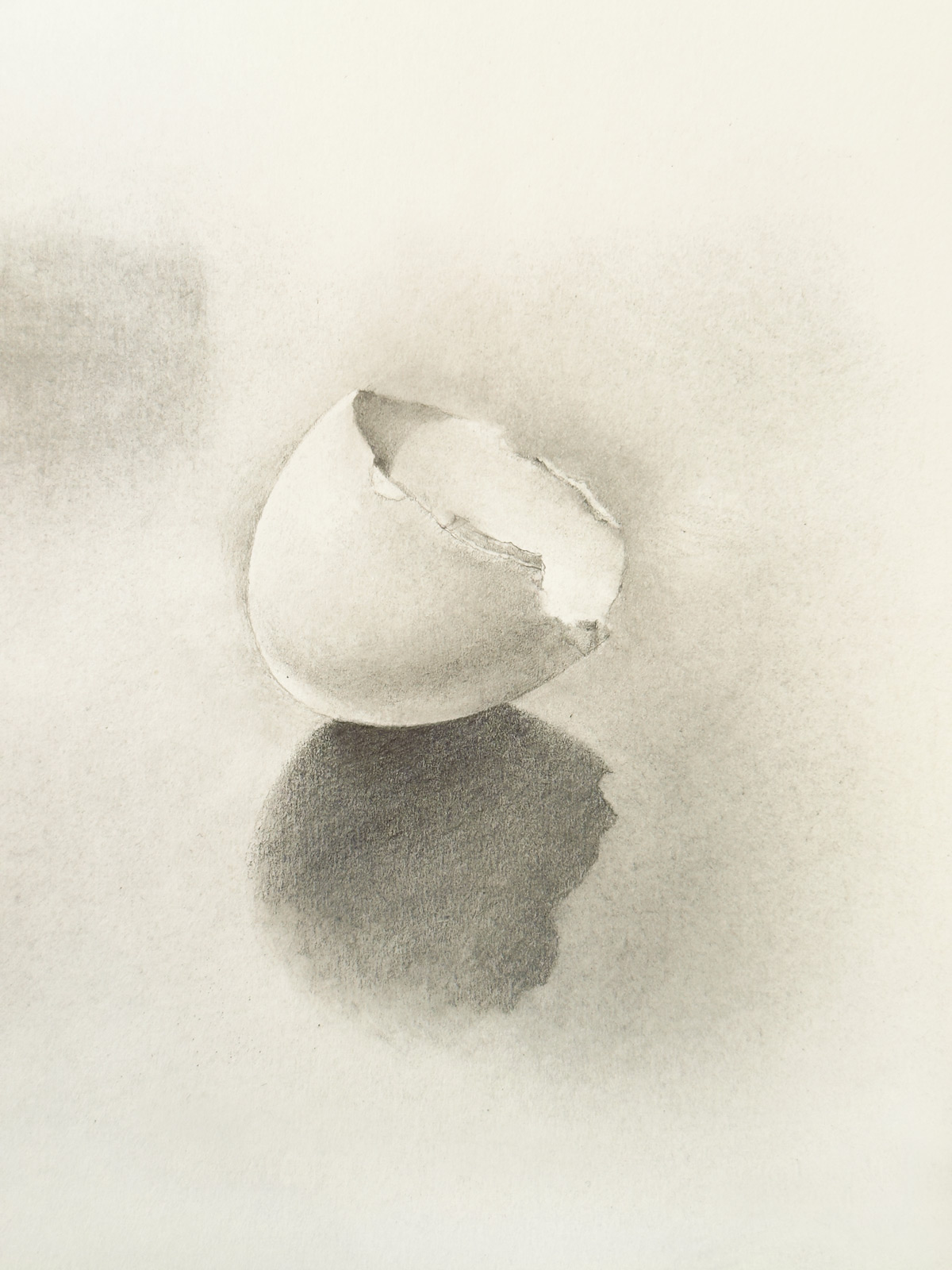
During Pandemic and during the crash of 2008 I turned to drawing as a form of psychic survival. Our current times echo the sense of upheaval I experienced then, and I have once again gathered my pencils and opened my Moleskine journals. In 2008 I drew tulips and convicted bankers, in Pandemic I drew locks, doors, and a tiny lightbulb made large, as though to clear a way through the darkness. The constant barrage of headlines from the Epstein files has created a sense of a world with too much malevolence to bear. And so I am drawing fragile things, the most fragile I can find: the shells of eggs, and nests. These subjects are phenomenally challenging, and symbolically healing. While I draw I must forget everything except the shape of light and how a line becomes a real thing, woven into a place of safety.
If you visited me now without warning you might think I had gone feral, as there are egg shells everywhere, placed so I can study how light moves across them throughout the day. Each time I draw I think I have never drawn before, and am convinced I have no idea how to do it. Each time I draw I am stunned that the pencil itself knows something, and it’s a matter, more than anything else, of pure, sensory observation: What is the sound of lead when it hovers above reflected light? What is the sound when it is pressed too hard and violates the grain of the paper? What happens when I step away and come back a day later? These drawings are made in very slow time. Each one evolves over several days, and as much happens when I am walking in the forest studying the shapes of trees as when I am appear to be “working.”
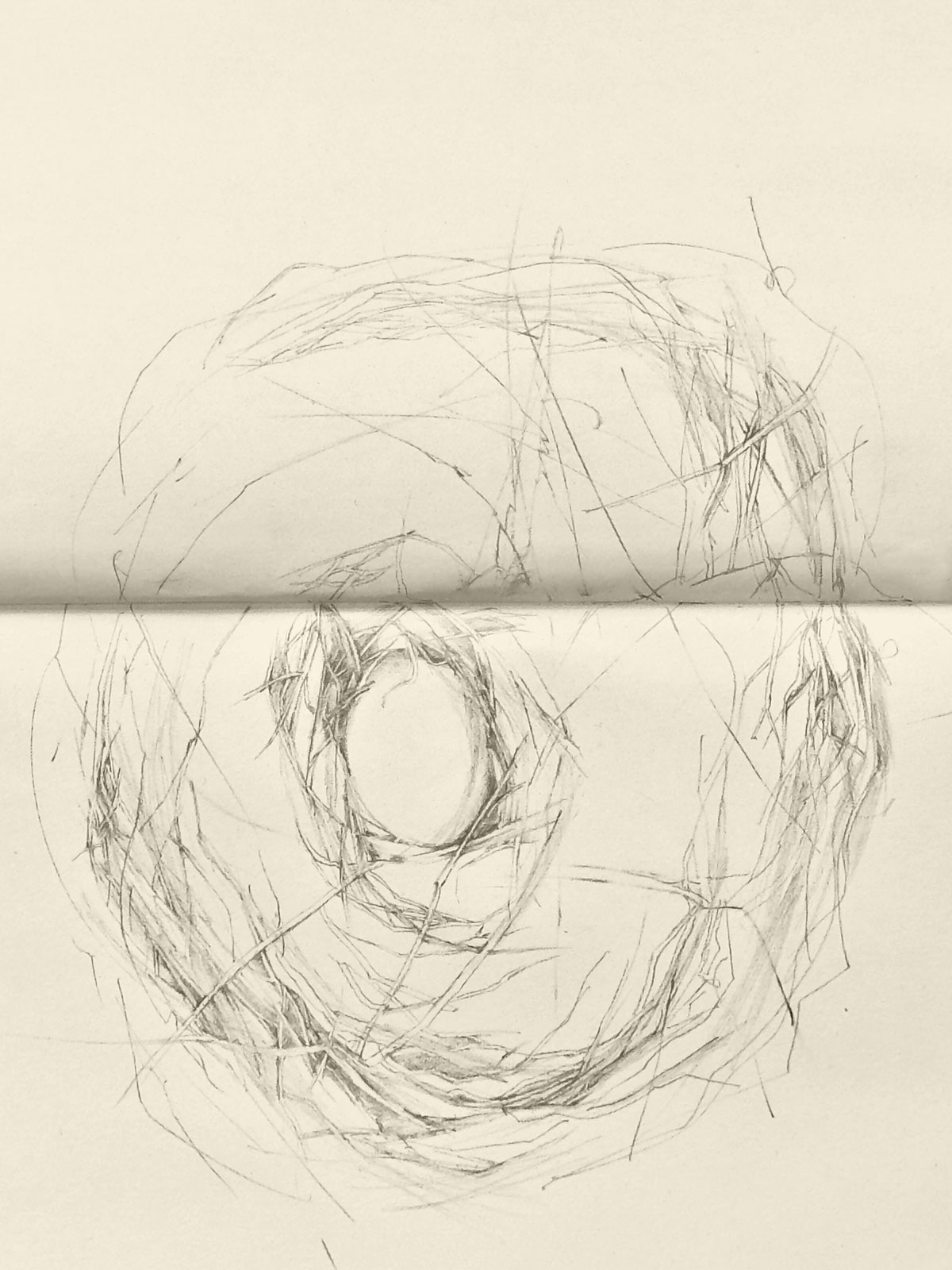
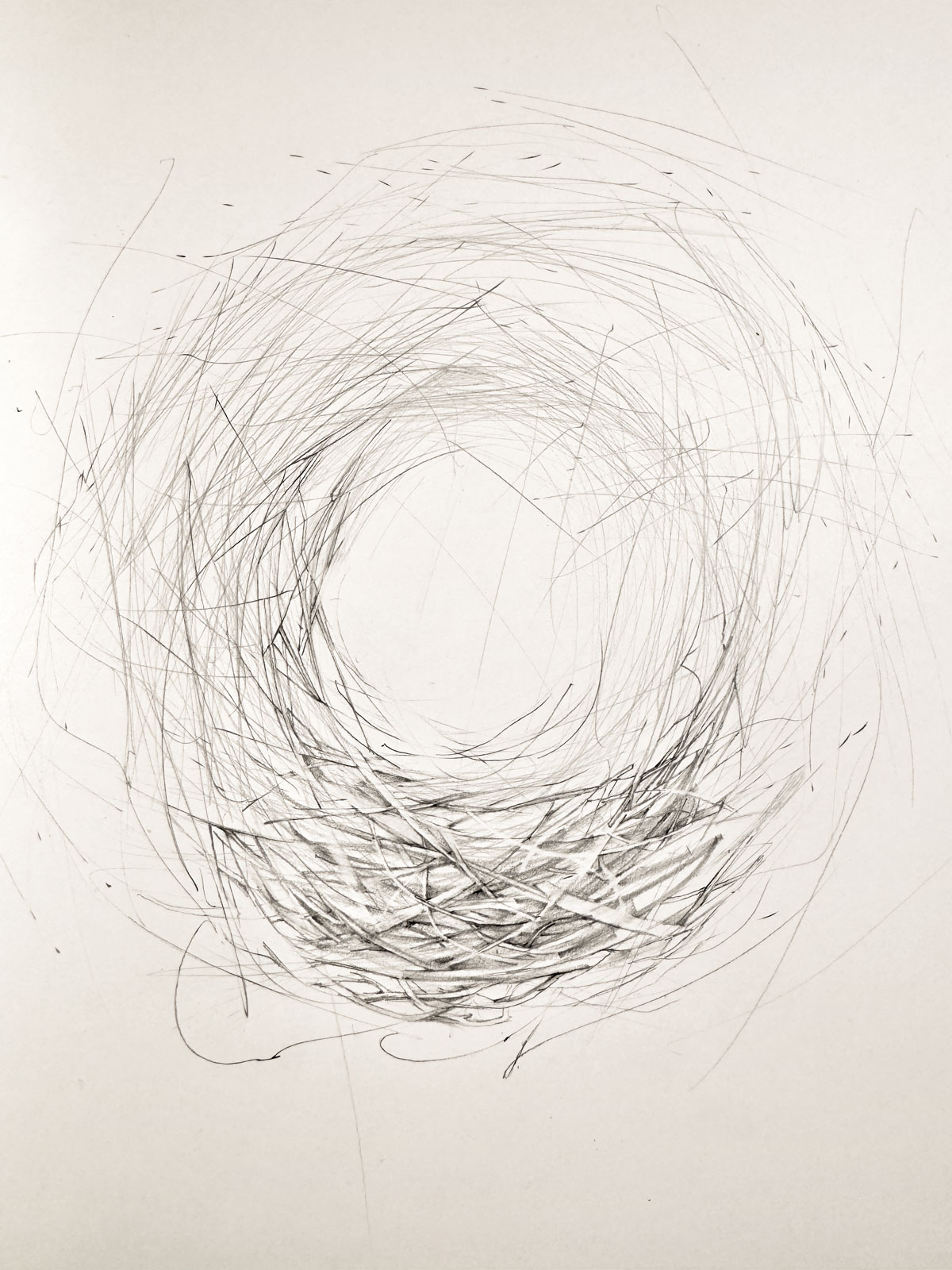
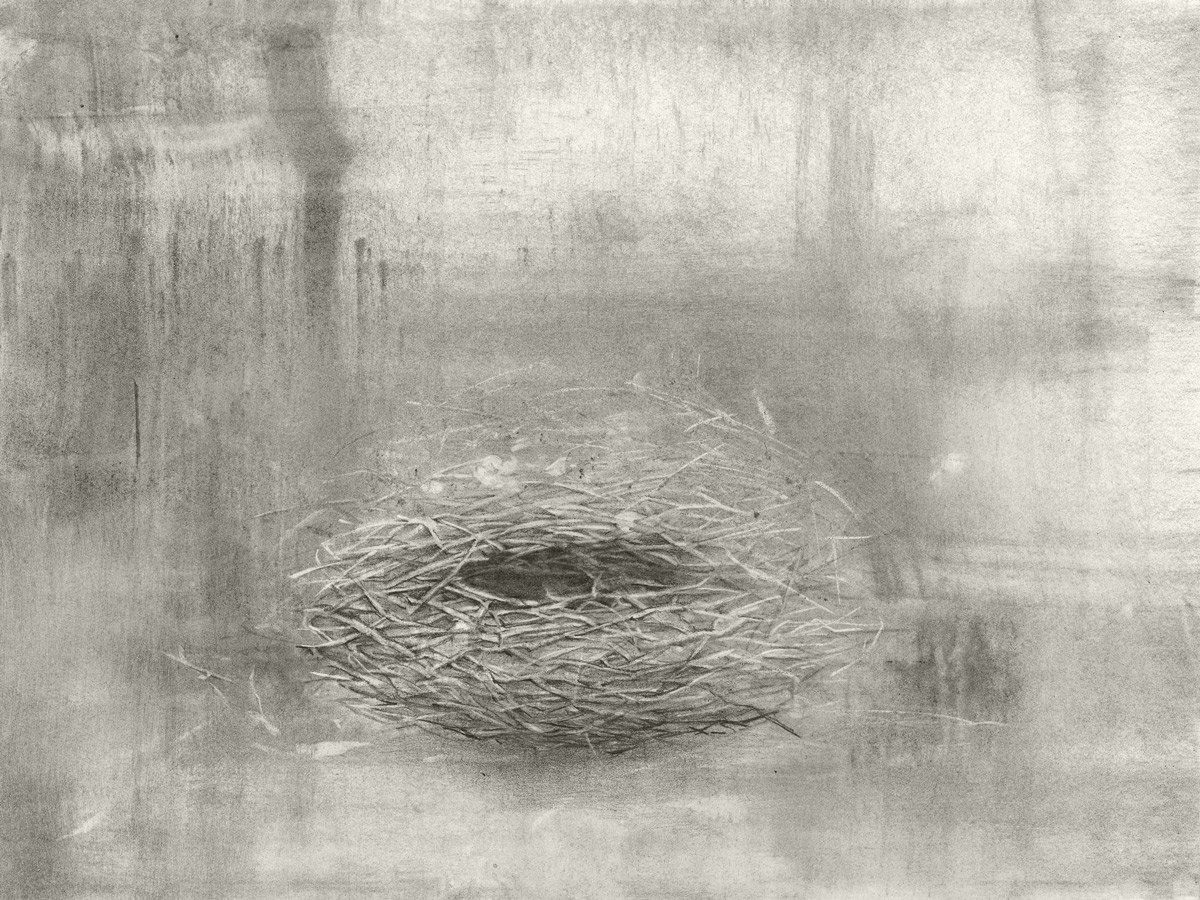
I have never drawn eggs before. There is no way to draw an egg without being perfectly calm.
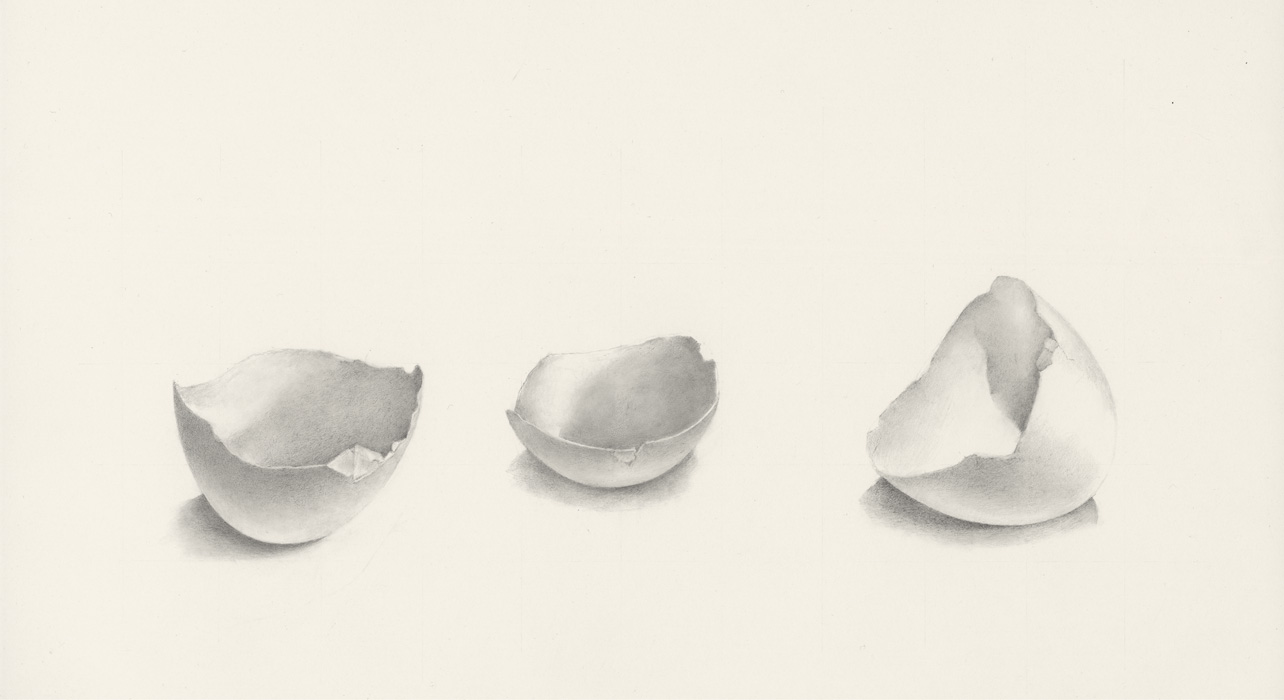
It turns out that drawing three egg shells in a row has a difficulty I had not anticipated. By the third one I learned so much that this egg seemed almost to come from another hand. I have never thought about the details of how fragile things break as much I am now. Is the edge torn like paper? Shattered along the fault lines of fractals? Does an egg break differently hit on a frying pan or tapped with a spoon? It turns out one of the very hardest things to depict is how the near-invisible membrane within an egg holds the edge together, even as it teeters on the brink of dissolution.
I have spent many hours testing papers and grades of graphite, and every paper in my collection—only to end up, nearly always, drawing on Moleskine. This paper, although unnervingly thin, is miraculous. It erases perfectly, it takes a full range of values, and it seems at times to be alive and breathing, just waiting with its faint texture and elegant hint of cream to be touched by the gentle shadings of graphite. I wrote a longer piece about the political and psychological threads of this work on my blog, The Iskra Journal, if you would like to read more: When the Personal Becomes Political . . . and the Political Becomes Personal.
In other writing news, I will be a featured reader at Hugo House for the curated performance of Collections, at Hugo House March 4th. I don’t know yet if I will be telling the story of finding a Third Place at Fred Meyer, or sharing poems about Virginia Woolf and Jeffrey Epstein (not in the same poem, by the way.) Doors open at 6. You can find out more here.
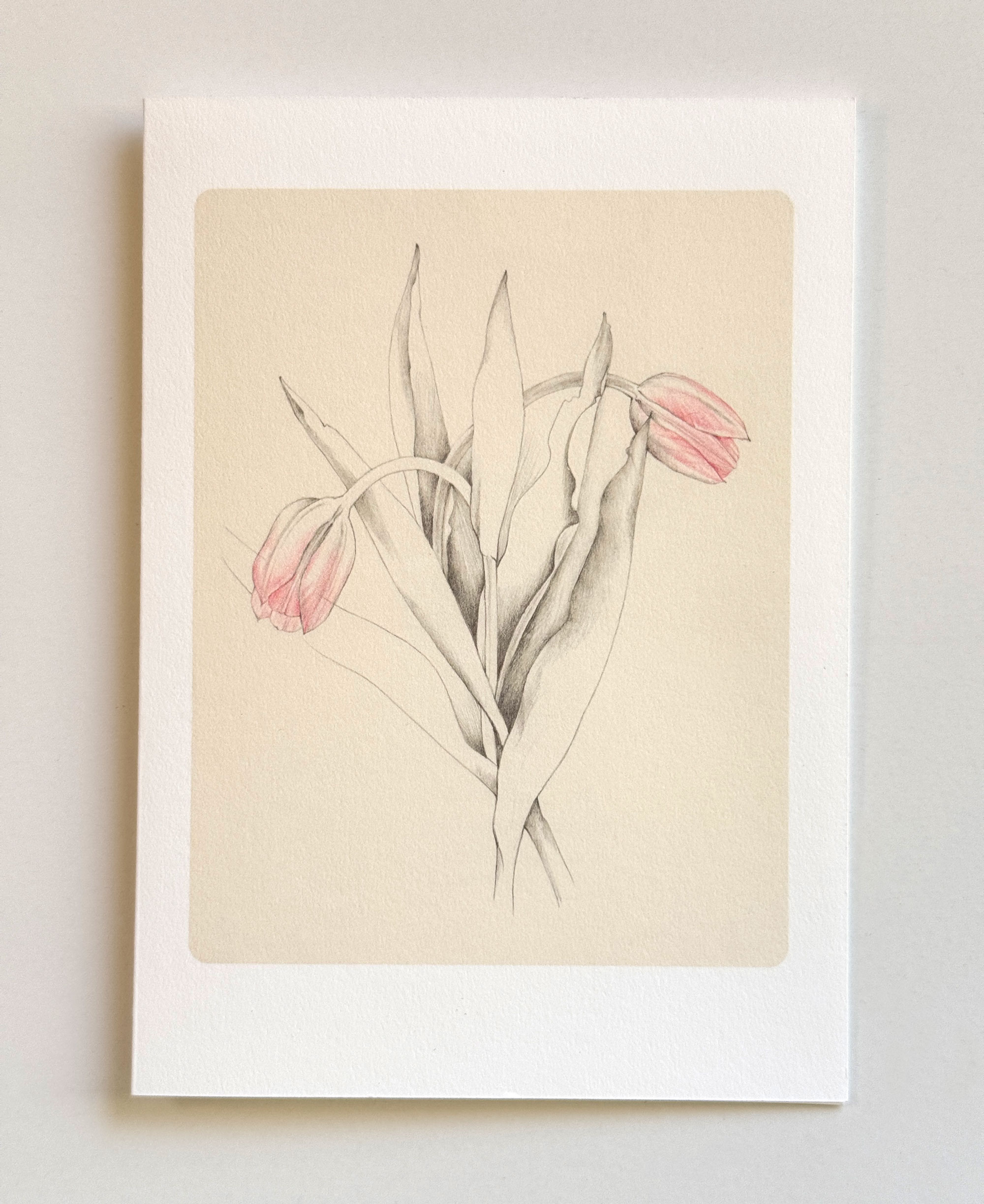
Don’t forget that it is Spring, always worth celebrating, although here in the Pacific Northwest I’m not sure we ever had winter. My rhododendrons have bloomed continuously since November. The spring tulips series was drawn in 2008, and is available for your letter-writing pleasure in my shop. Plant early!
All images and words © Iskra Johnson 2026
Leave a Reply