Iskra Fine Art

  • Prints
    • The Tarmac Residency: Airport Landscapes
    • Immersions | At The Shore
    • ColorBath: Images of the Harbor
    • The Floating World
    • Industrial Strength | Urban Industrial Landscape
    • The Scaffold
    • Industrial Pastorale: The Rural/Urban Landscape
    • Botanical Prints | The Natural World
    • Construction | Reconstruction : Urban Landscape
    • Infrastructure
  • Drawings
    • Pencil Drawings: Pandemic Pause
    • Drawings in Dust 1
    • Signs & Symbols (Archive)
    • Botanical Drawings (Archive)
  • Photography
    • New Work Inspired by England
    • Seattle Waterfront Park Photography
    • Architectural Photography | Construction Sites
    • American West Landscape Photography
  • Mixed Media
    • Modern Botanical | Mixed Media on Plaster
    • From the Sea | Water Paintings
    • Sleep Studies
  • Wabi Sabi Abstract
    • Minimalist Modern
    • Ink Painting Abstractions
  • Shop
    • The Water Tower Project
  • About
    • Contact
  • Blog
You are here: Home / Archives for homage to Alden Mason

Ready To Wear, ReComposing the Word on the Street

February 19, 2013 by Iskra 1 Comment

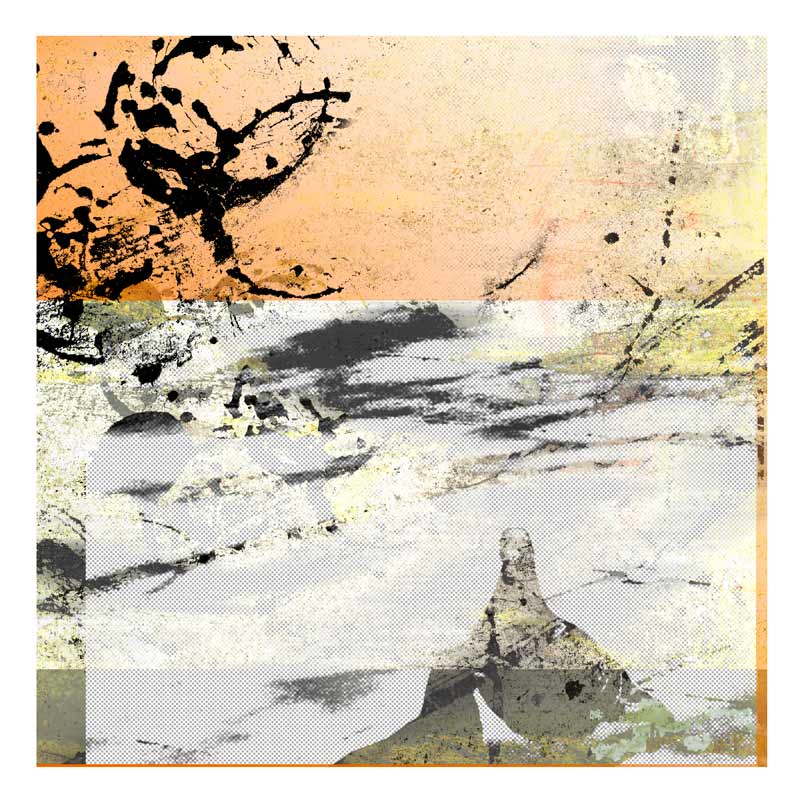
Tar Study 2, With Pigeons
“Tar Study 2, With Pigeons,” archival print, © Iskra Johnson

Over the President’s weekend I have been working on a series of street collages. Background reading that hovers, a guiding helicopter as I shuffle shards of color and type, is a book I just picked up at Elliott Bay called “Rapt.” Who could resist a book written by “Winifred Gallagher”? The name alone gives her instant credibility, but if that isn’t enough for you, she does have a thesis, and hard-won: “The quality of our lives is determined by what we pay attention to.” If you are a cancer survivor and you decide to write an entire book about this, I will most definitely tune in, with undivided attention. Although a quarter of the book is already dogeared with turned corners and notes in the margins, this passage in particular struck me:

“Just as bad feelings constrict your attention so you can focus on dealing with danger or loss, good feelings widen it, so you can expand into new territory — not just regarding your visual field, but also your mind-set. This broader, more generous cognitive context helps you think more flexibly and creatively and to take in a situation’s larger implications. …….when you feel upbeat, you’re much likelier to recognize a near-stranger of a another race — something that most people usually fail to do. “Good feelings widen the lens through which you see the world,” …… “You think more in terms of relationship and connect more dots. That sense of oneness helps you feel in harmony, whether with nature, your family, or your neighborhood.”

This idea affects me on many levels. February marks the recent passage of a marvelous Northwest artist and teacher, Alden Mason. I was privileged to take his last class at the University of Washington, when he was just beginning his artistic prime at 63. I remember working on a dreary watercolor of a nectarine, a plank of wood, a teapot and god knows what else on oatmeal paper in black gouache when I wailed to him to come and help. I don’t recall his exact words, but I will never forget his generosity and his wide yet intimate view. Each inanimate and dispiriting object in my still-life was a character, in relationship — the plank with the fruit, the teapot with the slanting light from the window, the floor with the paper and its hundreds of tiny fragments of non-archival woodpulp (oatmeal paper! bring it back! humble us as we work on 100% acid-saturated  disintegrating fragments of trees, and teach us to be free!). Alden was not a painter who was trying to “make good compositions” or even good paintings, for that matter. He paid attention to each blob of color, each squiggle of paint, as though it was a friend to carry on with, to converse and conspire and perhaps float down the Amazon with, looking for birds. He passed this jubilant anthropomorphism on to his students. In that moment as he stood by me looking at my watercolor what had been a “problem” to “solve” became a cocktail party full of fascinating characters who’s story I wanted to hear. With that frame of reference the painting took off, and in a quiet way my life changed.

Composition is, in essence, the practice of paying attention, and becoming conscious of what you pay attention to. When I walk down the city street an overwhelming flood of sensory imagery pours towards me. How do I order it? Do I look for signs of the modern saber-tooth? the predator of worry or an actual assailant? for signs of rain or for police who will tell me to buckle up whatever untoward sensibilities have gotten loose? Or do I follow my native tendency to read the random like a book, and to connect the dots of the particular into the bigger unfathomable poem, as it changes, as I walk?
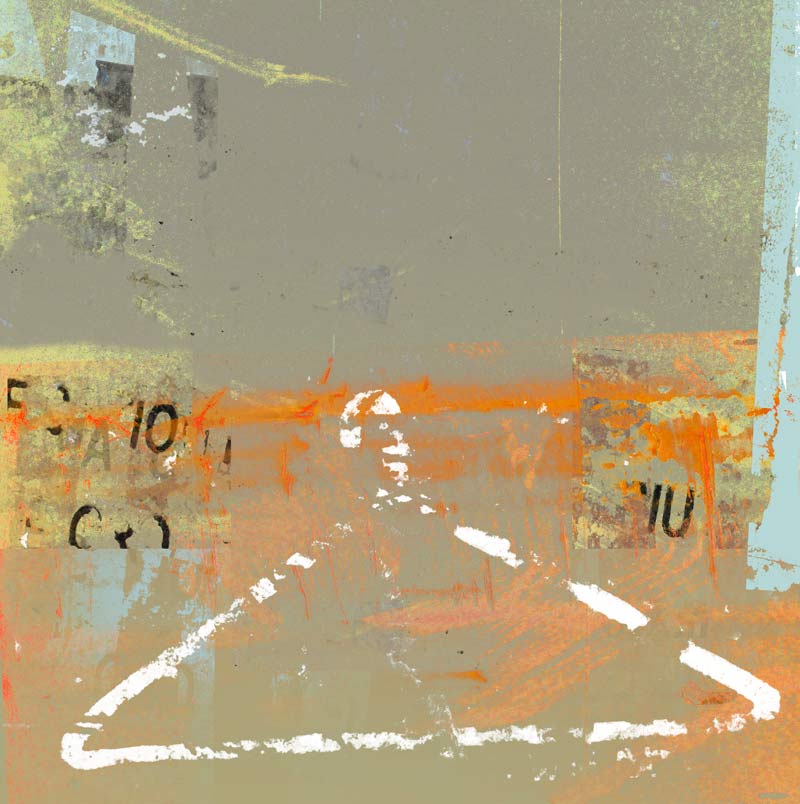
Ready To Wear digital collage
“Ready to Wear,” archival print, © Iskra Johnson

After these urban walks, when sitting at my computer with (conservatively speaking) — three to five thousand collected images of a lifetime of walking — I am confronted with the question of how I choose and arrange and then navigate the variations available in Photoshop’s magic trunk.  How wide is the net, and how deliberate is the choice? Do I focus on color, or shape, or opposites, or harmonies or atmosphere or conversation or pathos or humor? And in choosing, what balance do I also choose, how do I weight one over the other? Lastly, or more properly firstly, how can I access a spirit of open good will that rewards possibility and does not punish the hours of blind alleys and disasters? “Rapt” is the state I have always sought in making art, and yet the process of decision making can easily shatter it.

Sunday I took a break from the studio and went to a demonstration against coal trains at Golden Gardens. At the end of the demonstration, when the polar bear with claws made of recycled tires had slunk away and the men with daisy heads on stilts had gone back to normal height I paused with a friend and watched the trains rush past above the playground. I instinctively started photographing the moving graffiti, which is as much a part of the landscape of the park as volleyball or the grebes. My friend’s daughter shouted after each train, “Is that coal?” “No, just oil,” we said. And although I was standing there and being sociable I was also transported to trainyards in another time under the dark of the moon: I’ve ridden the rails, climbed on with a backpack at four AM long before the invention of fancy spray cans. Politics and aesthetics gives me a lot to think on. In scavenging the street there is this paradox: the graffiti artist defaces the wall of the property owner, the artist captures the defacement and…..offers it back. Yes, it is for sale. You could call this the art of revenge. Or poetic opportunism, if you are feeling generous.
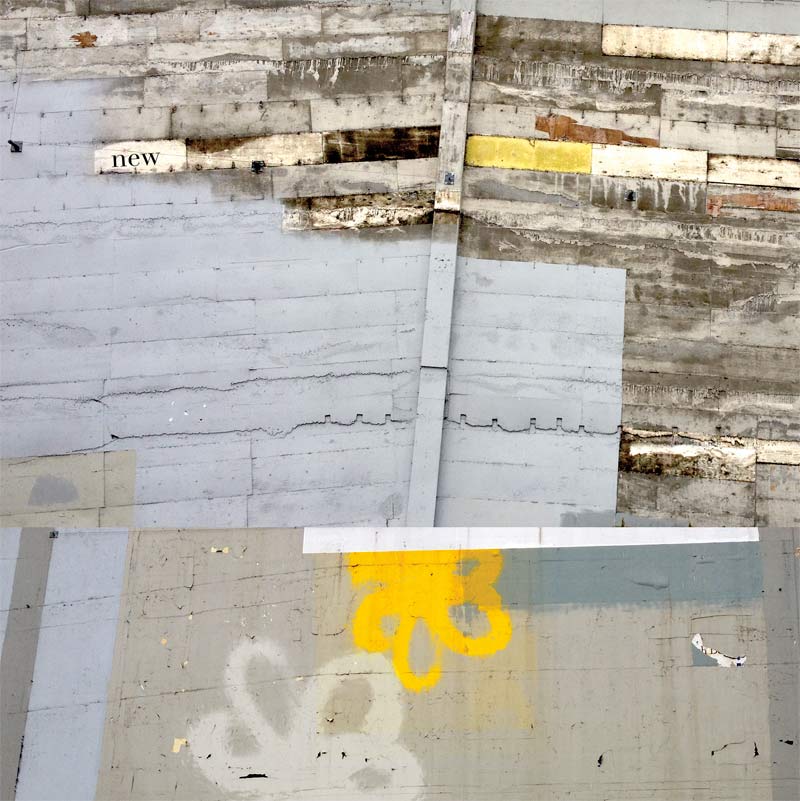
Approaching Spring

“Approaching Spring,”  archival print, © Iskra Johnson


Recent walks have been under deeply pessimistic skies. Seattle is known for its one hundred words for bleakness, and Paynes and Davey’s Grey would be among them. Yet a person’s mind turns to possibility. And hope. These collages are composed of pieces of the world bordered by Seattle’s Fifteenth Avenue East and First Avenue, and north to south, Eighth and Aurora and Jackson Street, with a lot of time spent in the parking lot at 2nd and Pike.


Filed Under: Digital Collage, Photocollage, Uncategorized Tagged With: Alden mason teacher, art of digital composition, collage process, homage to Alden Mason, Rapt by winifred Gallagher, street art, street collage

Join Iskra’s Mailing List

Don't miss a thing! Subscribe to receive show announcements, first peek at new work and my semi-monthly blog by email. I primarily use the blog for news and updates but by signing up you will also receive the occasional newsletter and special offers for items in my shop.

Iskra Fine Art Blog

the creative process | conversations with artists | the contemplative impulse in art

Instagram

Media studies. Addition and subtraction. Media studies. Addition and subtraction.
Somehow, between checking the news and the usual d Somehow, between checking the news and the usual distractions I managed to complete a drawing. Going back to the beginning: drawings in dust. 9.5 x 12” Charcoal powder, compressed charcoal, charcoal pencil on Moleskine. I feel peaceful for the first time in weeks.
The train tracks that go along Golden Gardens and The train tracks that go along Golden Gardens and pause briefly at the locks create a rupture in the city landscape. When the trains go by, the roar and squeal is like a thousand wild animals let out of their cage, and the ducks in the pond at the edge of the park shudder and dive under the water. A little farther north at Carkeek there is someone every year who steps in front of the train and whoever witnesses that is never the same. 

Sometimes the cargo containers are filled with coal, uncovered, and I have been part of demonstrations, which included polar bears and Orcas, objecting to that. Now, as we are being asked to casually accept nuclear reactors on every block as the price of having artificial intelligence, coal and its simple visible dust might look a little more friendly. The train brings with it economics and politics and life and death and class and all the people on the beach are just trying to have a moment in the sun. And the boaters at the marina, if they have finished polishing and descaling and mending the sails are lying back with a guitar and getting lost in the mountains. If you are willing to live right next to the train tracks, you can pay a much lower price for your home, but your dreams will change. I have lived next to the train tracks when I was very, very small and every night I woke up screaming and ran across the floor in the beams of the streetlight looking for safety. I have woken up in a train yard on a bed of cardboard and gotten on the train in the dark. Only when you do that, do you know just how hard metal is.

I’ve been drawing recently from life and this study was done from a photograph. It drove me crazy trying to see details that I couldn’t really see and feel them with the pencil. I’ve abandoned the drawing for now, but I learned a great deal about perseverance and obliteration and re-perseverance. Also how machines pretend that they are perfectly symmetrical and are not. And when you don’t draw them with perfection, they look just plain wrong so you have to make them more perfect than they are, at least when they are in perspective.
Tonight’s abandoned bird. The next one will be bet Tonight’s abandoned bird. The next one will be better. I’ve never tried to draw a Robin before. I’ve been obsessed with them since David Lynch sent them over to my childhood house, where they spent day and night getting drunk on the holly berries outside the kitchen window. And if you don’t know what I’m talking about google Laura Dern, Blue Velvet. And the Robin. It’s a hymnal to the good and the normal, done absolutely abnormally. I am learning all kinds of amazing things about how Robins build their nests. They start with mud. I did not know this. And in a drought, they will drag straw into a birdbath to get it wet and then drag the straw over a wormhole. Robins build their nests in the most unlikely places: drain spouts, highway overpasses, really bad motel parking lots. It’s kind of like how people find third place in community, even in the bleakest places. A franchise McDonald’s where people become regulars and always get the fries and just the fries because that’s all they can afford is a similar statement of naive valor: people talking to strangers and becoming known and taking shelter where they can. And if they leave a shredded napkin out there by their car, it will end up woven in with the straw and the leaves and the cigarette butts perched up there in the nest on the backside of the billboard.
Waking up. Waking up.
What if there were no mistakes? What if there were What if there were no mistakes?
What if there were just infinite possibilities?. . .

Featured Posts

  • Book Launch! The Water Tower Project from Iskra Fine Art
  • How to Purchase Artwork from Iskra Fine Art
  • About This Blog
  • New Directions in Contemplative Art: Conversations with Artists
  • What is a Transfer Print? (Artist Statement)

Categories

  • Abstract Calligraphy
  • Architecture & Sense of Place
    • Construction/Reconstruction
    • The Alaska Way Viaduct
    • The Water Tower Project
  • Art Reviews
  • Artist Studio Visits
    • The Mystic Muse: Artists Working in the Contemplative Traditions
  • Botanical Art
    • Botanical Art Cards
  • Collage
    • Digital Collage
  • Commissioned Art
  • Drawing
  • Essays
    • Object Lessons: Essays and images inspired by "A History of the World in 100 Objects."
  • Iskra Shows, Upcoming and Past
  • Iskra Sketchbooks & Journals
  • Living With Art
  • Meditation & Buddhism
  • Mixed Media
  • Painting
  • Photocollage
  • Photography
    • American West Landscape Photography
  • Print Sale
  • Prints
    • Transfer Prints
  • Seattle Iconic Landscape Prints
  • Social Media for Artists
    • The 100 Day Projects
  • The Garden
    • The Gardener's Almanac of Irreproducible Phenomena
  • The Spiritual in Art
  • Travel
    • Road Trips
  • Uncategorized

Archives

Search

Connect on Facebook

Iskra Fine Art Facebook Page

Creative Inspiration

  • Alternative Photography
  • An Artist's Retreat
  • Anonymous Chinese Textile Genius: Moo Won
  • Chocolate Is A Verb
  • Contemplative Art Process: Danila Rumold
  • Eva Isaksen
  • Old Industrial Japan
  • The Altered Page
  • The Heart Sutra Loop
  • The Patra Passage

Galleries for Contemplative Art

  • ArtXchange Gallery
  • Seattle Asian Art Museum

Links

  • CollageArt.org
  • Iskra at SAM Gallery
  • Iskra Fine Art on Houzz
  • Seattle Art Museum Blog
  • Seattle Artist League
  • Seattle Print Arts
  • Seeing Fresh: Contemplative Photography
  • The Painter's Keys

What I'm Reading: Online Magazines and Books I Love

  • 16 mi.
  • Essays by David Whyte
  • Evening Will Come: Poetry
  • Hyperallergic
  • Painter's Table
  • Shu: Reinventing Books in Contemporary Chinese Art
  • Streetsy
  • The Original Van Gogh's Ear Anthology
  • Tricycle Magazine
  • Unincorporated Persons in the Late Honda Dynasty
  • Vanguard

Let’s Connect

  • Contact Iskra
  • How to purchase artwork
  • Iskra Fine Art Blog : The creative process, conversations with artists, the contemplative impulse in art
  • Facebook
  • Instagram
  • Pinterest
  • Twitter

All Images Copyright © 2026  Iskra Johnson · Site by LND · WordPress