Iskra Fine Art

  • Prints
    • The Tarmac Residency: Airport Landscapes
    • Immersions | At The Shore
    • ColorBath: Images of the Harbor
    • The Floating World
    • Industrial Strength | Urban Industrial Landscape
    • The Scaffold
    • Industrial Pastorale: The Rural/Urban Landscape
    • Botanical Prints | The Natural World
    • Construction | Reconstruction : Urban Landscape
    • Infrastructure
  • Drawings
    • Pencil Drawings: Pandemic Pause
    • Drawings in Dust 1
    • Signs & Symbols (Archive)
    • Botanical Drawings (Archive)
  • Photography
    • New Work Inspired by England
    • Seattle Waterfront Park Photography
    • Architectural Photography | Construction Sites
    • American West Landscape Photography
  • Mixed Media
    • Modern Botanical | Mixed Media on Plaster
    • From the Sea | Water Paintings
    • Sleep Studies
  • Wabi Sabi Abstract
    • Minimalist Modern
    • Ink Painting Abstractions
  • Shop
    • The Water Tower Project
  • About
    • Contact
  • Blog
You are here: Home / Archives for The Stables on Orcas Island

Three Days in the Sun: Cyanotype Workshop at The Stables

July 29, 2012 by Iskra 9 Comments

Cyanotype_At_The_Stables
© Iskra Johnson

The Stables is the quietest place I have ever been. You can hear a twig drop in the woods, and a horse eating a buttercup. In between, complete, breathtaking stillness. Situated high on the southwest side of Orcas Island, this 25-acre ranch and creative compound hosts workshops in a variety of arts and crafts taught by the resident artists and invited guests. The simultaneous sense of vista and retreat makes for a very special place for art and reflection.

This July I signed on with my sister, Cassandra, and 17-yearold niece Zoë for a three-day workshop in cyanotype. My sister and I had spent early years growing up on a ranch, and to be together quite literally in a stables, sleeping in a loft above, sent us both into states of unexpected recollection. Every morning we looked out on two chestnut horses and followed their graceful ambulations across the pasture. The tooled leather and haymow, the 4-H, the riding rink, the coyotes under the moon and the back forty of our pasts tumbled into the present everywhere we turned. My niece, not yet of an age for elegies, lovely in pigtails and grave and hilarious by turns, focused on her senior year project in all things photographic. She proceeded to make one artlessly perfect composition after another. Note to self: make no helpful design suggestions when a true artistic gift is at hand.
ZoeTwoCyanotypesOneWithTea-Bath
Two of Zoë’s Prints, the lower one has been toned with tea

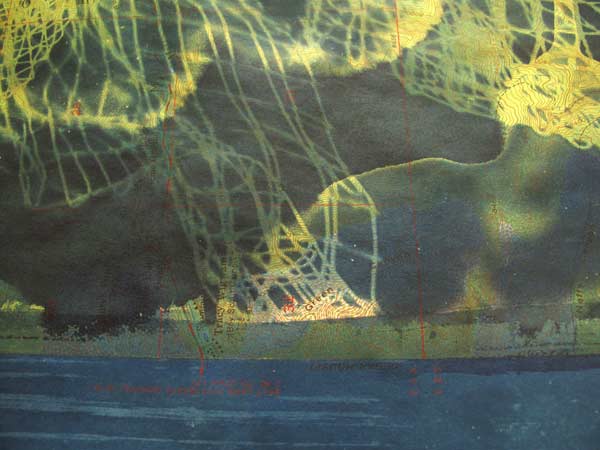
I had planned originally to work with my existing themes of architectural photography, and had spent days making negatives. At the last minute I threw two birdcages in the car. This turned out to be a very good idea. Within hours on the first day I could see that this process of cyanotype is an alive thing, a way to paint with the sun and your surroundings, an opportunity to toss out your preconceptions and open the door to the unexpected. Noted Seattle artist and cyanotype expert David Simpson taught us, and nudged and pushed us through three days of testing our limits. Although he had encouraged us to bring objects we also used what we found on site: crumpled wire, thistles, chainsaws, daisies, ferns. We laid these things on glass or directly on coated paper. Our fourth workshop member, printmaker Lynda Swenson, experimented with printing on maps and existing etchings and woodcuts.
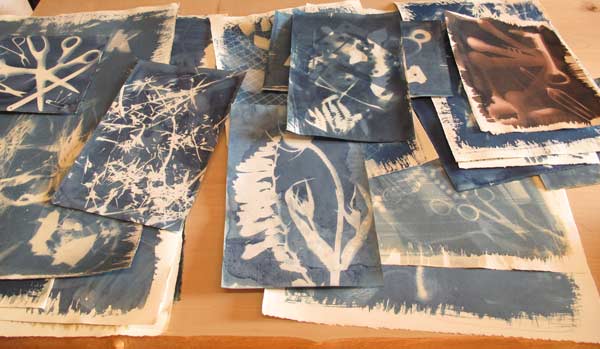
Cassandra_Cyanotypes_On_Various_Papers
Some of Cassandra’s prints.

Upper right brown and black print shows how fabulously the Artistico works with tannic acid toning. Below, a composition with three dimensional blocks and pearls, testing cropping. The actual print is not this yellow. The photo was taken with warm light from the walls of the stables reflecting onto the surface. I would love a skirt with this printed on it!
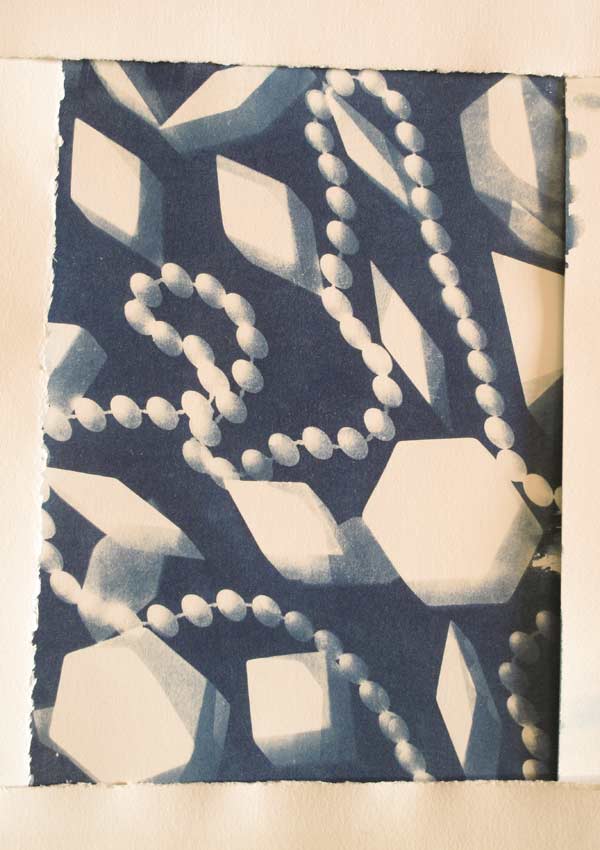
Cassandra_Cyanotype_With_Pearls

Close-up_of_Linda_Swenson's_cyanotype_on_a_Map
Close-up of Lynda Swenson’s cyanotype on a map

In the first step we coated our paper with solution in a darkened stable under a red safe-light. When ready we dashed from the darkroom to the outside laboratory where we slid the paper under existing arrangements or began lightning fast compositions, lifting or placing objects for different effects. We all had various timing devices, and at times it looked like a circus casino, or perhaps a camp for people with attention deficit disorder. We rushed in and out of the barn, lifted and placed objects, stared at our paper variously counting outloud, watching a cellphone or a wristwatch, or drifting into conversation — “What minute was I on???” And then (this was the best part) we threw the paper into a kiddie wading pool to fix and finish developing.
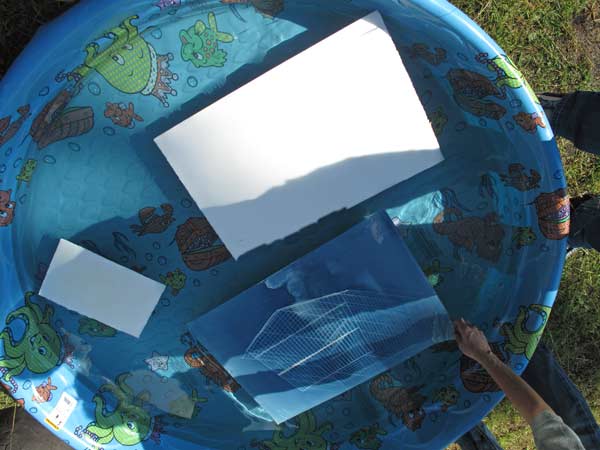
Art_In_The_Pool_Fixing_a_Cyanotype
Just accept the octopus into your heart…and agitate carefully to avoid the dreaded water bubble spots–they cannot be removed.

Some things I learned:

  1. Paper: Although many sites recommend Stonehenge as an ideal paper I would like to sell you a bridge to nowhere. I have fifty sheets of this stuff and we universally loathed it. No depth. A pale obnoxious blue. Also no watermark and cheap—what was I thinking??
  2. Rives BFK takes on odd shades of brown under some circumstances, which sometimes adds a pleasing element. The cyanotype solution tends to bead up and it is very hard to know if you have the edges of your paper covered in the semi dark.
  3. 400 pound Strathmore rag bristol mottles. It also can delaminate in the bath. But, you can then recoat the separated sheets and use the mottled tints as background to create lovely new images. Some of my sister’s best pieces were created this way. They have a wonderful vintage quality and tonal depth.
  4. Fabriano Artistico hotpress provides phenomenal fine grained exposures and takes toning elegantly, you can created a black and brown duotone with crisp luminous whites. I wish I had bought fifty sheets of THIS. Rives worked best with the few photo negatives I tried. I did test strips, and timing through clamped glass was one half to one third of that needed for objects (ie. For negatives, an average of four minutes in hot July sun.)
  5. Water: The Orcas water comes from a well and has minerals in it. This may be why certain prints took an amber cast after several coatings. Cyanotype is the art of variables. Washing and fixing prints in city water with chlorine could lead to completely different results. I had mysterious perfectly round spots on my first three or four prints, which appeared only after the water bath. It took a lot of detective work, but we finally figured out that it was bubbles formed by not immersing the paper fast enough and completely enough—and do immerse the paper face down.
  6. Adding peroxide to the water bath: you get blazing blues. We didn’t test definitively enough to know if the blues lasted and were as dark or darker than cured prints, but we decided it might be kind of a cheap trick.
  7. Time: Make no final decision on anything until prints have dried and oxidized for at least 24 hours. They can darken drastically.
  8. Random magic: Yes, you can expose while paper is still wet, and it leads to beautiful effects like watercolor. You can also paint with solution under the sun. The solution will change and change as you paint, losing potency as it is exposed. There is absolutely no need to take a meditation workshop or study impermanence with a master from the East. Just pour cyanotype onto paper under the sun and spend some days watching it dry. Change is the only constant.
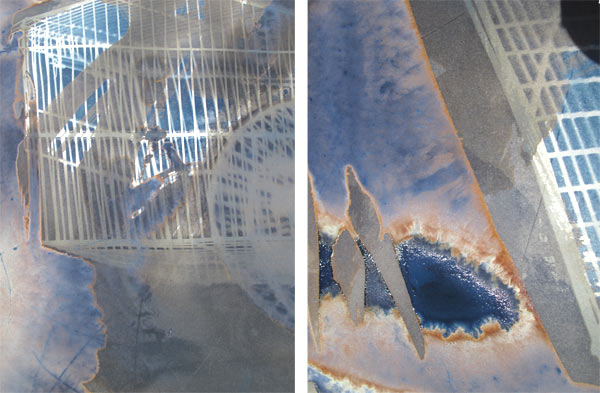
Painting_With_Light_Cyanotype_Experiment
Painting with light, cyanotype experiment

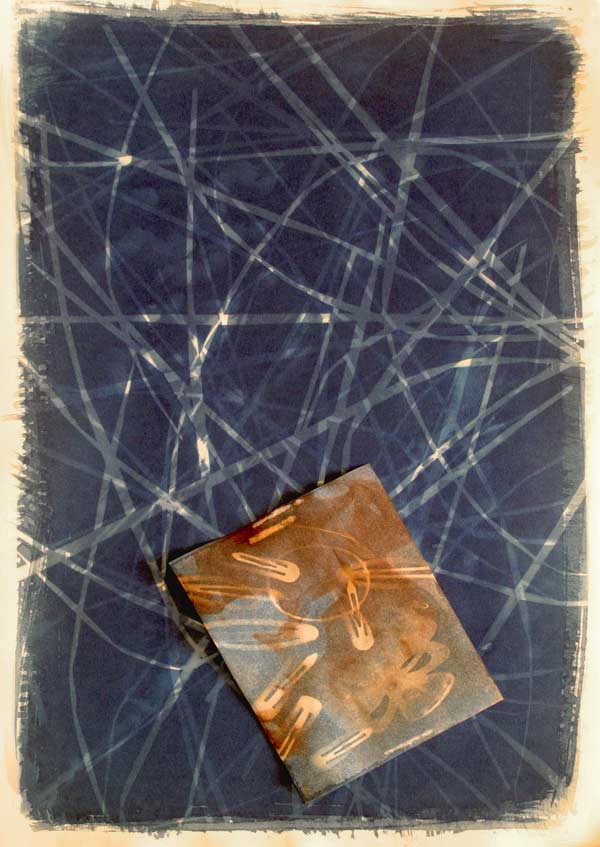
Above, a piece in progress. I painted under bright sun, adding new solution. As it dried it turned strange shades of rust and pink and two new shades of blue I hadn’t seen before. Then it all disappeared in the wading pool and became something else.

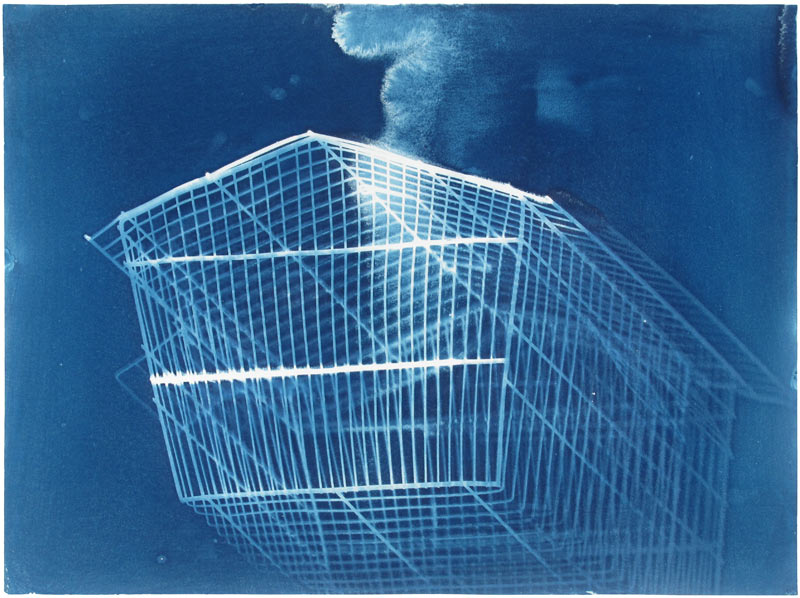
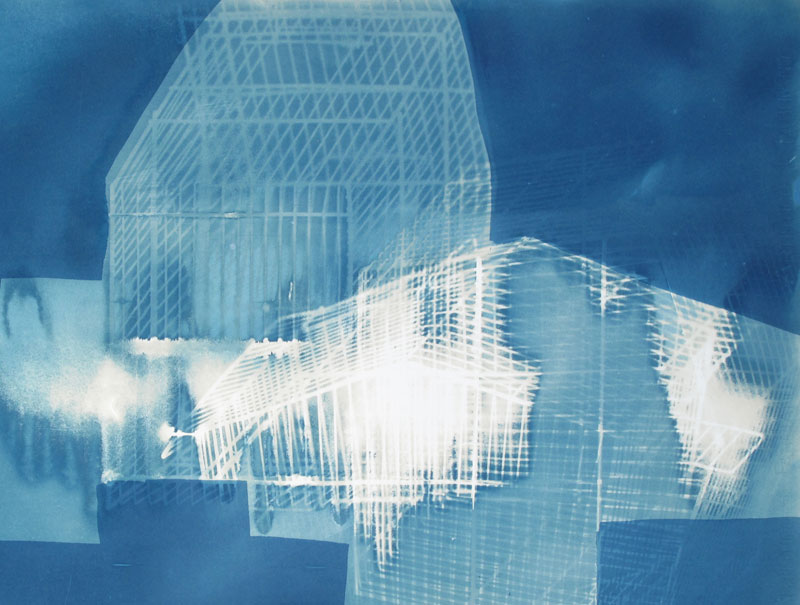
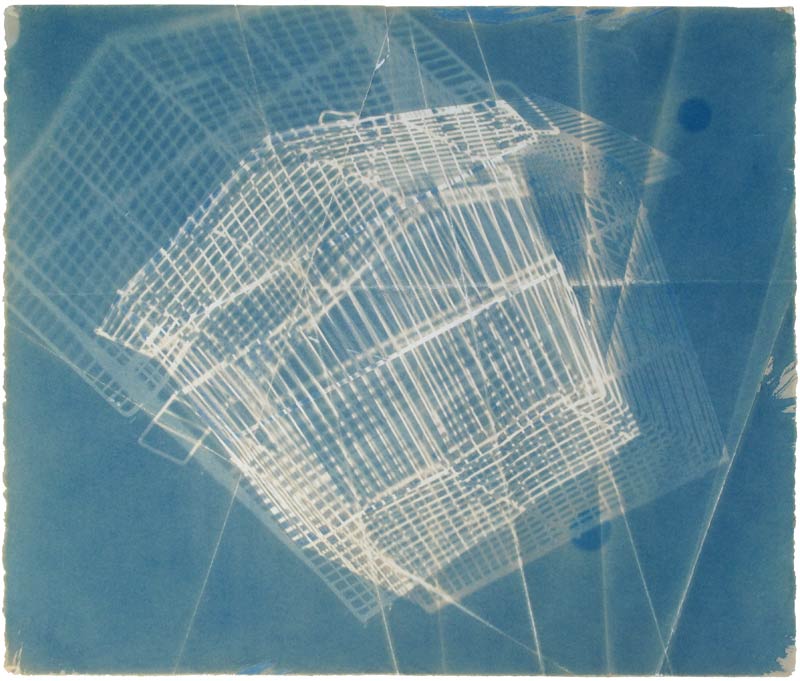
One of the most promising experiments I did involved folding paper while it was wet. I do wish I had figured out the cause of the mysterious round spots before I did “Origami Cage”, but I am including it here because I think it’s interesting. I can’t tell you how great it felt to completely beat up a piece of paper. When I wake up in the morning one of the first things I see when the sun is out is the shadow of birdcages cast onto the wall. I have tried off and on for ten years to capture them in some way. I think they finally found their home.
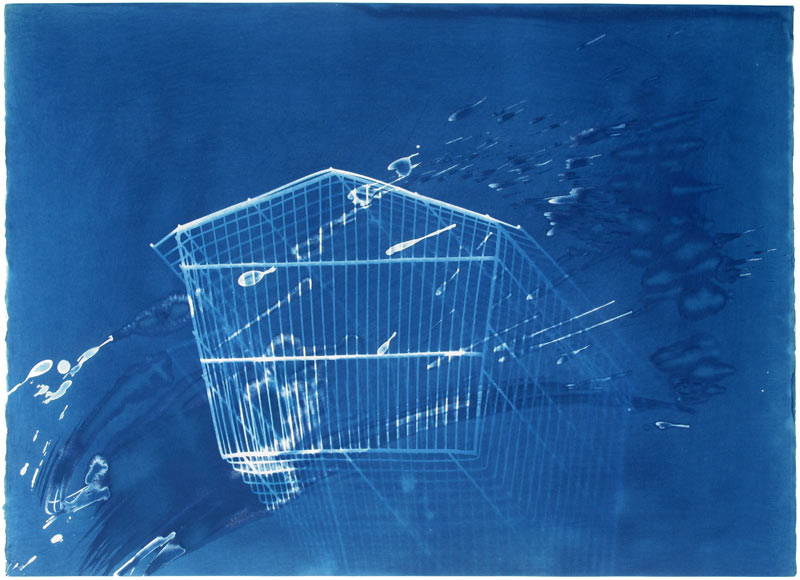
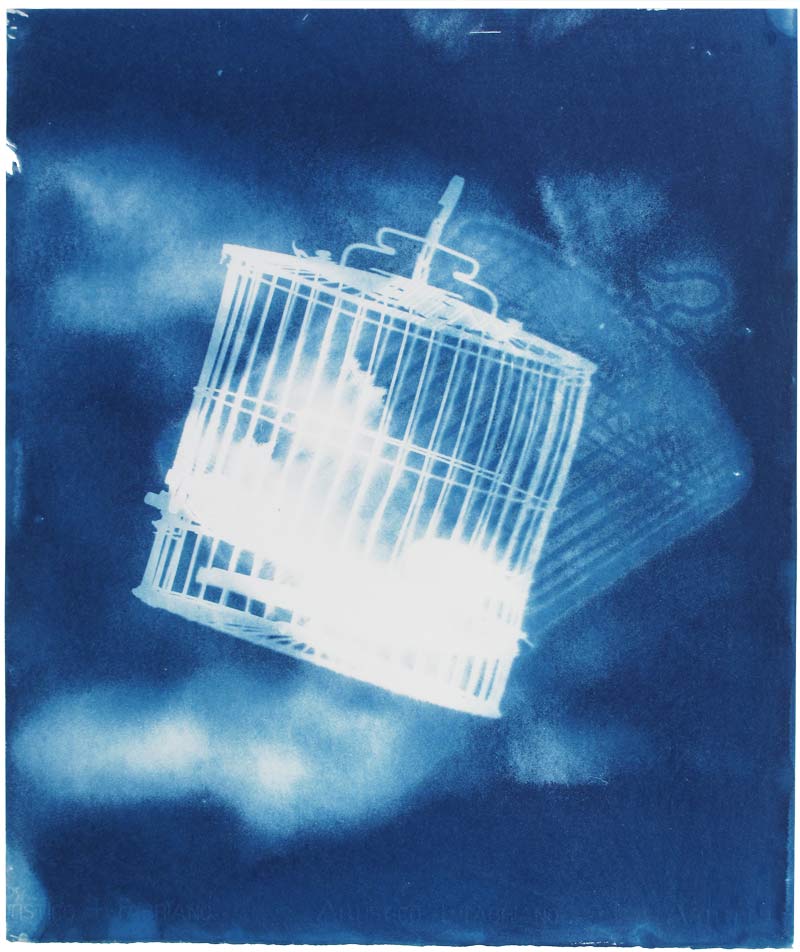
Bird_Cage_One_Cyanotype
Bird Cage 1, 16″ x 22″, Cyanotype on Fabriano Artistico © Iskra Johnson
TiltedCageCyanotype
Tilted, 22″ x 16″, Cyanotype on Fabriano Artistico, © Iskra Johnson
Bird_Cage_Cyanotype_2
The Cloud, 22″ x 16″, Cyanotype on Fabriano Artisitico, © Iskra Johnson

Architectural-CyanotypeDetail

Origami_Cage_Cyanotype
Origami Cage, 16″ x 20″ Cyanotype on folded Rives BFK
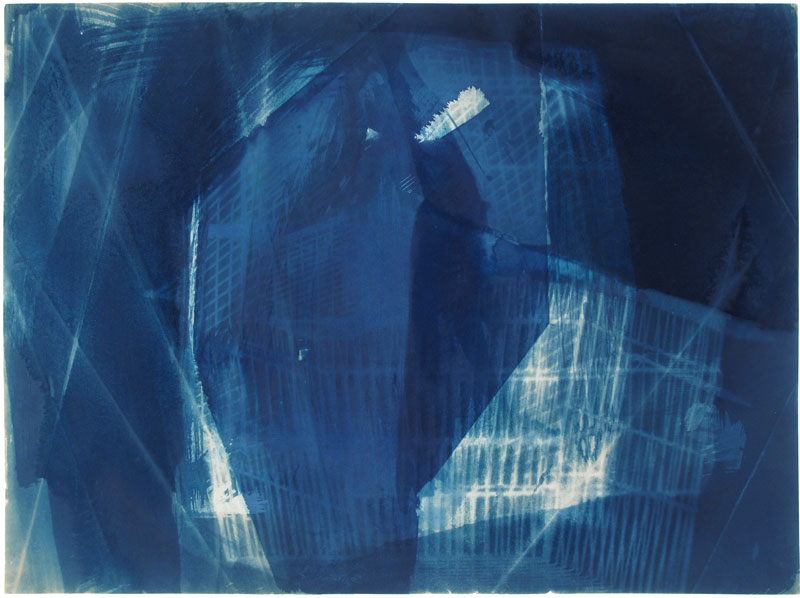
Deconstruction1_Cyanotype
Deconstruction, 17″ x 23″, Cyanotype on Fabriano Artistico, © Iskra Johnson

And, a couple of links. You can find out everything you ever want to know about cyanotype and alternative processes at Alternative Photography.com. And don’t miss David Simpson’s work at Photographic Wanderings at Lisa Harris Gallery opening August 2.

Filed Under: Photography Tagged With: alternative photography techniques, best papers for cyanotype, composing with objects, cyanotype workshop, Dvid Simpson, painting with light, The Stables on Orcas Island

Join Iskra’s Mailing List

Don't miss a thing! Subscribe to receive show announcements, first peek at new work and my semi-monthly blog by email. I primarily use the blog for news and updates but by signing up you will also receive the occasional newsletter and special offers for items in my shop.

Iskra Fine Art Blog

the creative process | conversations with artists | the contemplative impulse in art

Instagram

I have been obsessed for well over a decade by the I have been obsessed for well over a decade by the line between the photographic and the drawn. This is simply a media test, or an “under drawing“ for something else, but it gave me pause. It suggests so many different qualities of mood: Foreboding, calm, dichotomy, a family photo poorly developed, the cloudy skies of the Pacific Northwest, or the fugue state one falls into after turning the pages of our days as a failing empire. “Our“ refers to those of us who live in the USA although now it should be called the DU USA, as in disunited United States. That disunity is a powerful disruptive pain that I feel daily. Also, as we phase out medicine, research, medical care, and with that presumably self-care, this was created, for those who are curious, with a cotton ball by #JohnsonAndJohnson (my father’s Swedish ancestors) on a Talens sketchbook. As I said, I’m testing. How much of the world can I take in before I shut the door and become an art nun and don’t look up until the last minute?
Sunday concentration drawing, testing a new notebo Sunday concentration drawing, testing a new notebook( and my attention span. . .)
Today’s mood, from the morning walk. Today’s mood, from the morning walk.
A metaphysical idea waiting to become a drawing. A A metaphysical idea waiting to become a drawing. All day I have been studying graphite, the most evanescent of mediums. Fragility. Once you break the egg, scatter the nest, leave the children without family on an abandoned beach, what then? 

I have spent the day drawing. In the background, which becomes foreground with one click, is the news of the rounding up of another thousand or so human beings by bounty hunters given a quota, thrown into concrete cages and disappeared because someone decided that America is no longer the home of the #huddledmasses.

The plaque on the Statue of Liberty says:

“Here at our sea-washed, sunset gates shall stand
A mighty woman with a torch, whose flame
Is the imprisoned lightning, and her name
Mother of Exiles. From her beacon-hand
Glows world-wide welcome; her mild eyes command
The air-bridged harbor that twin cities frame.
“Keep, ancient lands, your storied pomp!” cries she
With silent lips. “Give me your tired, your poor,
Your huddled masses yearning to breathe free,
The wretched refuse of your teeming shore.
Send these, the homeless, tempest-tost to me,
I lift my lamp beside the golden door!”

Noem and Holman have not, apparently, run their hands over these words.

How do you continue making art at a time like this? You chase the metaphor. There is always a constant truth beneath the chaos.
Media studies. Addition and subtraction. Media studies. Addition and subtraction.
Somehow, between checking the news and the usual d Somehow, between checking the news and the usual distractions I managed to complete a drawing. Going back to the beginning: drawings in dust. 9.5 x 12” Charcoal powder, compressed charcoal, charcoal pencil on Moleskine. I feel peaceful for the first time in weeks.

Featured Posts

  • Book Launch! The Water Tower Project from Iskra Fine Art
  • How to Purchase Artwork from Iskra Fine Art
  • About This Blog
  • New Directions in Contemplative Art: Conversations with Artists
  • What is a Transfer Print? (Artist Statement)

Categories

  • Abstract Calligraphy
  • Architecture & Sense of Place
    • Construction/Reconstruction
    • The Alaska Way Viaduct
    • The Water Tower Project
  • Art Reviews
  • Artist Studio Visits
    • The Mystic Muse: Artists Working in the Contemplative Traditions
  • Botanical Art
    • Botanical Art Cards
  • Collage
    • Digital Collage
  • Commissioned Art
  • Drawing
  • Essays
    • Object Lessons: Essays and images inspired by "A History of the World in 100 Objects."
  • Iskra Shows, Upcoming and Past
  • Iskra Sketchbooks & Journals
  • Living With Art
  • Meditation & Buddhism
  • Mixed Media
  • Painting
  • Photocollage
  • Photography
    • American West Landscape Photography
  • Print Sale
  • Prints
    • Transfer Prints
  • Seattle Iconic Landscape Prints
  • Social Media for Artists
    • The 100 Day Projects
  • The Garden
    • The Gardener's Almanac of Irreproducible Phenomena
  • The Spiritual in Art
  • Travel
    • Road Trips
  • Uncategorized

Archives

Search

Connect on Facebook

Iskra Fine Art Facebook Page

Creative Inspiration

  • Alternative Photography
  • An Artist's Retreat
  • Anonymous Chinese Textile Genius: Moo Won
  • Chocolate Is A Verb
  • Contemplative Art Process: Danila Rumold
  • Eva Isaksen
  • Old Industrial Japan
  • The Altered Page
  • The Heart Sutra Loop
  • The Patra Passage

Galleries for Contemplative Art

  • ArtXchange Gallery
  • Seattle Asian Art Museum

Links

  • CollageArt.org
  • Iskra at SAM Gallery
  • Iskra Fine Art on Houzz
  • Seattle Art Museum Blog
  • Seattle Artist League
  • Seattle Print Arts
  • Seeing Fresh: Contemplative Photography
  • The Painter's Keys

What I'm Reading: Online Magazines and Books I Love

  • 16 mi.
  • Essays by David Whyte
  • Evening Will Come: Poetry
  • Hyperallergic
  • Painter's Table
  • Shu: Reinventing Books in Contemporary Chinese Art
  • Streetsy
  • The Original Van Gogh's Ear Anthology
  • Tricycle Magazine
  • Unincorporated Persons in the Late Honda Dynasty
  • Vanguard

Let’s Connect

  • Contact Iskra
  • How to purchase artwork
  • Iskra Fine Art Blog : The creative process, conversations with artists, the contemplative impulse in art
  • Facebook
  • Instagram
  • Pinterest
  • Twitter

All Images Copyright © 2026  Iskra Johnson · Site by LND · WordPress