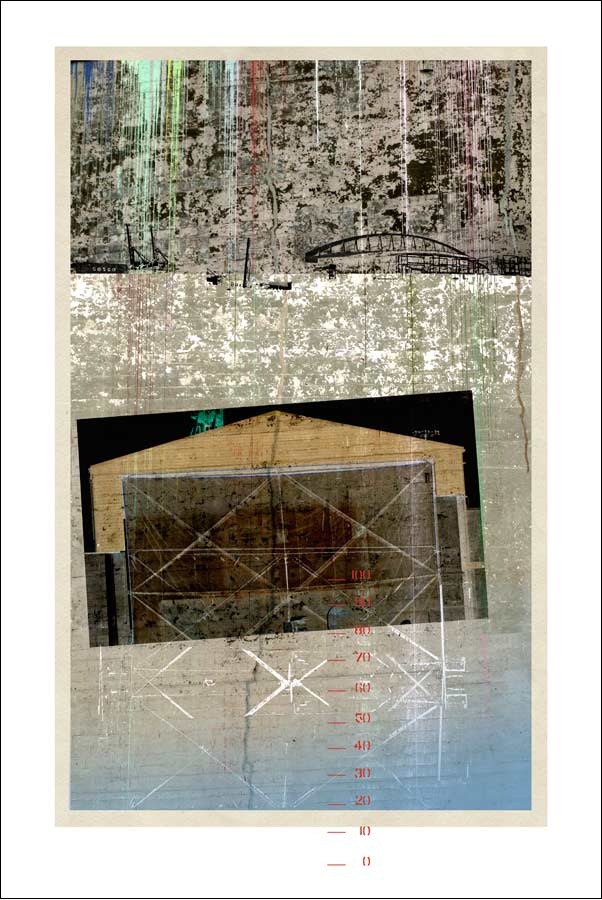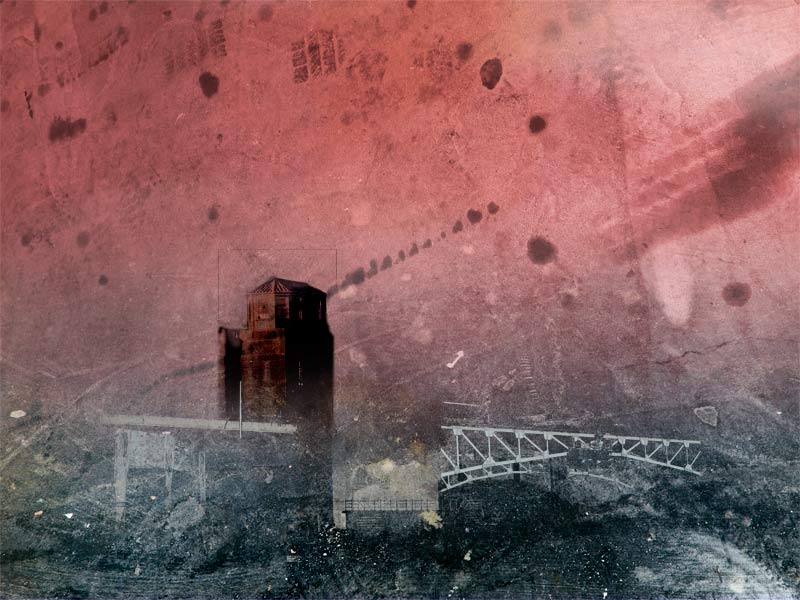
Midnight canoe along the Duwamish. You will look a long time for the moon.
Midnight canoe along the Duwamish. You will look a long time for the moon.

Invitation courtesy of Prographica
January and February can be harsh times in the turning of the year. The New York Times just had an article titled “January is the Cruelest Month” about our internal clocks and the moon and how we can blame it on the world, the moon and the weather, and it’s all real and not just human weakness. (What a relief. I thought it was just me…..) This exhibit takes bleakness and turns it on its head to show you its stark, resilient and imaginative beauty. As well as a work in charcoal, above, I will be showing five prints in various degrees of contemplative and exuberant color. Hope to see you there!
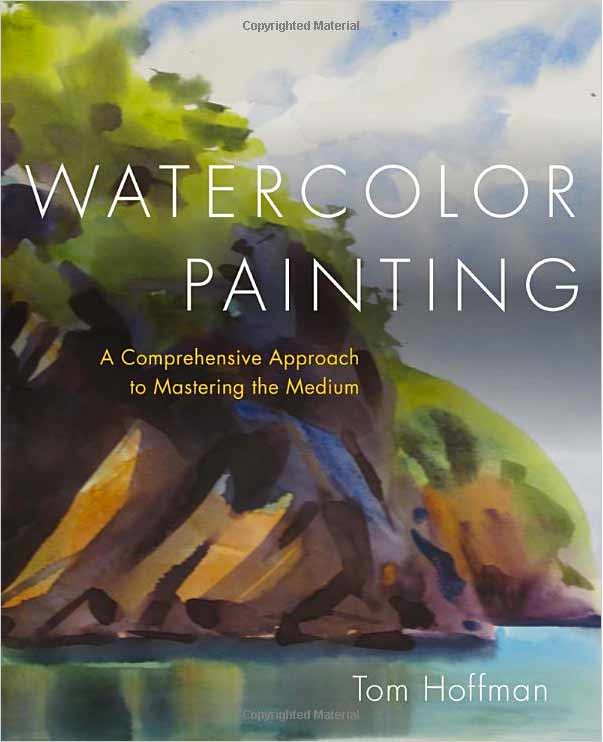
I was thrilled today to receive my copy of Tom Hoffmann’s new book on watercolor, “Watercolor Painting: A Comprehensive Approach to Mastering the Medium,” just out from Watson Guptill. You may know Hoffmann as a painter of incandescent skies and inimitable backstreets, an artist who takes “the unpaintable” and transforms it– he can make the most ordinary extraordinary. Over the course of his career his work has moved through many phases, but always it holds an indelible signature. His paintings are about paint and how it wants to be, combined with wonderful leaps of reduction and abstraction. His best work captures the air and the time of “place”, with a haunting sense of both immediacy and reverie.
This new book provides a valuable and fresh approach to understanding the medium. It’s a big picture view that will fill in what is missing from the volumes that teach you how to render kitten fur or use frisket to paint birch trees in the snow. (Not that these techniques aren’t valuable for any painter’s repertoire……) I am happy to be included in the book with a study for “From One Tree.”
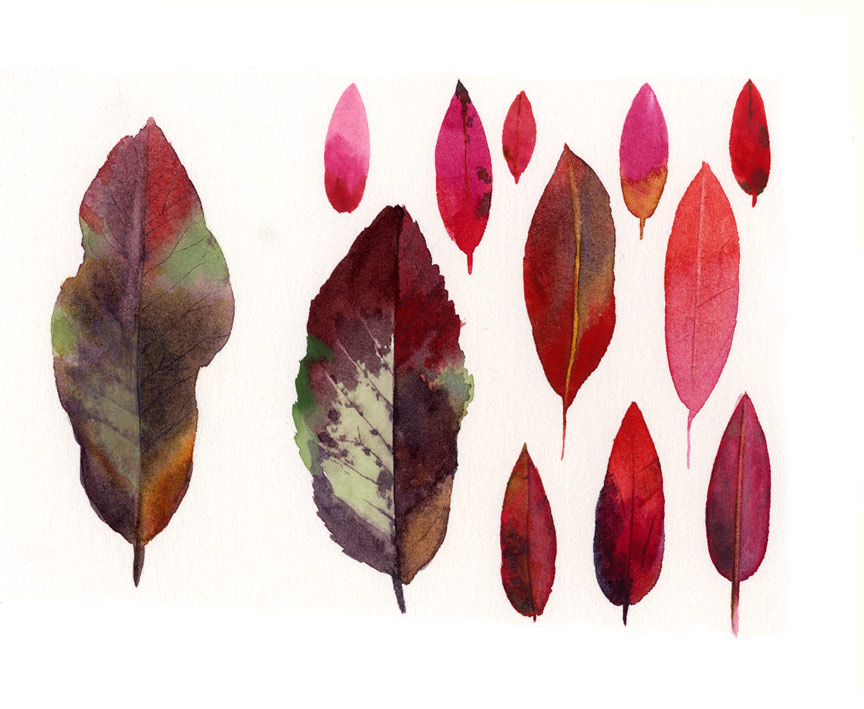
Hoffmann’s is the latest in a series of truly fine books written by instructors at Seattle’s Gage Academy of Art. Collectively they are setting a new standard for instructional books, many of which are becoming best sellers in their area of expertise. A list of other books by Gage instructors is included at the end of this post. Stay tuned for a book launch party and show at Gage in January. And if you would like to see more of Tom Hoffmann’s work you may visit him at his website.
A selection of books from Gage Academy instructors:
“Landscape Painting: Essential Concepts and Techniques for Plein Air and Studio Practice,” by Mitch Albala
“Classical Painting Atelier: A Contemporary Guide to Traditional Studio Practice,” by Juliette Aristides
“Contemporary Drawing, Key Concepts and Techniques,” by Margaret Davidson
“Lessons in Classical Drawing: Essential Techniques from Inside the Atelier,” by Juliette Aristides
“The Artist’s Complete Guide to Facial Expression,” by Gary Faigin
Follow the book and see more work by the contributors at the Hoffmann Watercolor Facebook page.
 Recently I had the pleasure of attending an elegant soiree at the Seattle Asian Art Museum as a guest of Heather McHugh. McHugh, in case you are unfamiliar with her, is a poet and MacArthur fellow, as well as recipient of a Stranger Genius award. Part of McHugh’s genius manifests as generosity. This evening’s offering of intensely beautiful culture came in the service of Caregifted, her charitable organization devoted to offering relief and deep respite to the exhausted and over-extended caregivers among us.
Many of us know someone, (or we may ourselves be) in the position of giving care to a permanently disabled person. Often this job is a 24 hour commitment and unpaid, as the person is a loved one, relative, child or spouse of the caregiver. The job is life-long, and it can be unrelenting. Each year Caregifted gives some of these people a week of time and inspiration and rest in a beautiful location. The program is a pilot at this time and it is McHugh’s hope that the idea will spread and that other organizations will form to do the same thing.
Among all the thousands of charitable organizations in the world, this cause could seem small–until you consider just what the unpaid life-long volunteer contributes to the greater social fabric by doing this. Imagine, for a moment, all of the disabled, in whatever capacity, mental or physical, suddenly without a caretaker, how we would function as a society. Most of us do not have the skills, much less the compassion, to care for people we do not know with autism, or alzheimers, or wheelchair bound– and those who step in and step up provide a sometimes invisible, powerful and indispensable thread in the fabric of our society. Caregifted’s week of time says, “We see you. Thank you! And may you restore your spirit.”
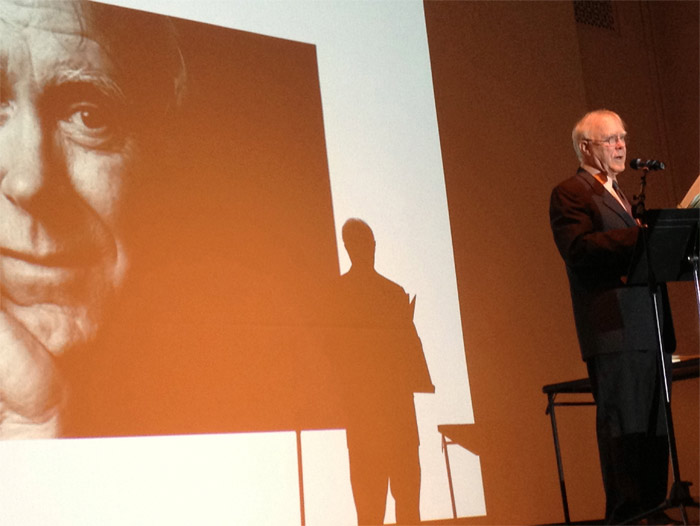
Only a poet with an unusual mind would conceive this project, and then present an evening of such enchantment in its service. Robert Hass took the stage to read both his own work and poems about art and music. I have searched in vain online for his conversation with Modigliani–startling, eloquent, and please somebody tell me when it is published! Following him, Jonathan Biss played the Steinway and convinced me I may never have heard the piano played before. I sat ten feet from the stage, and my tendency towards cultural narcolepsy did not have a chance. I quite literally felt chills up and down my spine.
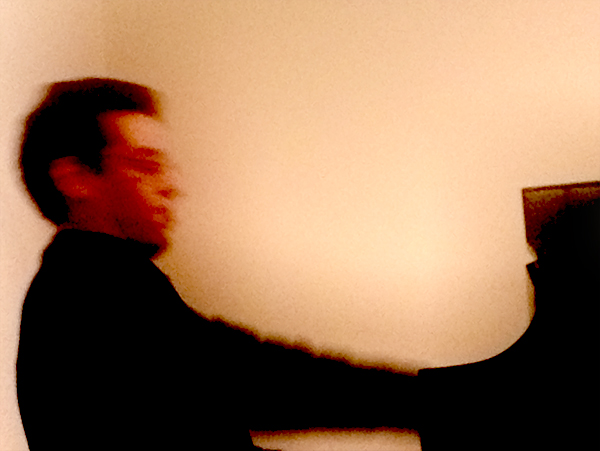 Photographs © Iskra Johnson (i-phone)
A documentary film (“Undersung”) about Caregifted is in the works, portions of which we viewed at the end of the evening. If you would like to know more (and see film clips) please visit the Caregifted site or donate through Children’s Hospital Foundation.