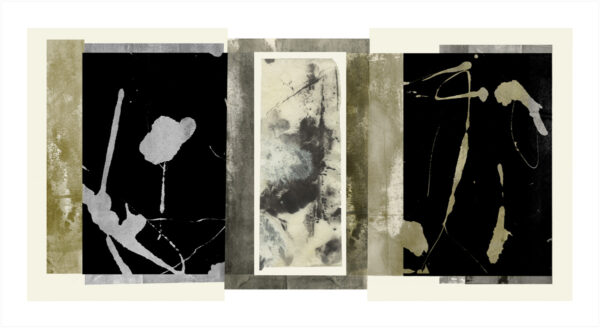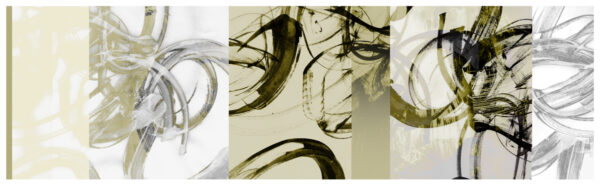
Iskra Fine Art

  • Prints
    • The Tarmac Residency: Airport Landscapes
    • Immersions | At The Shore
    • ColorBath: Images of the Harbor
    • The Floating World
    • Industrial Strength | Urban Industrial Landscape
    • The Scaffold
    • Industrial Pastorale: The Rural/Urban Landscape
    • Botanical Prints | The Natural World
    • Construction | Reconstruction : Urban Landscape
    • Infrastructure
  • Drawings
    • Pencil Drawings: Pandemic Pause
    • Drawings in Dust 1
    • Signs & Symbols (Archive)
    • Botanical Drawings (Archive)
  • Photography
    • Nucor Steel Industrial Landscape Photography
    • New Work Inspired by England
    • Seattle Waterfront Park Photography
    • Architectural Photography | Construction Sites
    • American West Landscape Photography
  • Mixed Media
    • Modern Botanical | Mixed Media on Plaster
    • From the Sea | Water Paintings
    • Sleep Studies
  • Wabi Sabi Abstract
    • Minimalist Modern
    • Ink Painting Abstractions
  • Shop
    • The Water Tower Project
  • About
    • Contact
  • Blog
You are here: Home / Abstract Calligraphy / New Abstract Minimalism, a Summer Subscriber Sale (And Some Thoughts On AI…)

New Abstract Minimalism, a Summer Subscriber Sale (And Some Thoughts On AI…)

August 23, 2023 by Iskra Leave a Comment

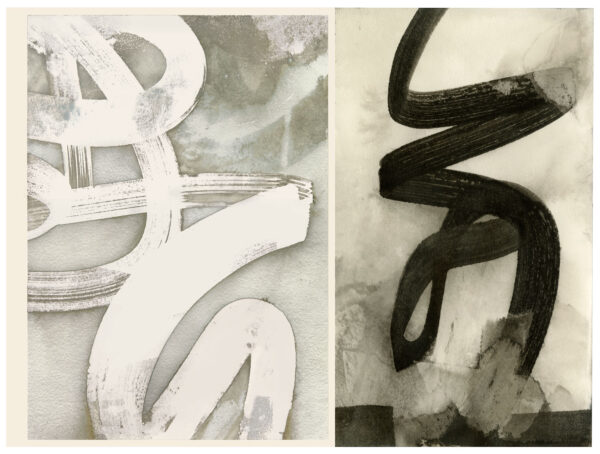
Duo (Yes/And) minimalist calligraphic art

Duo (Yes/And), one of the new minimalist prints just off the press and in my shop.

It was great to see old friends and new at the opening of Intersect at SAM Gallery. Thank you to all who came to the opening and also those who have gone at other times and sent me your lovely notes! The show continues Wednesday through Sunday 10-5 through the end of the day Sunday August 27. 

The opportunity to talk about my work and explain my process at the gallery gave me a lot to think about. These last quiet days of August are a good time to reflect on what led me to work in this medium and to explain my “rules” for making the work. Also (in case you haven’t noticed!) Artificial Intelligence is making a lot of noise in the room and any artist, particularly an artist using digital technology, has to address the questions it raises.

Evolution of a Digital Printmaker

When it comes to computers, I began my journey as The Last Luddite, kicking and screaming at the intervention of design programs into illustration and the typographic arts. As it became apparent that no professional designer could survive the transition and remain completely analog I embraced Photoshop and other programs as tools, but continued to make the basic ingredients of my work in design by hand. The catch here has always been the blurry line between using a tool and being used by it. My rule as a professional lettering artist, and now as a fine artist who incorporates digital tools in my work, is to use the best tool for the job, rather than grabbing something because it is handy and fast and baked into “digital workflow.”
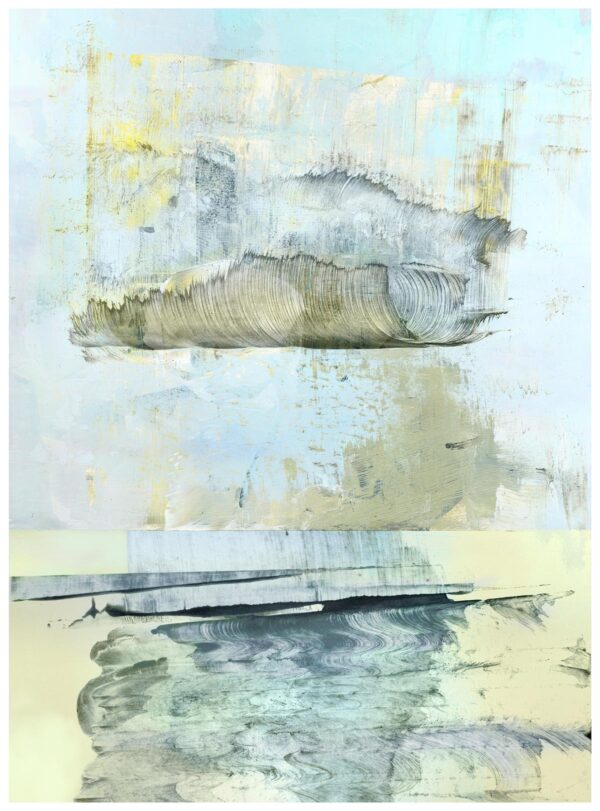
Source (The Wave Revisited) mixed media archival print

Source (The Wave Revisited) 42 x 32 ” framed, at SAM Gallery, a piece made using one of my favorite mark-making tools, long pieces of balsa wood and watercolor on paper.

What software does brilliantly is visualization, design and assembly. What led me to turning to the computer originally was the attempt to add color to fragile drawings done with charcoal dust. In working with delicate media the risk to the original is acute – every method I tried destroyed the drawings. In the process of digitally testing color ideas over scanned originals I realized I had the potential for magic, and a new kind of printmaking. Although I also paint, printmaking has always shaped my methods and my aesthetic. I love the idea of building images through plates, layering veils of ink and imagery to create effects that can only be made indirectly. I love the mark that is mysterious, clearly not possible to create without an intervention of pressure or the physical transfer from one surface to another. 

It took many years to master the translation from hand-made marks, to the digital laboratory, to printing on fine rag paper, where the work lives as a limited edition print. With the exception of a few botanical cards reproducing small works on Venetian plaster, none of my prints are reproductions of paintings; if I make a painting it’s a painting, and there is no reason to make a print of it. My reason to make a print from something is to change it, to enter a process of alchemy and to be surprised. This is why all the original elements used to build the abstract work are created in black and white. The colorless image is like a zinc matrix, a plate, waiting to be inked in color. Through software I add color and layer the plates. The process is entirely improvisational, and I do not know what it will look like until many hours, days, or sometimes months later.
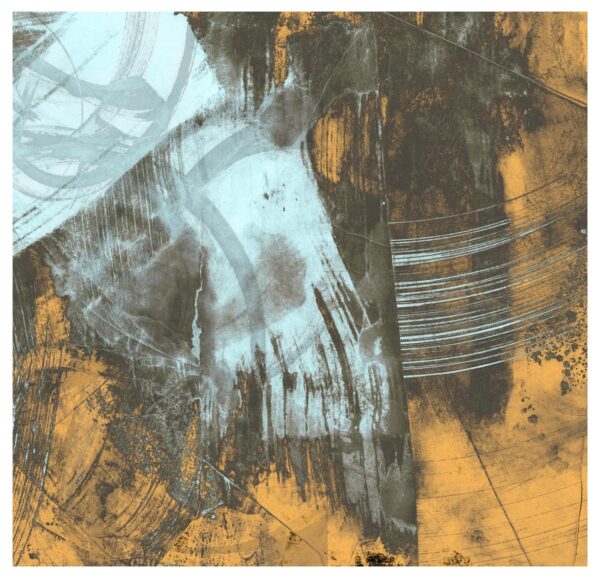
New media experimental print

Experimental work using ink-painted rice paper folded, spindled and crushed with a brayer and scanned. I used the scanner to capture both sides of the paper including the ghost image on the reverse side, and then went wild with color ideas.

Machine Learning versus Being Human

This process could not be farther away from machine learning, the goal of which is “to allow software applications to become more accurate at predicting outcomes without being explicitly programmed to do so. Machine learning algorithms use historical data as input to predict new output values.” (Search Google for “tech accelerator” to learn more.)

Anyone tempted by the seductions of AI needs to think long and hard about where the ingredients of AI art come from: the harvest of “historical data” (original art!) created by human beings throughout history. Every image ever uploaded to the world wide web is being combed and analyzed 24/24 so it can be cloned and reassembled to resemble “what art looks like.” Human beings themselves are the tool being used by the software. Our memories, motivations, emotions, skills and creations are all being “sourced” and repackaged as product. It is more than disconcerting when every time I go to LinkedIn to post my work it prompts me to use ChatGPT to create my offering. The world’s premier network for finding a job is on board to help me replace myself with an algorithm. I do not want to be used as a tool to make artificial intelligence smarter, I want to become a smarter human. I have more to say on this and will be posting longer pieces about AI, ethics and authenticity on my blog. In the meantime . . . 

New Work Inspired by Edo Avant Garde

This all makes me want to return immediately to another century, perhaps again to the Edo Period in Japanese art. I am fascinated by the format of the scroll, and the complex composition process of sequence and interruption, reading the tea leaves right to left. These two recent pieces are designed to think about walls, and about contemplative states of reflection. The Edo series is inspired by the extraordinary film Edo Avant Garde that I watched on my laptop during the snow in the first year of pandemic.  
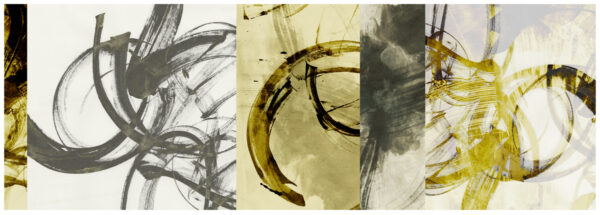
Edo Contemplation No.6, abstract calligraphic scroll by Iskra

Edo Contemplation No.6, size variable to 80 inches long.
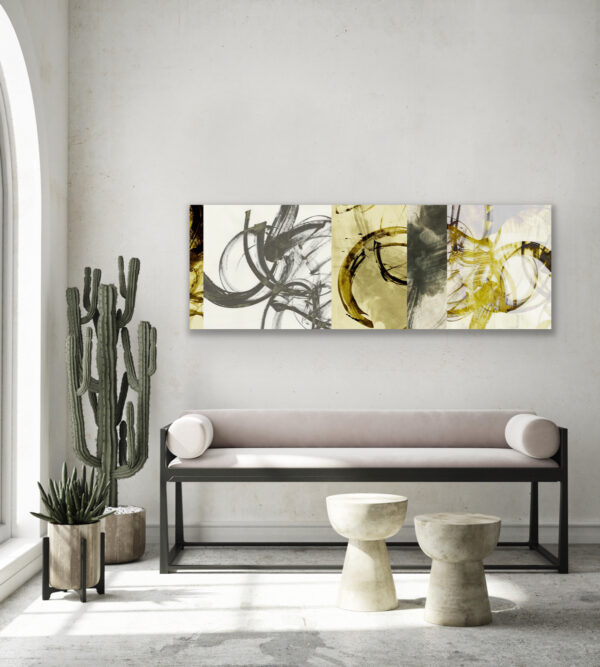
Edo scroll in room, art for interiors

Everyday Sutra abstract calligraphy by Iskra

Every Day Sutra, size variable

Edo Variation…the combinations of elements offer endless possibilities, making this way of working ideal for designing for spaces with different moods and size constraints.
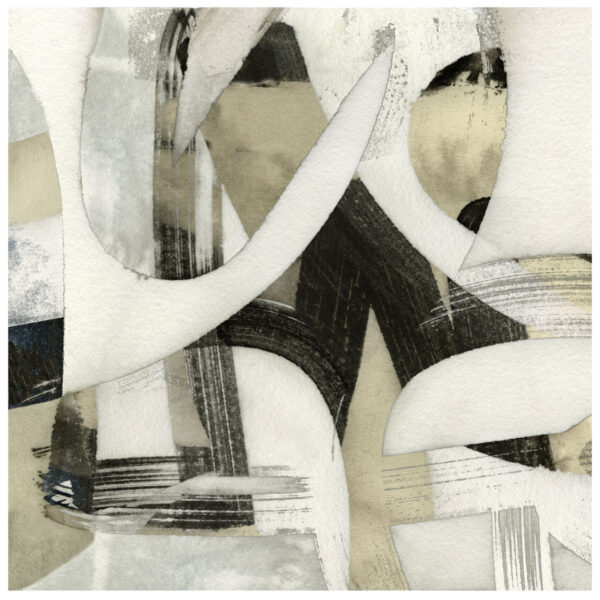
Puzzle Print

Puzzle Piece (Harlequin’s Puzzle), a new piece completed this week, available in my shop. This print was composed from ink washes on paper, reconfigured to explore pattern and interruption. It can be printed up to 20 inches square.


To launch us out of the dog days of August and into fall I am offering a 20% off sale on all shop items with a total purchase of $150, today through September 30th. If there is something you’ve been thinking about for awhile, now might be the time! All you have to do is subscribe to my newsletter.
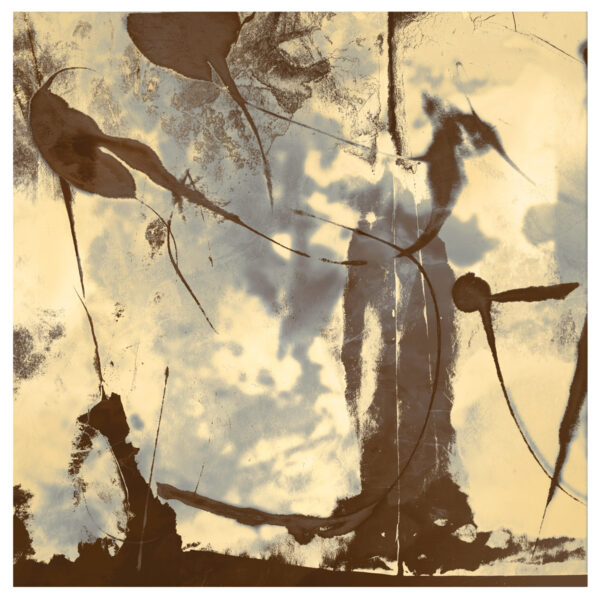
The Courtesan New Media Print Bashos lost lover

I’ll leave you with this last image from my recent explorations: The Courtesan (Basho’s Lost Lover), available in 24 x 24″ on SaatchiArt or direct from my studio, (not yet a shop listing, smaller size available there soon.) Minimalism in the service of August light – it doesn’t take a lot of color to tell the last of summer’s story.

Filed Under: Abstract Calligraphy Tagged With: Abstract calligraphy, abstract minimalism, artists consider AI, Edo Avant Garde, evolution of a printmaker, summer print sale

Leave a Reply Cancel reply

Your email address will not be published. Required fields are marked *

This site uses Akismet to reduce spam. Learn how your comment data is processed.

Join Iskra’s Mailing List

Don't miss a thing! Subscribe to receive show announcements, first peek at new work and my semi-monthly blog by email. I primarily use the blog for news and updates but by signing up you will also receive the occasional newsletter and special offers for items in my shop.

Iskra Fine Art Blog

the creative process | conversations with artists | the contemplative impulse in art

Instagram

The photography show opening Friday, October 9th a The photography show opening Friday, October 9th at Slip Gallery is curated by my friend and fellow photographer, Scott Wipperman. This seemed like a good time to share his work and the story of our friendship on the road. Half the photographs are his and half are mine. This is an excerpt, and you can read the rest of it on my blog, see link tree in bio:

One of the rarest gifts in the life of an artist is finding a creative muse: someone who truly sees your work, and better yet, has a similar vision that is just enough different that you can collaborate without competing. In the often solitary studio life these connections can be difficult to find, but during pandemic, Instagram brought a new creative companion into my life. I do not know who started following who first. But in May 2020 I found myself sharing instant messages with a photographer working under the name “Concrete spaces“— a handle that immediately piqued my interest. Concrete has been one of my obsessions for years. Miraculously, there was someone out there who understood why I was working on a book called Parking Lot Floors Of North America. . .

©️Scott Wippermann

©️Scott Wippermann

©️Scott Wippermann

©️Scott Wippermann

©️Iskra Johnson

©️Iskra Johnson

©️Iskra Johnson

©️Scott Wippermann

©️Iskra Johnson
I am excited to be part of a show opening Friday, I am excited to be part of a show opening Friday, October 9th featuring eight Seattle  photographers and curated by Scott Wipperman @concretespaces at Slip Gallery. The theme of this show is complex and interesting: Intimate Structures. How the human body and human emotions connect with the built environment. And how the structures in our environment shape our lives, our relationships, and our possibilities. I will be showing industrial landscape as well as six pieces from the series “Immersions” based on tableaus of human relationship captured at Seattle’s waterlines. A diving platform is a stage, and the summer season a riveting drama of ever-shifting players. Most of these pieces have not been shown before.

I’m fascinated by the work of the seven other photographers, each one approaching the theme of the show from a completely different perspective, using both traditional photography and contemporary experimental techniques. Alienation, sublimation, meditation, connection:
Annie Regerson
Dimitri Wessendorf
Gillian Peckham
Iskra Johnson
Janis Mathieson
Mack Greene
Nina Bolger
Scott Wipperman
I hope to see you there!

The runs until the end of October. 
Thursday – Friday: 1:00 PM – 6:00 PM
Saturday – Sunday: 1:00 PM – 4:00 PM

Slip Gallery
2301 First Avenue in Belltown

Two Divers ©️Iskra Johnson

Guardian ©️Iskra Johnson
Morning Pages: Doors The first thing I saw when I Morning Pages: Doors

The first thing I saw when I woke up this morning was shadows on a door. Last night, I dreamt of an old building, one I have visited in dreams for years. It is a co-op apartment in some imaginary Canadian city, on a long steep hill above which are what appear to be the Swiss Alps. It was built in the early 1900’s and has grand staircases and balconies, huge rooms, bronze doorknobs and leaded glass windows. In my dreams, I interview with the board, I make an offer and I even buy an apartment— and then suddenly the door of my new home opens into a parking lot or a garage or someone else’s basement and I wake up and check my bank account, mystified by the power of this particular place, and how opening a door universally signals a new chapter in the story. 

Doors and windows are the most metaphoric parts of architecture. 100 years ago builders understood the attention they deserved. Now I live in a city where we have torn down historic churches, dumped the stained glass into a landfill and replaced these devotional structures with stacked box apartment complexes covered with Hardie Plank. I’m watching million dollar houses go up in my neighborhood with the cheapest vinyl windows from Home Depot, no eaves and often no roof— simply a flat lid to seal the box — and no trim at all. It is architecture as expedience, and it degrades the experience of how we see and experience the commons, and our human values, because, as Churchill noted, “We shape our buildings and afterward our buildings shape us.” 

We don’t look twice at these new houses, whereas I can look at this particular building somewhere in England for hours. Whoever built this wall took great care. They used the art of subtraction to add rather than to diminish. The vast flat wall of stone, the curved lintels, make the windows and doors speak. The doors and windows are not grand, but curiously condensed. They are portals through which one must squeeze with effort, which makes a person pause, and wonder. Later, they may find themselves dreaming of what is behind the walls.
Westminster Mall deconstruction project. I had to Westminster Mall deconstruction project. I had to go to the Department of Licensing this morning and stand in line and it gave me an opportunity to watch the Sears building come down. Sears was the last place left in the Seattle area where you could buy a vacuum cleaner from a man wearing creased polyester slacks, a tucked in shirt and an engraved name badge making a commission on the number of vacuum cleaner bags you bought to go with the Electrolux. I fondly remember my conversations about uprights versus canisters. This building is where I bought a snowsuit for a child that just barely fit me the day we had the epic snow and I was caught unprepared. I walked a mile on ice to get to Sears and then left looking like a nine year-old robot trying to get my knees to bend and move swaddled in 4 inches of poly blend padding. But I was warm! I doubt that anything that goes up this year in the Westminster Mall will last as long as Sears did. And there will be no catalogue unless I create one.
Excited tonight for the opening of Art and Steel a Excited tonight for the opening of Art and Steel at Youngstown Cultural Center! This is primarily a painting show from the Plein Air Watercolorists Association of Seattle (although I don’t think any of us were actually painting inside the mill on our tour!) I have been included as a photographer and mixed media artist, see last image in carousel, “Glide.” 

An exhibition of paintings telling the story of steel fabrication at NUCOR mill, hosted by Delridge Neighborhood Dev Association.

Friday, September 18 | 6:30 PM - 9:00 PM
Join us for a special evening celebrating art, industry, and community.

This exhibition features original paintings that tell the story of steel fabrication at the NUCOR Mill, presented by the Delridge Neighborhood Development Association (DNDA).
The evening will include a panel discussion, light refreshments, and an opportunity to learn more about the intersection of art, labor, and local history.

All donations made during the event will be matched and directed to DNDA’s Art Education Programs, helping support creative opportunities in our community.
Friday was my birthday. 9.11 is a day of remembran Friday was my birthday. 9.11 is a day of remembrance and national tragedy, and it seems bizarre to claim some kind of importance for having been being born on that day in the context of the event. 

Several days after, I allow myself reflection on the passage of time. This is me 15 years ago, with my Canon Powershot, which offers an astonishing naive pre-Cabrian 6 Mb image. It was much more kind than today's 24 MP iPhone, which not only captures the older me but turns that version into a character from Shakespeare with hi-def Bertrand Russel thought lines above my eyebrows and unforgiving evidence of allergies and time. 

On reflection I realize that 2011 was a very good year. I am going to allow myself to be that person for the month, and remember what that was like. The love of my life from the 8th grade had come to stay with me that summer. He took terrible photos of me that I now realize were not so bad. 99% of of the corrosive social media influences had not been invented yet. Women over whatever age was deemed desirable were not subjected to an ad every minute telling us that a new part of our face or body had gone south, and offering us a (discounted! on sale! watch the entire 30 minute video!!) $165 remedy on a monthly subscription to fix it. 

Now every day I look at the thinking and brooding lines above my eyebrows (which are also the lines caused by considering how funny some things can be even when crying) and ask myself what Bertrand Russel would say. If you are too young to know that name, AI is your ever-friend and will tell you how you too can become a "towering British philosopher, logician, mathematician, and social critic" and also how to fix those lines that come from considering things with your face. 

I think my romance with the iPhone is coming to a partial close. I want to go back to the idea of “glass.” It costs serious wages. It is made by Germans— Lately, (subtract the umlaut) Sony, the wizards of sand and heat and bending light to high high focus. I need to return to optics, f-stop, aperture, focal length— words that require frowning. 61 megapixels seems like the bare minimum. There is no cosmetic cure to being a lens-based artist:))

Featured Posts

  • Book Launch! The Water Tower Project from Iskra Fine Art
  • How to Purchase Artwork from Iskra Fine Art
  • About This Blog
  • New Directions in Contemplative Art: Conversations with Artists
  • What is a Transfer Print? (Artist Statement)

Categories

  • Abstract Calligraphy
  • Architecture & Sense of Place
    • Construction/Reconstruction
    • The Alaska Way Viaduct
    • The Water Tower Project
  • Art Reviews
  • Artist Studio Visits
    • The Mystic Muse: Artists Working in the Contemplative Traditions
  • Botanical Art
    • Botanical Art Cards
  • Collage
    • Digital Collage
  • Commissioned Art
  • Drawing
  • Essays
    • Object Lessons: Essays and images inspired by "A History of the World in 100 Objects."
  • Iskra Shows, Upcoming and Past
  • Iskra Sketchbooks & Journals
  • Living With Art
  • Meditation & Buddhism
  • Mixed Media
  • Painting
  • Photocollage
  • Photography
    • American West Landscape Photography
  • Print Sale
  • Prints
    • Transfer Prints
  • Seattle Iconic Landscape Prints
  • Social Media for Artists
    • The 100 Day Projects
  • The Garden
    • The Gardener's Almanac of Irreproducible Phenomena
  • The Spiritual in Art
  • Travel
    • Road Trips
  • Uncategorized

Archives

Search

Connect on Facebook

Iskra Fine Art Facebook Page

Creative Inspiration

  • Alternative Photography
  • An Artist's Retreat
  • Anonymous Chinese Textile Genius: Moo Won
  • Chocolate Is A Verb
  • Contemplative Art Process: Danila Rumold
  • Eva Isaksen
  • Old Industrial Japan
  • The Altered Page
  • The Heart Sutra Loop
  • The Patra Passage

Galleries for Contemplative Art

  • ArtXchange Gallery
  • Seattle Asian Art Museum

Links

  • CollageArt.org
  • Iskra at SAM Gallery
  • Iskra Fine Art on Houzz
  • Seattle Art Museum Blog
  • Seattle Artist League
  • Seattle Print Arts
  • Seeing Fresh: Contemplative Photography
  • The Painter's Keys

What I'm Reading: Online Magazines and Books I Love

  • 16 mi.
  • Essays by David Whyte
  • Evening Will Come: Poetry
  • Hyperallergic
  • Painter's Table
  • Shu: Reinventing Books in Contemporary Chinese Art
  • Streetsy
  • The Original Van Gogh's Ear Anthology
  • Tricycle Magazine
  • Unincorporated Persons in the Late Honda Dynasty
  • Vanguard

Let’s Connect

  • Contact Iskra
  • How to purchase artwork
  • Iskra Fine Art Blog : The creative process, conversations with artists, the contemplative impulse in art
  • Facebook
  • Instagram
  • Pinterest
  • Twitter

All Images Copyright © 2026  Iskra Johnson · Site by LND · WordPress