Iskra Fine Art

  • Prints
    • The Tarmac Residency: Airport Landscapes
    • Immersions | At The Shore
    • ColorBath: Images of the Harbor
    • The Floating World
    • Industrial Strength | Urban Industrial Landscape
    • The Scaffold
    • Industrial Pastorale: The Rural/Urban Landscape
    • Botanical Prints | The Natural World
    • Construction | Reconstruction : Urban Landscape
    • Infrastructure
  • Drawings
    • Pencil Drawings: Pandemic Pause
    • Drawings in Dust 1
    • Signs & Symbols (Archive)
    • Botanical Drawings (Archive)
  • Photography
    • New Work Inspired by England
    • Seattle Waterfront Park Photography
    • Architectural Photography | Construction Sites
    • American West Landscape Photography
  • Mixed Media
    • Modern Botanical | Mixed Media on Plaster
    • From the Sea | Water Paintings
    • Sleep Studies
  • Wabi Sabi Abstract
    • Minimalist Modern
    • Ink Painting Abstractions
  • Shop
    • The Water Tower Project
  • About
    • Contact
  • Blog
You are here: Home / Prints / Paths to Intuition in Digital Printmaking

Paths to Intuition in Digital Printmaking

June 13, 2017 by Iskra 1 Comment


intuitive composition Iskra Fine Art
Morning pages digital composition practice

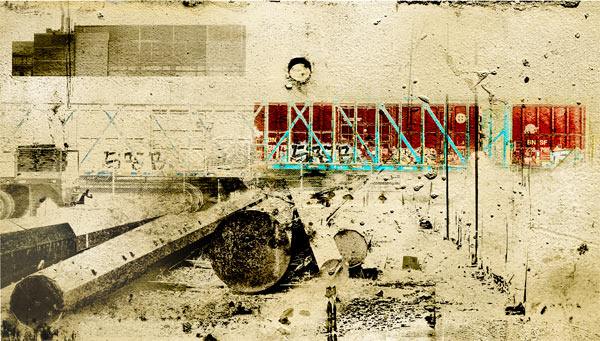
The big puzzle in my studio life right now is how to maintain access to intuition while working in the highly technological medium of digital print making. As someone coming from traditional printmaking, and particularly monoprint, I prize the excitement of accidents and transformations not entirely in my control. And the things I look at obsessively, like the sides of dumpsters and the backs of stop signs, are surfaces of completely unintentional beauty. To get this feeling of things — to get the reality, more importantly — it’s essential to embed in the workflow some wild cards. The images I have been doing recently are taking radical new turns, and it’s because I have been taking risks and learning how to embrace chaos.

What is Digital Printmaking?

First, for those reading who may think of digital printmaking as simply scanning a painting and printing it from a computer, or using a mouse or stylus to draw, a brief explanation. Photoshop allows any image to be taken apart and reassembled into constituent parts. It operates on a system of layers that can each be subjected to “layer effects” that change color, density, value, line quality, texture and positive negative relationships. It allows for drawing and painting marks and tones as well, although my own choice is to make most marks by hand or to use photographs of found textures. A digital printmaker uses Photoshop layers like plates in the printmaking process, building up images layer by layer until the work is complete. Then the image lives either in cyberspace viewed on monitors, or is printed on paper or another substrate.

Even after five years I still spend hours each month Googling for obscure tutorials and banging my head against the embedded math of pictures made of pixels. I still take obsessive notes and make countless proofs. But slowly I am beginning to feel like a native. Partly this is because of the perverse beauty of the words that describe the digital image process.
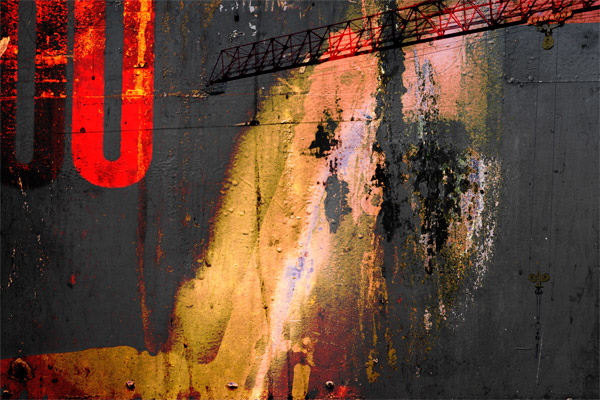
 

Morning pages, industrial composition (and out of gamut….)

“Gamut,” for instance. I can spend a whole day working on an electrifying image only to discover that it will never print properly because it is “out of gamut.” That phrase seems to describe my mind, and I’ll gladly take it. Then there are the names of layer effects in Photoshop. Who could resist taking a spin with “linear light?” or “luminosity” or diving off the deep edge with “difference” or “exclusion?” These are words for poets and dreamers, not engineers. Sometimes I allow myself to try out every single combination of everything, working faster and faster between actions until I have NO IDEA what I have done. That’s usually when it gets really interesting. As a calligrapher I always relied on variations on speed and slowness to change the character of the marks I made. Along with that, I had the texture of paper and the softness or hardness of my brushes. A computer monitor has no texture, so it’s a bit of engineering to to make slickness stutter. I use multiple layer effects, channels and masking to keep the computer’s fingerprints as invisible as possible.

More than the technical chops though, the most important element for finding intuition on the computer is frame of mind. I come to art-making through words, and the writing life is always where I go to shake up my process. Following the same model as writing practice, I have started doing what I call “morning pages” as soon as possible after I wake up. I sit at the computer after a cup of tea and writing in my journal, and then instead of meditating I start improvising in Photoshop, while keeping my attention on my breath. No music, and the dimmest of goals, knowing only that I want to not-know, and trust the not-knowing. Usually after an hour or so I have something that surprises me. Part of a corner may actually be dazzling. The rest may be a mess. I put it away and go back to the intentional images. And soon I find the mysteries of the morning informing the “real” work.

 

Industrial glimpse Iskra
Industrial Glimpse © Iskra Johnson

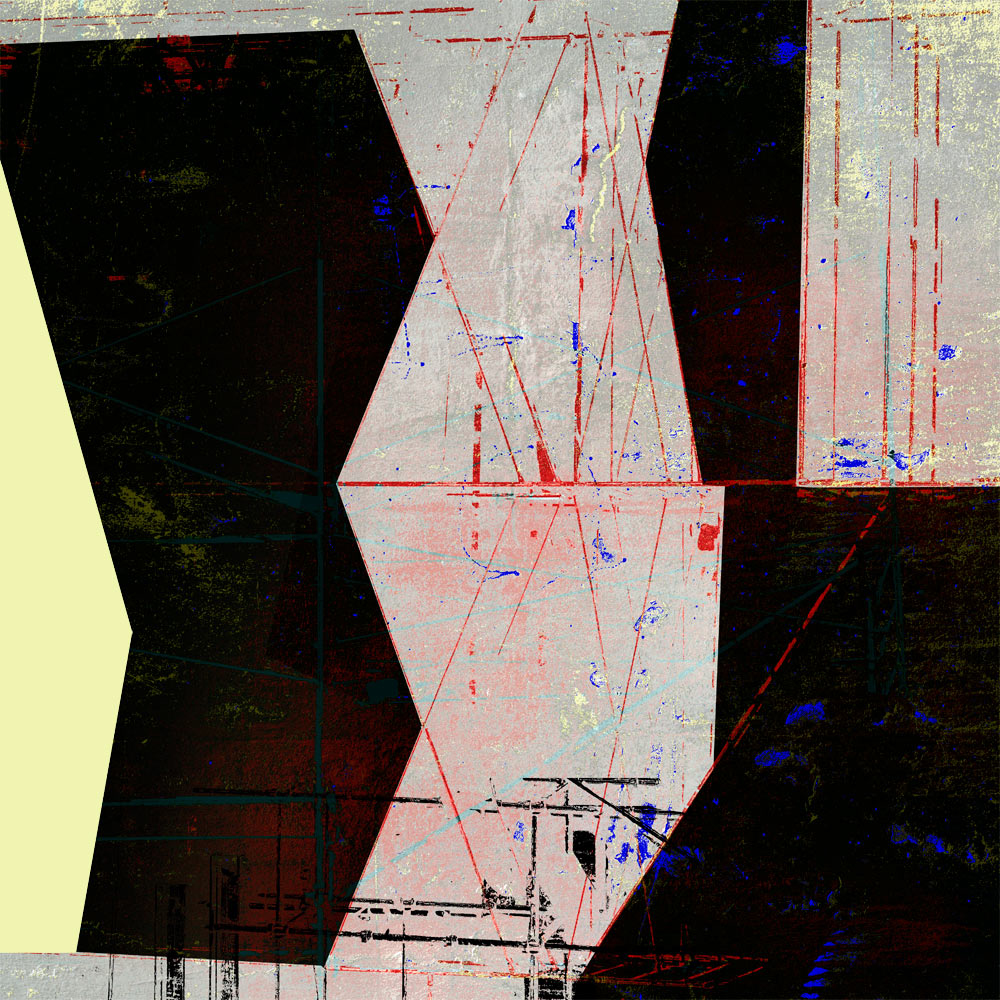
One of the interesting things about this is that metaphor sneaks in, just as it does in poetry (on little cat feet. . .). I have been brooding about scaffolds for about ten years. In a show called “Bleak Beauty” at Prographica several years ago I showed a print called “The Elegant Scaffold.” Now it has resurfaced, ready to be explored in a new way. Here are a few of the new pieces, some of which will be at SAM Gallery this fall in Industrial Strength.

These will be available in a collection called The Scaffold in my shop as a series very soon. The scaffold prints come in two sizes: 16 x 16″ on a 17 x 22″ sheet, edition of 25, $600 each; 24 x 24″ on 29 x 29″ sheet, edition of 10, $1,200.

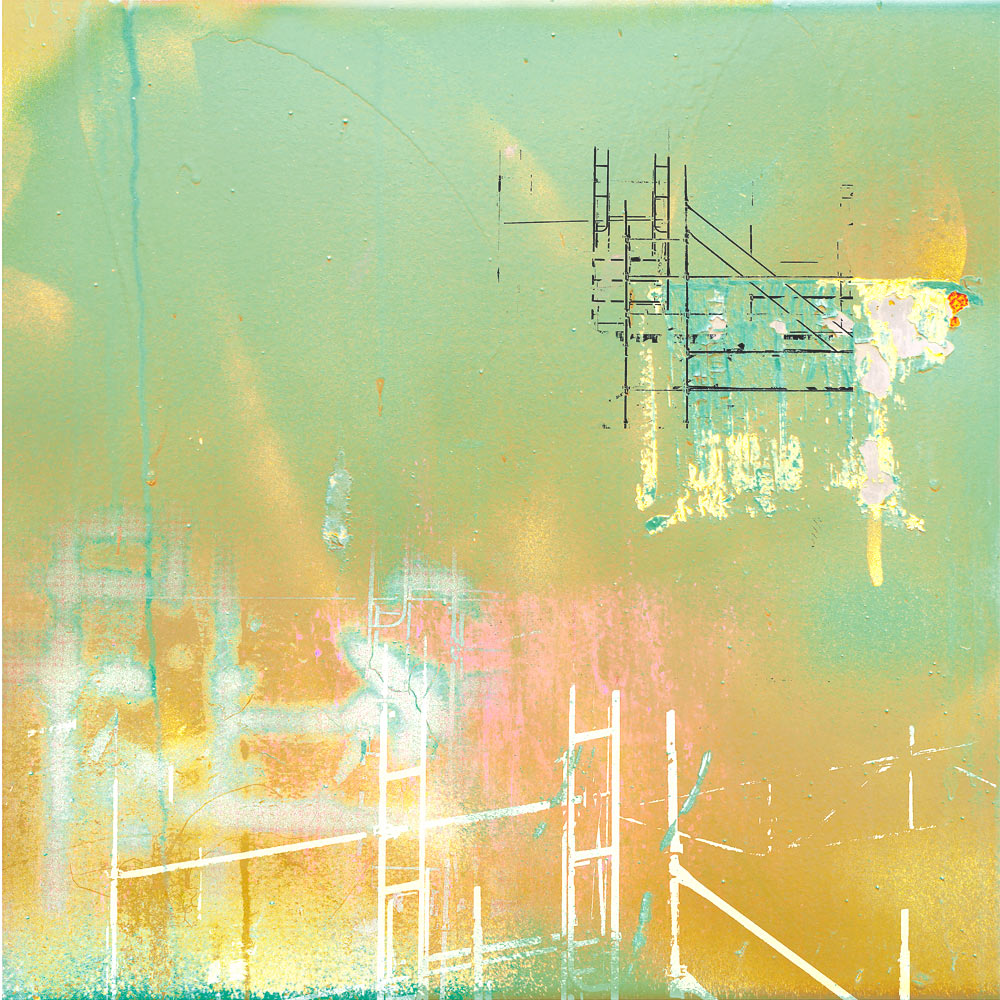
 

Scaffold Dream print by Iskra
Dream Scaffold, © Iskra Johnson


Near and Far Print by Iskra
“Near and Far,” © Iskra Johnnson

As with traditional printmaking using plates I approach each image as though I am mixing variations on color, rotating plates back and forth, making registration errors, wiping an image, overprinting, ghosting and etching.
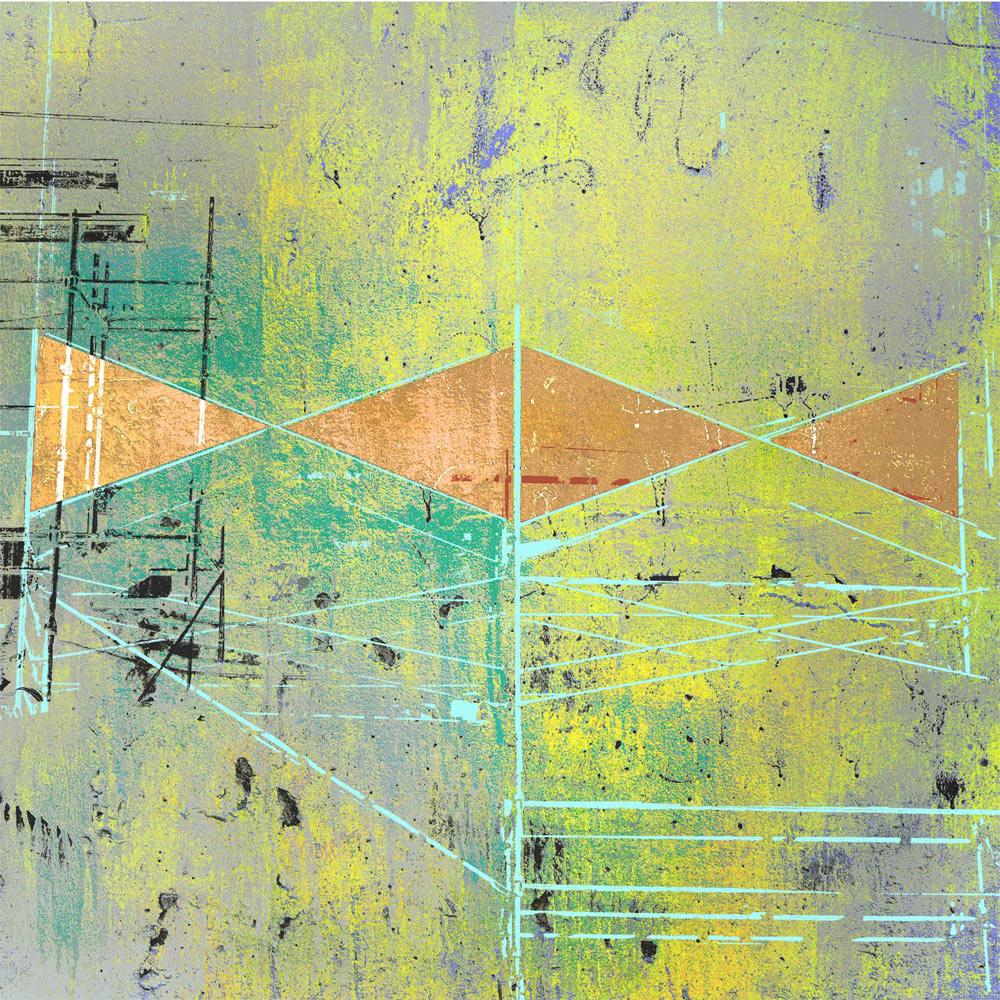
 

Cats Cradle Print by Iskra
Cat’s Cradle, © Iskra Johnson


In Between, industrial print by Iskra
In Between © Iskra Johnson


On the High Beam print by Iskra
On the High Beam, © Iskra Johnson (Available here. Two sizes, 17×22 or 29 x 29)

Upcoming: Save the date for a show this summer commemorating the Ballard Locks. I will have a print in this show curated by Lisa Lady, opening Thursday August 17, from 7-8pm at the beautiful Beaux Arts Ballard Locks Administration Building.

Additional Inspiration: Take a look at the wonderful blog and letter press art by Myrna Keliher at Expedition Press. I have been very inspired by the story behind her recent work and her dedicated use of writing in her work.

Filed Under: Prints Tagged With: digital intuition, digital printmaking, industrial art, modern printmaking, new work from Iskra, the creative process

Comments

  1. Leah says

    June 15, 2017 at 10:06 pm

    What a wonderful post…insightful and enlightening. Thank you for sharing your process.

    Reply

Leave a Reply Cancel reply

Your email address will not be published. Required fields are marked *

This site uses Akismet to reduce spam. Learn how your comment data is processed.

Join Iskra’s Mailing List

Don't miss a thing! Subscribe to receive show announcements, first peek at new work and my semi-monthly blog by email. I primarily use the blog for news and updates but by signing up you will also receive the occasional newsletter and special offers for items in my shop.

Iskra Fine Art Blog

the creative process | conversations with artists | the contemplative impulse in art

Instagram

At 18, in my first year in class at Cornish, Charl At 18, in my first year in class at Cornish, Charles Stokes said: “To be an artist, first you must learn to visualize. Your assignment is to go home, close your eyes, and visualize an apple. Rotate it and observe how it looks from every direction, as though you were God and you had just designed this fruit. Then imagine cutting it into pieces and turn each piece in your mind’s eye. If you need to get in the bathtub, do.” A year later, my skin had turned permanently pink from baths, but I was beginning to be able to See. That moment when I really could imagine the apple from above, below, the side, and visualize the slices falling away was a revelation. The cherubim cheered. Today I can shut my eyes in any moment of boredom and see the apple rotate like a muffin on a dim sum tray, round and round, the highlights glinting.

Apples also nearly killed me. When I was 19, I worked for a month in the orchards of Orondo, and slept under the trees in a sleeping bag and little else. Each morning I woke to the drone of crop dusters and the pale white incandescence of pesticides sifting through the leaves. My water came from a galvanized pipe fed directly by the irrigation ditch. Me and Caesar Chavez? Solidaridad. I came back from the orchard with a stomach malady that defeated every doctor I saw. Over the ten years following I lost 32 pounds, and I had been slender to start. At 27 I came within three weeks of death. Over that decade I was tested for everything, and my body claimed an allergy to every food except the pinto bean. No amount of antibiotics or enzymes or the primitive curatives of those days worked. After this inexplicable and punishing siege on my health it took years to get back to food as a good idea. I lived on boiled carrots and rice. The one possible argument to inexplicable: every alternative medicine healer found indications of arsenic, a prime ingredient of pesticides and known disruptor of the digestive tract. (Continued in next comment, complete essay at link in bio.)
Exquisite work by @christinegedye @fountainheadgal Exquisite work by @christinegedye @fountainheadgallery.
Experiments in juxtaposition. Yesterday I worked Experiments in juxtaposition. 

Yesterday I worked in the studio to some kind of divine mix of Raga and drone and hand pan drum and returned to the state of mind I’m here for. 

This study of an eggshell is only incidentally an eggshell; it is any fragile thing regarded with love. I think of the days when there was an antique shop on every block and I would haunt them and find among the watering cans and spoons and rusted winches a lace handkerchief starched and embroidered with imagined daisies by some woman crossing the country in a covered wagon with a packet of seeds. I held the cloth up and watched clerestory light fall from the rafters and transform its quiet folds into something burning, heard the sounding bells of ships in the harbor, the train rumbling in the tunnel, people stumbling and laughing on the boardwalk. 

Light is the keeper of history. As we walked out of the steel plant last week, steam mingled with clouds and enveloped the massive structures around us in softness. Just before my camera died, I took this picture of a steel door. On its face, the flag of an imagined country, stripped of warp and weft and left with only traces. As the world hangs on the edge, held by the flimsiest of props, each day aims another missile at certainty. We still have memory, and that may save us.

#TheFragilityProject
Slow Art. The beat helps tune out the Everything E Slow Art. The beat helps tune out the Everything Else Going On. . .#graphitepencil
I am excited to be part of the annual open studio I am excited to be part of the annual open studio tour for 
Spotlight North 2026, Noon to 5 May 16+17! 
Meet the artists of Shoreline, North Seattle, 
and Lake Forest Park in their native habitat: 

Robin Arnitz, Anna Wetzel Artz, Laura Brodax, Shruti Ghatak, Eva Isaksen, Amanda Knowles, Sarah Norsworthy, Paul Leavitt, Paul Lewing, Iskra Johnson, Dale Lindman, and Shoko Zama.

I will be showing new drawings and paintings influenced by nature and place, as well as ongoing print work, and several new card series. Many people have told me they would love to collect more but their walls are full, or they are moving into smaller spaces. In response, I have created new tiny works you can set on your desk or slip into the spice rack between the oregano and the thyme. I have always loved the intimacy of small work: It is the quietest most personal of conversations. These three pieces are from the hundreds of media studies I do to see “what happens if,” in an experimental state of mind. They are made with a combination of liquid graphite, pencil and paint, and presented like tiny one-of-a kind etchings. Contact me if you are interested in pre-purchase.
Link in bio to the Spotlight North Website. The map will be posted soon!
First glimpse of the Nucor Steel Plant. Probably t First glimpse of the Nucor Steel Plant. Probably the most amazing photo shoot I have ever been on. It will take me months to know what to do with the hundreds of images from this amazing day. Thank you Seattle plein air painters for this rare opportunity. Thank God we had dedicated minders to keep us from falling off the stairs and to help us adjust to the three layers of gear, hard hat, ear coverings, goggles, vest (hint: you need all of them!)

Featured Posts

  • Book Launch! The Water Tower Project from Iskra Fine Art
  • How to Purchase Artwork from Iskra Fine Art
  • About This Blog
  • New Directions in Contemplative Art: Conversations with Artists
  • What is a Transfer Print? (Artist Statement)

Categories

  • Abstract Calligraphy
  • Architecture & Sense of Place
    • Construction/Reconstruction
    • The Alaska Way Viaduct
    • The Water Tower Project
  • Art Reviews
  • Artist Studio Visits
    • The Mystic Muse: Artists Working in the Contemplative Traditions
  • Botanical Art
    • Botanical Art Cards
  • Collage
    • Digital Collage
  • Commissioned Art
  • Drawing
  • Essays
    • Object Lessons: Essays and images inspired by "A History of the World in 100 Objects."
  • Iskra Shows, Upcoming and Past
  • Iskra Sketchbooks & Journals
  • Living With Art
  • Meditation & Buddhism
  • Mixed Media
  • Painting
  • Photocollage
  • Photography
    • American West Landscape Photography
  • Print Sale
  • Prints
    • Transfer Prints
  • Seattle Iconic Landscape Prints
  • Social Media for Artists
    • The 100 Day Projects
  • The Garden
    • The Gardener's Almanac of Irreproducible Phenomena
  • The Spiritual in Art
  • Travel
    • Road Trips
  • Uncategorized

Archives

Search

Connect on Facebook

Iskra Fine Art Facebook Page

Creative Inspiration

  • Alternative Photography
  • An Artist's Retreat
  • Anonymous Chinese Textile Genius: Moo Won
  • Chocolate Is A Verb
  • Contemplative Art Process: Danila Rumold
  • Eva Isaksen
  • Old Industrial Japan
  • The Altered Page
  • The Heart Sutra Loop
  • The Patra Passage

Galleries for Contemplative Art

  • ArtXchange Gallery
  • Seattle Asian Art Museum

Links

  • CollageArt.org
  • Iskra at SAM Gallery
  • Iskra Fine Art on Houzz
  • Seattle Art Museum Blog
  • Seattle Artist League
  • Seattle Print Arts
  • Seeing Fresh: Contemplative Photography
  • The Painter's Keys

What I'm Reading: Online Magazines and Books I Love

  • 16 mi.
  • Essays by David Whyte
  • Evening Will Come: Poetry
  • Hyperallergic
  • Painter's Table
  • Shu: Reinventing Books in Contemporary Chinese Art
  • Streetsy
  • The Original Van Gogh's Ear Anthology
  • Tricycle Magazine
  • Unincorporated Persons in the Late Honda Dynasty
  • Vanguard

Let’s Connect

  • Contact Iskra
  • How to purchase artwork
  • Iskra Fine Art Blog : The creative process, conversations with artists, the contemplative impulse in art
  • Facebook
  • Instagram
  • Pinterest
  • Twitter

All Images Copyright © 2026  Iskra Johnson · Site by LND · WordPress