Studio Visit With Zen Teacher Anita Feng: Expanding Our Idea of What Equanimity Looks Like

I visited the raku studio of artist and zen teacher Anita Feng in late August at the height of Indian summer. The trees had not yet caught fire, but the air held an expectant shimmer. Within a few weeks the leaves would deepen and turn, and that abalone glaze particular to this latitude would paint the city in subtle iridescence. If there is a season for raku, it is Autumn. This ceramic art form relies upon the drastic extremes of water and fire. It epitomizes the dynamic of change and working skillfully with change, and in this way it is the perfect parable for Zen practice.
I had met Anita earlier in the year, after seeing her Buddha sculptures in various galleries and visiting the Blue Heron Zen Center, where I very much enjoyed her clear-eyed Dharma talks. I was intrigued by her complex background as a poet, a potter and a 30- year practitioner of Zen in the Korean tradition. As a poet she has won many prestigious awards, including an NEA grant and the Pablo Neruda Prize and published two books of poetry. Much of her pottery background has been devoted to the making of ocarinas, the diminutive bird-shaped flutes of ancient times. I was very curious to know how she wove the threads of these different paths into her current focus as “The Buddha Maker.” As well, how she reconciles the traditions of devotional practice with a modern audience. I caught up with Anita as she took a break from preparations for Art in the Garden, an annual art and sculpture event held at Bellevue Botanical Gardens. We talked for many hours, and this interview is a combination of notes, memory, and email.
IJ) The power of Buddha images traditionally lies in their impersonality. The faces are based on years and years of archetypes, repeated and refined over centuries. In devotional statues the emotional element of mirroring, of liking what looks like us, is complicated by the idea of holiness or aspiration. In fact, we don’t really want the Buddha to be just like us. In contrast to the requirements for presidential candidates, we don’t judge the Buddha’s success by whether he would be a great guy to have a beer with. That not-having-a-beer-with characteristic is part of the deal. The statue is clearly not us. It is an idealized extreme. If we are from Northern European stock or African or Hispanic the Asian/Indian character of the features is not ours. This can be alienating. Alternatively we can experience it as restful–the burden of being personal is lifted, and we can surrender to something outside of ourselves.
One of the most difficult things to do in sculpture is to create a face that is universal, that does not create a subjective reactive “I don’t/do like you” response in the viewer. When a human being sees a face, whether on a real person or in a work of art, an immediate relationship arises. What guides you as you create the faces of your sculptures, and does your process or state of mind change as you work on the body?
AF) There is a way in which iconography, indeed in which history, prettifies or re-invents the past to teach and/or inspire (or divert!) the following generations. As Zen students, as students of our own particular moment world, we have the responsibility to sort out inventions and embellishments from the root teacher/teaching.
For me, in sculpting a face, I am looking for a meeting place of the particular with the universal. There is, in all iconography, an ideal that is presented. (ie.- calm, equanimity, peace, centeredness). But from the teachings and enlightened experiential wisdom that has been passed down over the generations, the only way these qualities can arise and be authentic is in the present world/moment experience. So I create faces that reflect our/my world, but it should be said, this is a world that contains all the references of the past as well. We are, as creative creatures, a composite of past, present and future, all together.
In the physical act of working the clay I reflect these two essential components (moment world, infinite time and space) in this way: the fleeting, sometimes ragged and torn movement suggested in the body/robes…. paired with the enduring, infinite stillness within the calm face. These faces may be sad, happy, or in between — but all mean to suggest a still equanimity. There is something wonderful and necessary about having an idealized image that inspires us to think that equanimity is possible. What is dangerous is when we start to believe “equanimity looks like this.”

IJ) Where and how do you draw your line between tradition and innovation? I have noticed that you have discarded many of the familiar aspects such as the stylized hair and dome-like stupa on the top. The robes can be completely wild.
AF) I don’t know if I draw any real lines between tradition and innovation. I do feel it’s important to reach back and honor aspects of the tradition where it seems to fit and serve. If the figure becomes too abstracted from the archetype people don’t have an anchor. I have chosen to keep the stylized ears, because it is an easily recognizable feature of a Buddha, but also because it points to a very real person, a privileged wealthy youth who became Buddha –with his ears elongated from the weight of heavy earrings.

The Ears [Read more…]
New Directions in Contemplative Art: Conversations with Artists

This week I am launching a new series of occasional interviews with artists working in the contemplative/devotional traditions. Many of these artists work within the rich iconography of Buddhism, and specifically with the image of the Buddha. Historically the Buddha is represented as a figure of serene composure, elegance and grace. The eyes look inward, closed or downward cast, the shoulders curve gently into hands held in perfect mudra. A careful ritualized mathematics guides the distance between folds in the Buddha’s robes and the size and placement of snails on his head. The surface is stone-hard or wood, impenetrable.
This is a statue, not a man–and certainly not a woman, although Greek influence gives his robes a lyrical sweep and his body is not the emaciated one of early more ascetic representations. Not just the province of practicing “Buddhists,” the Buddha image lives ubiquitously in the contemporary marketplace of imagery and ideas. The popular shorthand for “Buddhism” is the relinquishment of desire and a state of serene acceptance, exemplified by the immobile statue. The statue is an ideal. What happens when society fills its spiritual landscape with an image of an ideal rather than a real?
It sets up a struggle, a dichotomy, hazardous and blessed in equal measure. The essence of devotional art is an image and an ideal larger than the human capacity to realize. It is aspirational. And in aspiration is a keen and particular form of suffering: you never get there, you are always leaning towards, but never reaching. Modern life, at least as practiced in America, is about getting there: and it is about getting. There is grasping and a kind of avarice in that. As well, a valuable practical truth and wisdom. The democratic revolutions tumbled the monarchies: we can all consider ourselves kings, queens, or at least the head of our local precinct caucus. Darwin, driving a nail into holy hierarchies, established that we might be on a less than mystical trajectory from birth to death and nowhere does he tell us if the soul is an acquired or inherited trait. Given the melting ice caps we don’t know if we or the sutras will be here in 2020. It is only logical to say: why not now? Why not me? Why can’t I understand in my own terms, and right now, — quickly?
The membrane between the modern urgency to leap efficiently from aspiration to getting and a deeper, timeless and more thoughtful understanding is being explored by the artists, writers and other creators reinventing religious iconography on their own terms. Some of them continue in the lineage of traditional forms, repositioning them in modern environments. Others take the sly point of view, working in illustration and advertising, and others work from the ground up re-inventing the very iconographic forms, with their own personal and aesthetic mathematics. Irony is rare, and to me this is a welcome blessing. These artists are not afraid to wear their aspiration on their sleeve. They may risk condescension and accusations of blasphemy from the spiritual establishments, and incomprehension from the secular consumer, and yet they continue on.
As someone who has followed the Buddhist path– with some detours– for most of my adult life, I want to talk to these people. The Buddha image in particular has huge resonance for me. I have done and continue to do visual art, or what I think of more properly as contemplative practice, that incorporates the image of the Buddha. This practice has led me towards viewing my own art making, regardless of the subject, as an extension of contemplation, primarily motivated by a desire for insight, beauty and emotional ballast, and secondarily as an object in the marketplace. I look forward to visiting the studios and work of artists with a similar perspective, and to seeing the varieties of ways in which their practice takes form.
Please check back from time to see the latest artists interviewed in the category of “The Mystic Muse“, or subscribe to receive this blog in your mailbox.
My companion in travels, the plug-in-‘88 Toyota-cigarette-lighter-laughing-while-driving-Buddha. Factory made in a high-stress environment by card-carrying atheists, no doubt.
Viktoria Viktoria Site Study: Future Residential on Second Avenue
It is exhilarating beyond measure to be alive in Seattle during this endless Indian Summer. (By the way, before using this phrase, this being the city of all things politically correct, I spent an hour researching whether in fact it is politically okay to use this phrase. I am going to go with this: As the American Indians were reportedly the first to notice the loveliness of this time and to celebrate the harvest by looking at the light and perhaps smoking a pipe rather than engaging in more frantic scurrying, worrying and stacking of crops in the barn (as the pale settlers were wont), when the phrase is invoked by a non-Indian person caught up in the intoxicating Autumnal rhapsodies it is in fact an homage to the wisdom of the First Nations, and understood as such.) Whew.
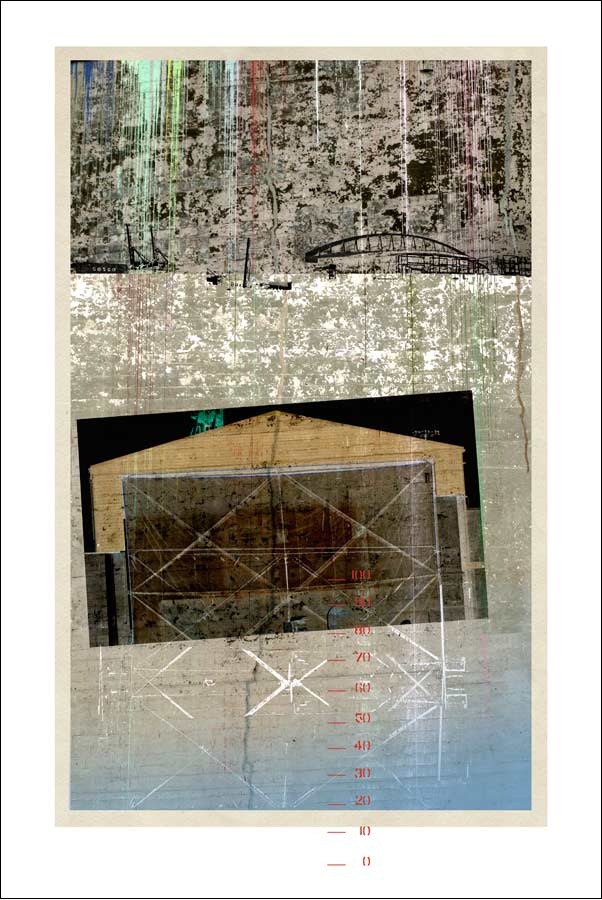
So I walk around, temporarily off the hook, and I can’t help but notice but the city is damn fine beautiful. I am sure nature is also doing something, but the construction sites are in their prime, as in primary colors, none of this faded pink of cosmos and hydrangeas and plum feather grass. Give me the street, the baylight glinting on scaffolds and glass, the scattered jump rope song of grafitti and the fifteen people gathered to watch the man in the Mercedes try to park his car in the the lot on Second Avenue with one-sixteenth inch margin of error and a flawless polish on that fender. Pretty much anytime of day is good light, because we actually have light which makes, yes, shadow. If you live here, you know.
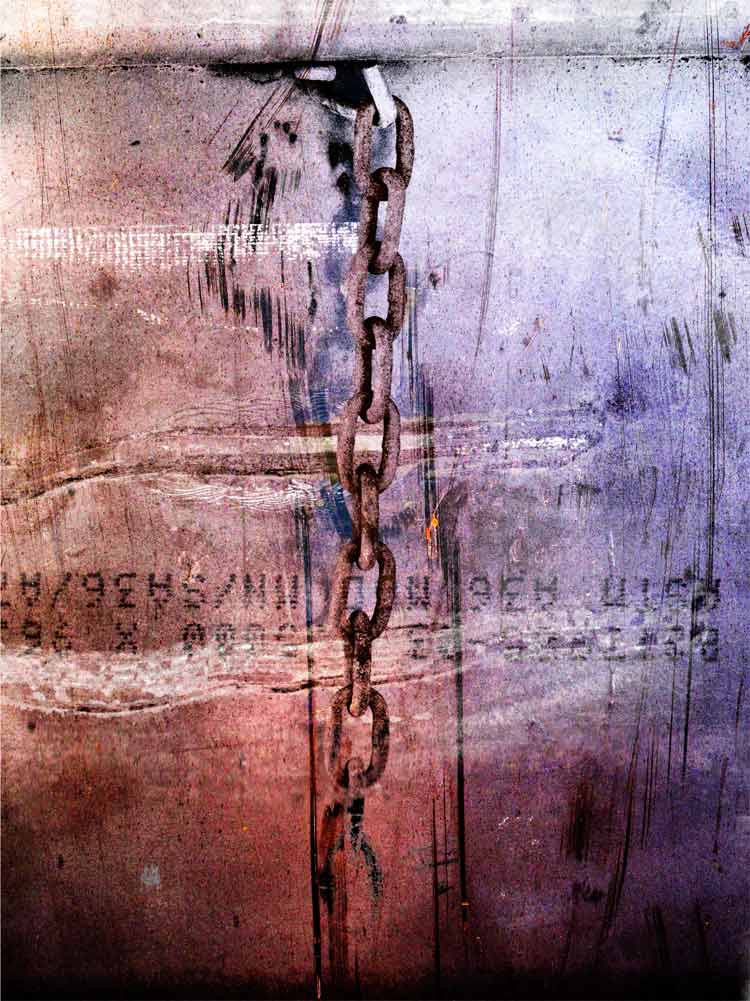
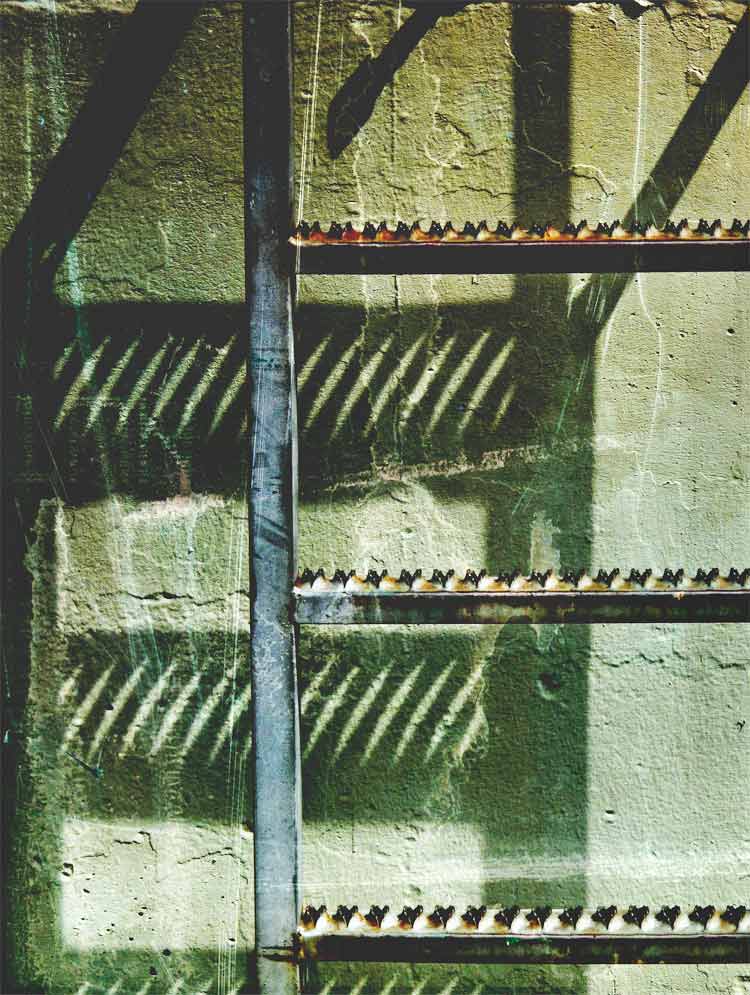
Here is a piece that will probably go through another fifty iterations, but which has landed here, comfortably, for the moment. The rule for this series, (thank you John Cage for pointing out how necessary rules are in your fine book Silence) are simple. All elements of photographic evidence must come from an actual construction site. Paint and other elements layered into the work may come from my drawing table.

Stadium Site Study 1: Photo Collage

This week’s architectural subject is the University of Washington stadium project. From a distance I saw three men on huge elevated platforms taking pictures, and I was very envious. I wondered if they were surveying, or if they were part of a formal documentation project. But when I got closer to the shrouded fence surrounding them I discovered, oddly enough, that they were photographing young men in gold helmets and purple jerseys running frenzied relays in the grass.
- « Previous Page
- 1
- …
- 36
- 37
- 38
- 39
- 40
- …
- 58
- Next Page »