Iskra Fine Art

  • Prints
    • The Tarmac Residency: Airport Landscapes
    • Immersions | At The Shore
    • ColorBath: Images of the Harbor
    • The Floating World
    • Industrial Strength | Urban Industrial Landscape
    • The Scaffold
    • Industrial Pastorale: The Rural/Urban Landscape
    • Botanical Prints | The Natural World
    • Construction | Reconstruction : Urban Landscape
    • Infrastructure
  • Drawings
    • Pencil Drawings: Pandemic Pause
    • Drawings in Dust 1
    • Signs & Symbols (Archive)
    • Botanical Drawings (Archive)
  • Photography
    • New Work Inspired by England
    • Seattle Waterfront Park Photography
    • Architectural Photography | Construction Sites
    • American West Landscape Photography
  • Mixed Media
    • Modern Botanical | Mixed Media on Plaster
    • From the Sea | Water Paintings
    • Sleep Studies
  • Wabi Sabi Abstract
    • Minimalist Modern
    • Ink Painting Abstractions
  • Shop
    • The Water Tower Project
  • About
    • Contact
  • Blog
You are here: Home / Archives for The Garden

The Parrot Tulip, a Drawing for Easter

March 31, 2013 by Iskra 1 Comment

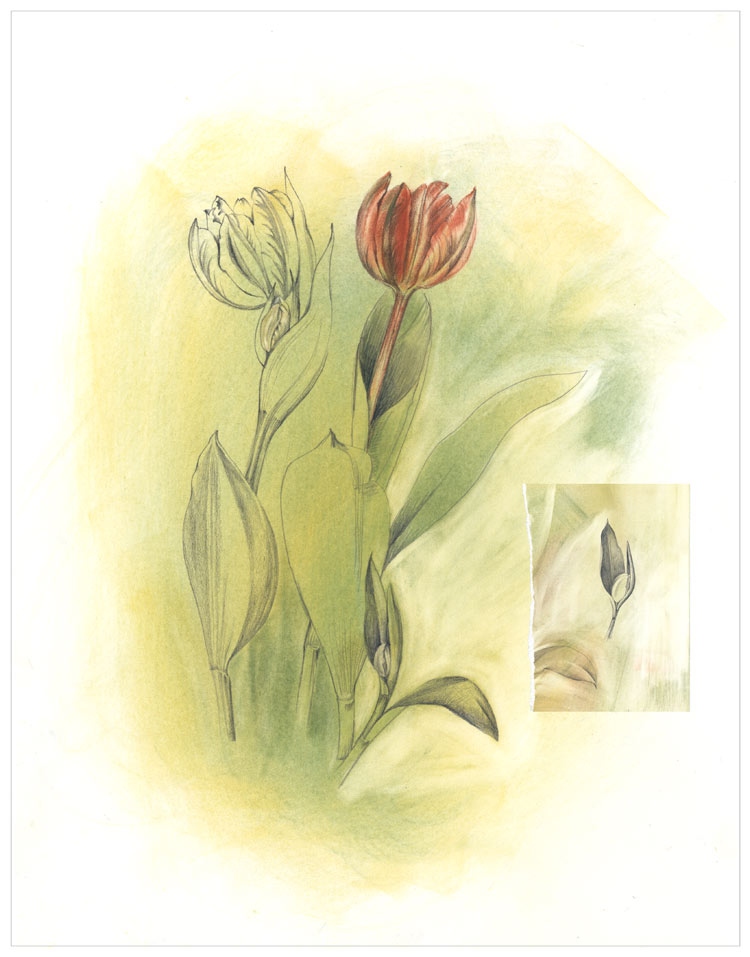
Tulips For Easter Mixed Media Drawing
“Parrot Tulips, Easter,” pencil and powdered pigment © Iskra Johnson

Last night I went for a long walk on Easter Eve. I came home at dusk and sat by the pond in the near dark to watch the dogwood tree. It has just this year fulfilled its promise. Every branch but one holds the shape of embrace so characteristic of cornus, and at the end of each twig is the spring-shaped tear which doubles as a single hand, reaching towards the sky. If I were more Japanese I might fret over the wrong branch that sprouts with no awareness of proper social skills or courtesy or the long tradition of arboreal beauty straight up in the midst of graceful arcs. I might know what to do with it and stand for an hour with my honed shears and change this tree’s life.

But the beauty of sitting in the dark is that there is no work to do. At dusk I have no pruning shears, no hoe and no spade. All I can do is sit helpless surrounded by a garden being its untamed self. In one ear the gargoyle spouts a water melody and in the other traffic starts and stops and purrs the comfort and annoyance of civilization. Between the two a flock of some kind of bird drifts overhead with the sounds of ripples beseeching. I cannot locate these birds by continent or season; their mysterious v-shaped song makes a wake between pond and highway and leaves me in a place of perfect peace.

This morning light dazzles every wall. I will set the table with ceremonial bowls and offer bright colors to the day.

Easter Bowl

Filed Under: Drawing, The Garden Tagged With: easter drawing, easter invocation, parrot tulip, Tulips drawing

Blue Poppies for Redon

March 10, 2013 by Iskra 1 Comment

This morning when I opened the front door I was startled by ducks flying off the roof where they had been sleeping. The day started in dense white fog and unfurled into gold. In the afternoon I sat at the pond for the first time in months, looking into the space where the poppies will come.

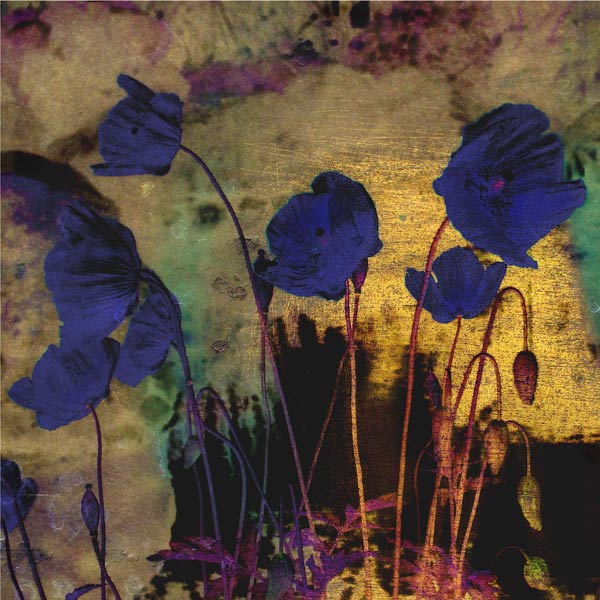
Blue Tulips For Redon, archival pigment print
Blue Poppies For Redon, archival pigment print, size variable © Iskra Johnson


Filed Under: Prints, The Garden

Object Lessons: The Television Buddha

August 15, 2012 by Iskra 1 Comment

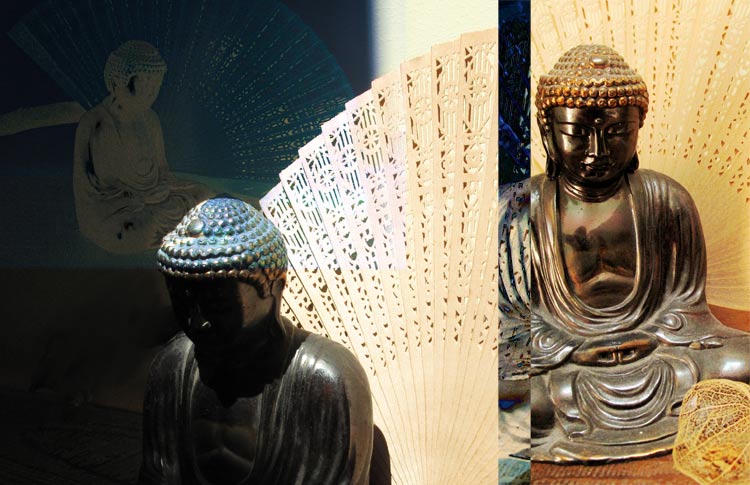
Television_Buddha_Digital_Collage
The Television Buddha © Iskra Johnson

The Black Buddha, otherwise known as the “television Buddha” sat for years on my step-grandmother’s TV, his head unironically posed between two silver antennae. Even as a child who had not yet been taught the niceties of good taste I could tell that this statue, although hollow like my milk chocolate Easter bunny, was a Prince among objects. Where the black paint had rubbed away copper glinted. His robes had the sharp cast and sheen only found in metal, and when I picked him up and set him down I could tell he belonged to a different family of dolls.

At some point in my late teens, after reading a book or two by Alan Watts and becoming instantly hip and knowing, which I eagerly confused with being enlightened, it occurred to me that this object belonged in my life. Did I steal it? Did I stand in front of the television as though mesmerized by the cheap print of VanGogh sunflowers and off-handedly tuck the Buddha into my coat? I have a vague memory of light on a dusty window, of the pine tree outside, of family noise and clatter and a moment of rationalization. I hope I asked.

This Buddha has gone with me to every room I have lived in, presided over my inkstone and rice paper and the copying of sutras and 4 AM yoga sessions and detours into Gurdjieff, Guru Mai, and Yogananda. He has never gained or lost weight, or criticized me for being delusional, or asked for water, or offered a word of advice. For years at a time I have not actually looked at him; I’ve even lost him on occasion– buried in a box under the bed. Then I will find him and the fact of him starts all over again. The Buddha is a resonant object, and my mind changes when I look at him.

I puzzle over this quite a bit. What is this alchemy of the object? The historical and real person of Siddhartha, who became the Buddha, never asked to be made into a figurine. In fact the Buddha himself discouraged this as dangerous close-cousin to the worship of idols. Only the image of his footsteps was allowed or perhaps the trace of a wave on the shore, or a hand.  Yet today I doubt that any Buddhist anywhere meditates without some image in their mind of –not the breathing, sweating actual human being — but the statue.  Leave it to the Greeks to ruin a good thing, the void and the imagination, and to supplant it with idealized form. And now you can buy a guy in a robe with snails on his head anywhere, online next to blinking ads for a flat belly, or in an import store or from a catalogue full of clocks that wake you up with the sound of the ocean.

Through hundreds of years and thousands of places of manufacture, the significant details of the sitting Buddha rarely change. The graceful sloping of the shoulders, the relaxed ease and the simultaneous sense of absolute focus, the circuit of small spheres along the head. And form is important. The shape of the saints is common, but it is not ordinary. The power of shape is a mystery, devotional practice equally so.

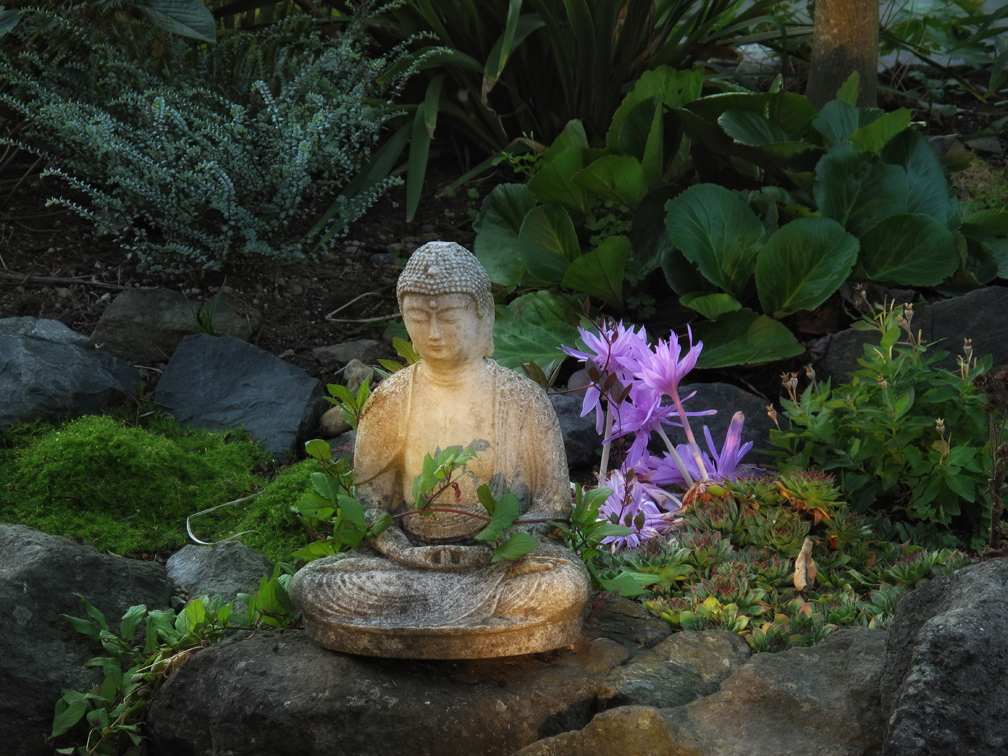
Buddha_Garden_Statue
The Standard Concrete Garden Buddha

I have a second Buddha, a pale gray version mass produced and bought at a nursery twenty years ago. He has sat long enough in my garden to acquire the iridescent sheen of actual snails across his knees. Together both statues, indoor and outdoor, do a fine job of gentle reproach as I plunder time and waste it in mindless daily orbit. You would think two would be enough. However, I was seized this spring with a sudden overwhelming desire for a new Buddha, something life-size. I became completely obsessed with the idea that a statue was waiting for me and I had to find it right now. So abandoning my other obligations for a day I scoured every Asian import store in the city. The closest I came to my imagined find was a graceful, stupefyingly beautiful Thai god (god of what, I’m not sure) made of fragile wood and $15,000.87 out of my price range. As I started to leave the shop, my obsession defeated, I noticed the chairs. Simple, magnetically so, projecting a deadpan stoic humor and covered with the patina of decades in an outdoor cinema. If one wanted a reminder to “sit” what could be more potent than a chair, after all? I sat. In spite of the barracks-style severity the chair was surprisingly comfortable. And you can bargain for chairs, although you would never bargain for a Buddha.

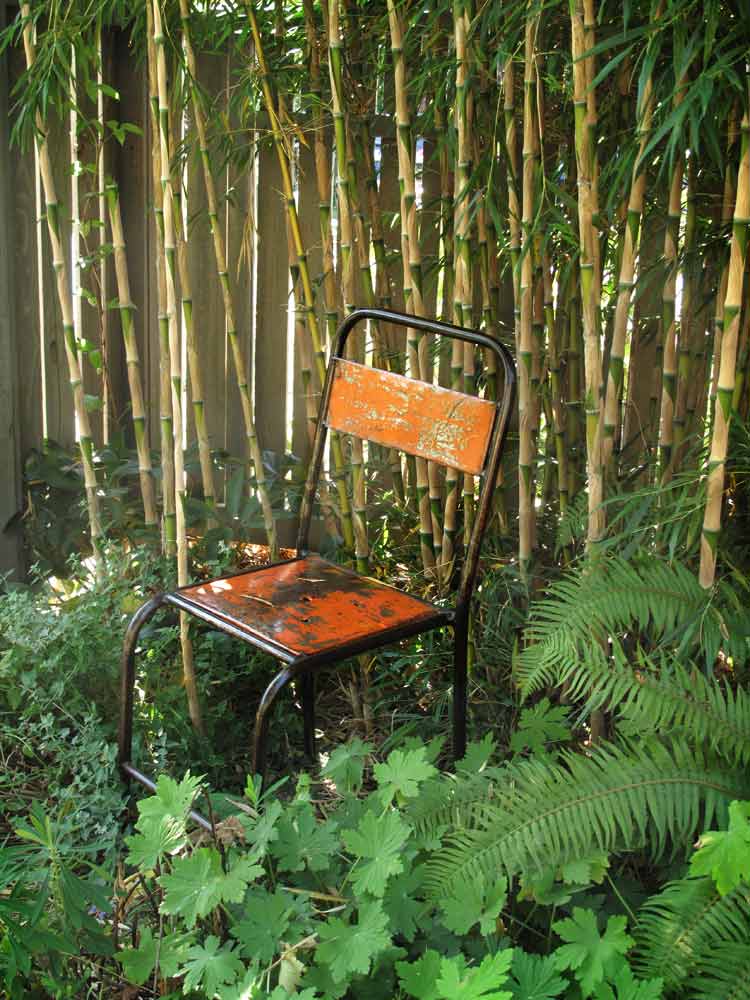
The-Sitting-Chair
The Sitting Chair © Iskra Johnson

This is my new garden statue, for now. It lives in the bamboo reminding me to be still, to just sit.

__________________________________________

This is the first in an upcoming series of essays on Buddhist iconography in art and daily life. I will be featuring interviews with artists who work in a variety of contemplative paths, ranging from traditional devotional art to contemporary improvisations, in media ranging from painting and drawing to sculpture, music and video. If you are interested in the subject of the object as a source of contemplation you may want to visit the section of my blog that focuses on response to the book “A History of the World in 100 Objects.”

Filed Under: Meditation & Buddhism, Object Lessons: Essays and images inspired by "A History of the World in 100 Objects.", The Garden, The Spiritual in Art Tagged With: Buddha statues, devotional practice, devotional statues, objects of meditation, the Black Buddha, The Television Buddha

Line Study with Captive Twig: An Ode to Botanical Tradition

February 28, 2012 by Iskra Leave a Comment

Spring is coming too early;  green shoots, unfurling leaves. I have been shouting at the clematis and honeysuckle and lillies to stop. We need more sleep, more dreaming time — and snow is on the way. I am in winter still, in love with architecture.

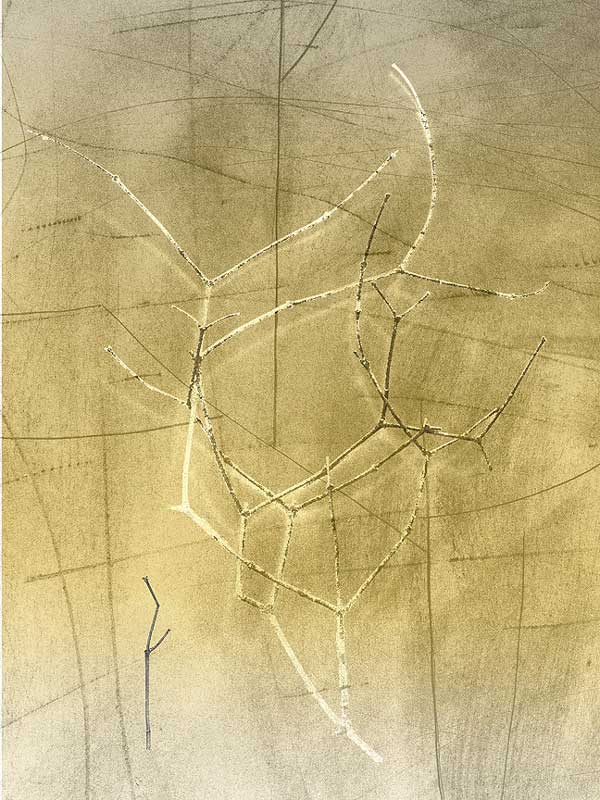
Line Study with Captive Twig
Twig in Space: Botanika, © Iskra Johnson


Filed Under: The Garden Tagged With: mixed media botanical art, new botanical art, twig drawing

“There is a Crack in Everything…That’s how the Light Gets in”

November 27, 2011 by Iskra Leave a Comment

I can’t shake the November state of mind today. The lowering skies, the gusting winds. The pond and the rake. The maple tree that has grown for 12 years along the south side of the water has that fatal illness of maples, with black rings inside its branches. This is the last year I will stare into its red lanterns in the summer afternoons, and sift its colors from tangled lillies and gravel in late Autumn.

On a recent aftrnoon the light fell in such a way that it looked like this, like a cliff, and an abyss, and a refuge, that crack in Leonard Cohen’s wonderful bell, the dark and somber and jubilant Anthem:

     Ring the bells that still can ring
     Forget your perfect offering
     There is a crack, a crack in everything
     That’s how the light gets in

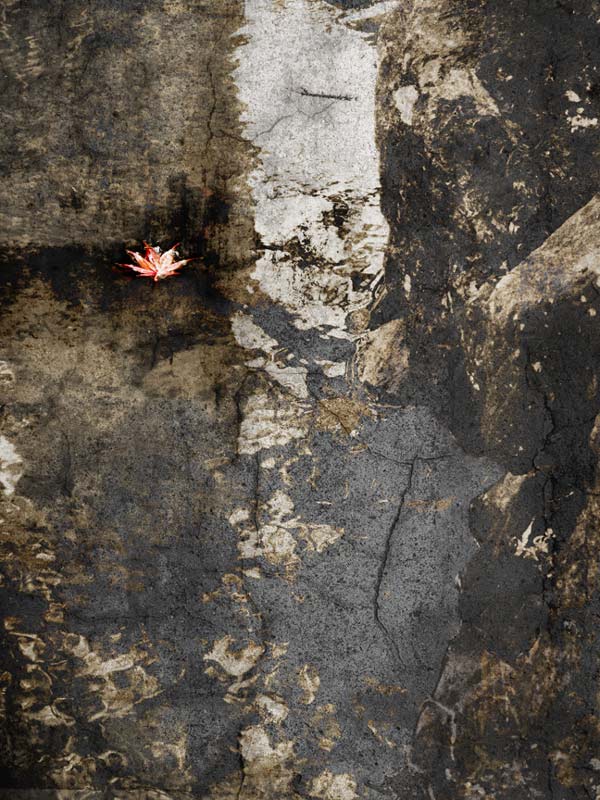
PondStudyAutumn
The Pond: Autumn, © Iskra Johnson


Filed Under: Photography, The Garden, Transfer Prints Tagged With: Anthem, art inspired by Leonard Cohen, leaves in art, Leonard Cohen's bell, photographic collage of water and leaves

  • « Previous Page
  • 1
  • 2
  • 3
  • 4
  • 5
  • 6
  • 7
  • Next Page »

Join Iskra’s Mailing List

Don't miss a thing! Subscribe to receive show announcements, first peek at new work and my semi-monthly blog by email. I primarily use the blog for news and updates but by signing up you will also receive the occasional newsletter and special offers for items in my shop.

Iskra Fine Art Blog

the creative process | conversations with artists | the contemplative impulse in art

Instagram

Media studies. Addition and subtraction. Media studies. Addition and subtraction.
Somehow, between checking the news and the usual d Somehow, between checking the news and the usual distractions I managed to complete a drawing. Going back to the beginning: drawings in dust. 9.5 x 12” Charcoal powder, compressed charcoal, charcoal pencil on Moleskine. I feel peaceful for the first time in weeks.
The train tracks that go along Golden Gardens and The train tracks that go along Golden Gardens and pause briefly at the locks create a rupture in the city landscape. When the trains go by, the roar and squeal is like a thousand wild animals let out of their cage, and the ducks in the pond at the edge of the park shudder and dive under the water. A little farther north at Carkeek there is someone every year who steps in front of the train and whoever witnesses that is never the same. 

Sometimes the cargo containers are filled with coal, uncovered, and I have been part of demonstrations, which included polar bears and Orcas, objecting to that. Now, as we are being asked to casually accept nuclear reactors on every block as the price of having artificial intelligence, coal and its simple visible dust might look a little more friendly. The train brings with it economics and politics and life and death and class and all the people on the beach are just trying to have a moment in the sun. And the boaters at the marina, if they have finished polishing and descaling and mending the sails are lying back with a guitar and getting lost in the mountains. If you are willing to live right next to the train tracks, you can pay a much lower price for your home, but your dreams will change. I have lived next to the train tracks when I was very, very small and every night I woke up screaming and ran across the floor in the beams of the streetlight looking for safety. I have woken up in a train yard on a bed of cardboard and gotten on the train in the dark. Only when you do that, do you know just how hard metal is.

I’ve been drawing recently from life and this study was done from a photograph. It drove me crazy trying to see details that I couldn’t really see and feel them with the pencil. I’ve abandoned the drawing for now, but I learned a great deal about perseverance and obliteration and re-perseverance. Also how machines pretend that they are perfectly symmetrical and are not. And when you don’t draw them with perfection, they look just plain wrong so you have to make them more perfect than they are, at least when they are in perspective.
Tonight’s abandoned bird. The next one will be bet Tonight’s abandoned bird. The next one will be better. I’ve never tried to draw a Robin before. I’ve been obsessed with them since David Lynch sent them over to my childhood house, where they spent day and night getting drunk on the holly berries outside the kitchen window. And if you don’t know what I’m talking about google Laura Dern, Blue Velvet. And the Robin. It’s a hymnal to the good and the normal, done absolutely abnormally. I am learning all kinds of amazing things about how Robins build their nests. They start with mud. I did not know this. And in a drought, they will drag straw into a birdbath to get it wet and then drag the straw over a wormhole. Robins build their nests in the most unlikely places: drain spouts, highway overpasses, really bad motel parking lots. It’s kind of like how people find third place in community, even in the bleakest places. A franchise McDonald’s where people become regulars and always get the fries and just the fries because that’s all they can afford is a similar statement of naive valor: people talking to strangers and becoming known and taking shelter where they can. And if they leave a shredded napkin out there by their car, it will end up woven in with the straw and the leaves and the cigarette butts perched up there in the nest on the backside of the billboard.
Waking up. Waking up.
What if there were no mistakes? What if there were What if there were no mistakes?
What if there were just infinite possibilities?. . .

Featured Posts

  • Book Launch! The Water Tower Project from Iskra Fine Art
  • How to Purchase Artwork from Iskra Fine Art
  • About This Blog
  • New Directions in Contemplative Art: Conversations with Artists
  • What is a Transfer Print? (Artist Statement)

Categories

  • Abstract Calligraphy
  • Architecture & Sense of Place
    • Construction/Reconstruction
    • The Alaska Way Viaduct
    • The Water Tower Project
  • Art Reviews
  • Artist Studio Visits
    • The Mystic Muse: Artists Working in the Contemplative Traditions
  • Botanical Art
    • Botanical Art Cards
  • Collage
    • Digital Collage
  • Commissioned Art
  • Drawing
  • Essays
    • Object Lessons: Essays and images inspired by "A History of the World in 100 Objects."
  • Iskra Shows, Upcoming and Past
  • Iskra Sketchbooks & Journals
  • Living With Art
  • Meditation & Buddhism
  • Mixed Media
  • Painting
  • Photocollage
  • Photography
    • American West Landscape Photography
  • Print Sale
  • Prints
    • Transfer Prints
  • Seattle Iconic Landscape Prints
  • Social Media for Artists
    • The 100 Day Projects
  • The Garden
    • The Gardener's Almanac of Irreproducible Phenomena
  • The Spiritual in Art
  • Travel
    • Road Trips
  • Uncategorized

Archives

Search

Connect on Facebook

Iskra Fine Art Facebook Page

Creative Inspiration

  • Alternative Photography
  • An Artist's Retreat
  • Anonymous Chinese Textile Genius: Moo Won
  • Chocolate Is A Verb
  • Contemplative Art Process: Danila Rumold
  • Eva Isaksen
  • Old Industrial Japan
  • The Altered Page
  • The Heart Sutra Loop
  • The Patra Passage

Galleries for Contemplative Art

  • ArtXchange Gallery
  • Seattle Asian Art Museum

Links

  • CollageArt.org
  • Iskra at SAM Gallery
  • Iskra Fine Art on Houzz
  • Seattle Art Museum Blog
  • Seattle Artist League
  • Seattle Print Arts
  • Seeing Fresh: Contemplative Photography
  • The Painter's Keys

What I'm Reading: Online Magazines and Books I Love

  • 16 mi.
  • Essays by David Whyte
  • Evening Will Come: Poetry
  • Hyperallergic
  • Painter's Table
  • Shu: Reinventing Books in Contemporary Chinese Art
  • Streetsy
  • The Original Van Gogh's Ear Anthology
  • Tricycle Magazine
  • Unincorporated Persons in the Late Honda Dynasty
  • Vanguard

Let’s Connect

  • Contact Iskra
  • How to purchase artwork
  • Iskra Fine Art Blog : The creative process, conversations with artists, the contemplative impulse in art
  • Facebook
  • Instagram
  • Pinterest
  • Twitter

All Images Copyright © 2026  Iskra Johnson · Site by LND · WordPress