Iskra Fine Art

  • Prints
    • The Tarmac Residency: Airport Landscapes
    • Immersions | At The Shore
    • ColorBath: Images of the Harbor
    • The Floating World
    • Industrial Strength | Urban Industrial Landscape
    • The Scaffold
    • Industrial Pastorale: The Rural/Urban Landscape
    • Botanical Prints | The Natural World
    • Construction | Reconstruction : Urban Landscape
    • Infrastructure
  • Drawings
    • Pencil Drawings: Pandemic Pause
    • Drawings in Dust 1
    • Signs & Symbols (Archive)
    • Botanical Drawings (Archive)
  • Photography
    • New Work Inspired by England
    • Seattle Waterfront Park Photography
    • Architectural Photography | Construction Sites
    • American West Landscape Photography
  • Mixed Media
    • Modern Botanical | Mixed Media on Plaster
    • From the Sea | Water Paintings
    • Sleep Studies
  • Wabi Sabi Abstract
    • Minimalist Modern
    • Ink Painting Abstractions
  • Shop
    • The Water Tower Project
  • About
    • Contact
  • Blog

My House Is Not A Tree: Art, Shamanism & The Demon Flicker

August 1, 2013 by Iskra 4 Comments

Awhile back I had a Flicker on the side of my house. By the wording of that sentence you may know that I mean attached as though with adhesive, firmly anchored, determined, and loud. A Flicker is a bird that thinks your house is either A) a piece of wood that he can bore into and coax ants into or B) a dead tree or soon to be dead tree that already has ants and other insects living in it rent free — insects which the Flicker plans to have for breakfast, between 4 and 5 AM.

On a fine spring morning you may find yourself barefoot in your bathrobe with a garden hose, screaming and spraying into the eaves as the protected and very handsome bird looks over his shoulder at you and says, “Huh.” If you are me, you start painting pictures to explain the situation — to the bird.
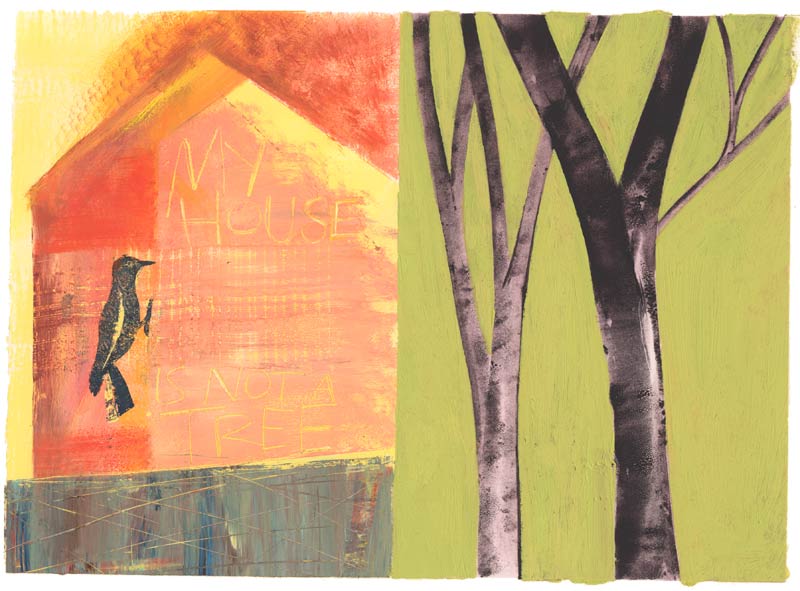
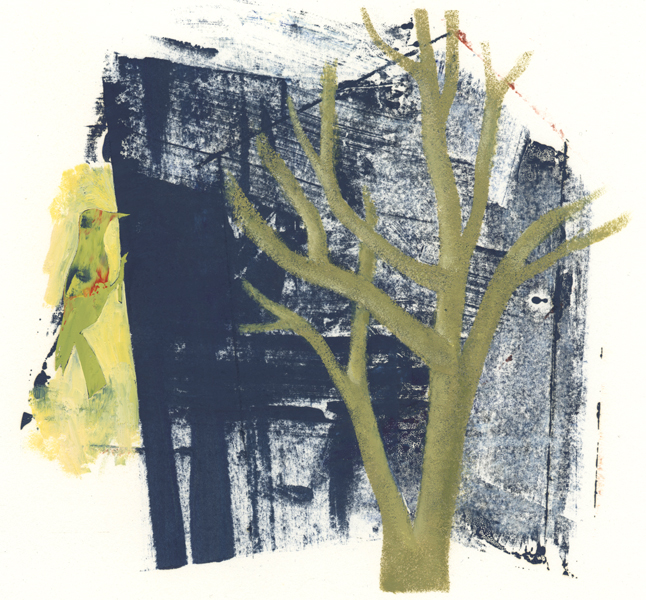
 House Is No A Tree
My House is Not A Tree  © Iskra Johnson

This went on for quite awhile. I tried a lot of different approaches to organizing the message. Some were direct, some were oblique.
Flicker 2
Flicker 2, © Iskra Johnson
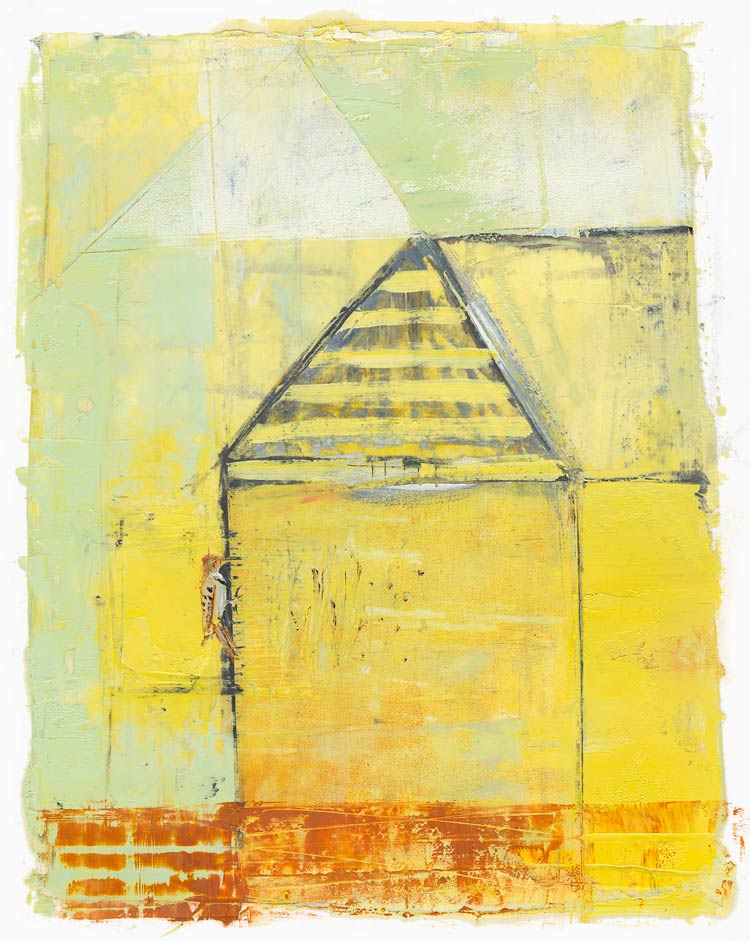
House Carpenter
House Carpenter © Iskra Johnson

I grew in a strange way quite fond of him. I assumed he was a him. When he attacked the gutters I nicknamed him Donald Rumsfeld, remember him?
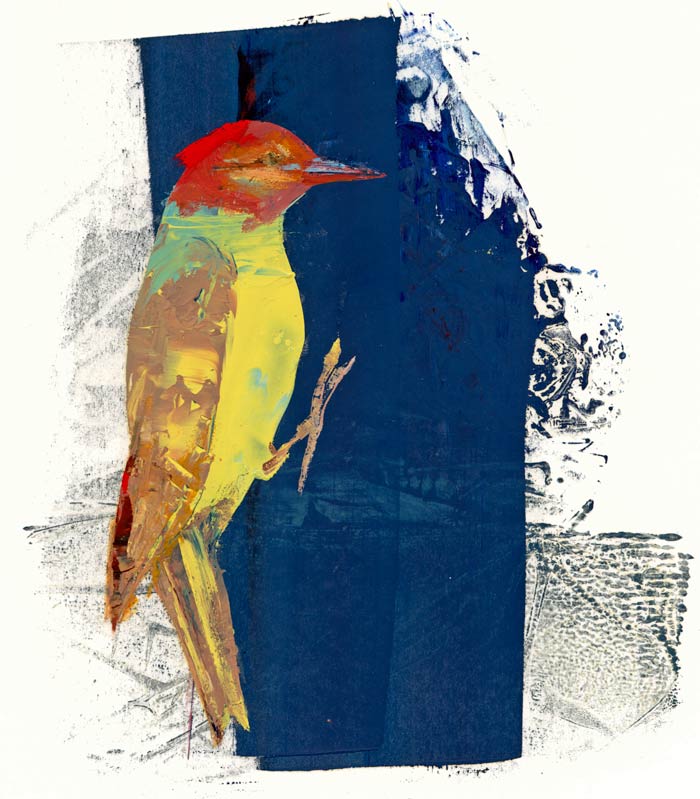
Flicker: Getting To Know You
Flicker: Getting To Know You, © Iskra Johnson

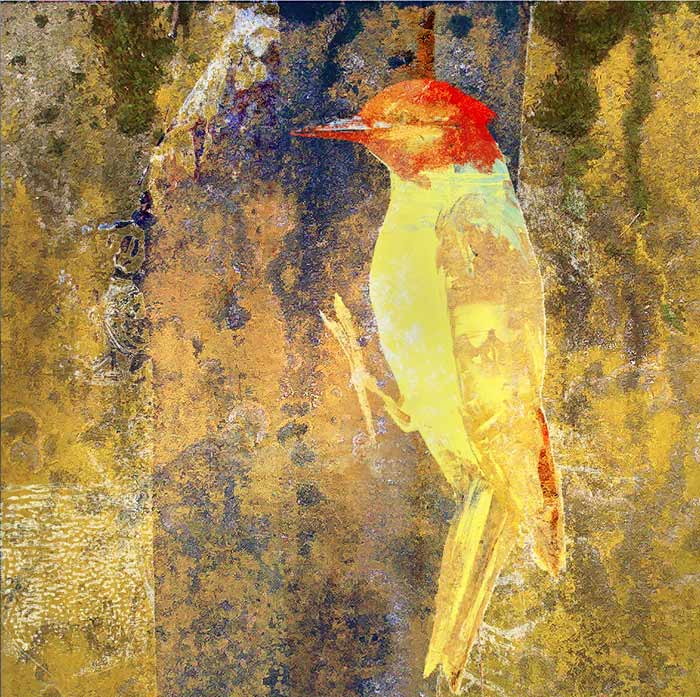
Flicker In Yellow Tree

I tried reversing him, and I gave him a very fine tree with lots of bark. And finally I did this painting, the last in the series, which may have been the one that finally got the message across, because he went away and I have never been bothered since:
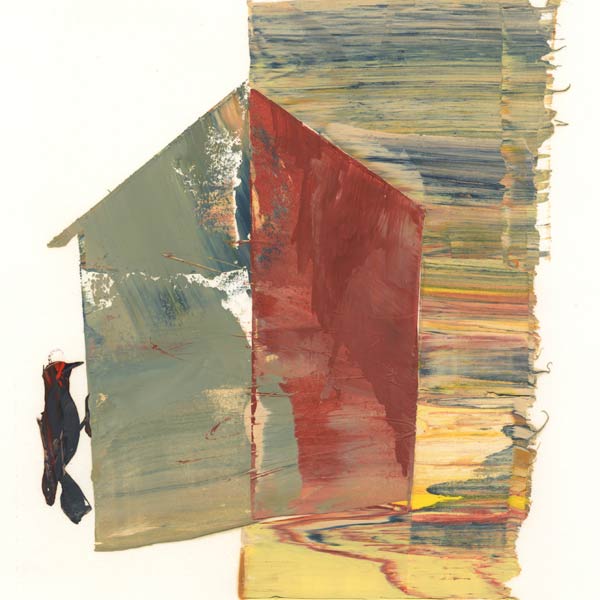
Flicker 3
Flicker 3 © Iskra Johnson

I recently was approached by someone who also had a bird attached to her house, and she took possession of this painting to see what powers it might have. I requested that my patron sign an indemnification agreement, as I cannot guarantee that this kind of magic will work twice. And it occurs to me tonight as I look around the studio and into the eaves that I may have broken a rule of art and magic, as now my bird is gone, and perhaps along with it the protective spell. Tomorrow morning, if you see a woman in her bathrobe spraying a garden hose into the sky and shouting in some strangled and incomprehensible language, that will be me.
 

Filed Under: Painting, Uncategorized Tagged With: art and shamanism, house and Bird Painting, house carpenter, Northern Flicker Painting

New Portfolio of Construction Site Photography

July 9, 2013 by Iskra Leave a Comment

Landscape With Concrete Forms
Landscape With Concrete Forms, © Iskra Johnson

I photographed my first construction site over 30 years ago. At least three men with bullhorns shouted at me as I walked a long gangplank into the center of an open pit the size of a city block. I could not resist the bright red ladders, the spiking rebar and randomly thrown coils of wire, the orange triangles and cones and wooden spools, the augurs and blades – all massed against a landscape of mud brown and gray. The scene spoke of the chaos phase of creativity, when shape and sense are only dimly glimpsed, and anything is possible. Not to mention that it was BIG. A few months later the newspaper carried a piece about a woman in an evening dress with a cast on her arm who was found, drunk and asleep on a beam in the unfinished 6th story. It occurred to me then that not for nothing do they measure skyscrapers in “stories.”

Barrier View 1

My fascination with monumental structure, excavation, history, surface and the ambiguous terrain between ruin and renewal has continued as our world has moved into a phase of urban development in hyperdrive. You can visit any city in the world and see the unmistakeable filigree of orange cranes rising above the skyline. The new landscape incorporates an ever-changing theater of half-walls, scaffolds, massive draperies and open pits girded by barriers as interesting as what is behind them.

The photographs here reflect the influence of the theory of wabi-sabi: nothing lasts, nothing is finished and nothing is perfect. And within this recognition lies a very particular kind of beauty. Purely documentary photographs form the basis for much of my work in the series Construction/Reconstruction although I often obscure or alter them beyond recognition in the process of collage. The images in this new portfolio stand alone as photographs, a record of a singular time and place. Archival pigment prints are available in a range of sizes.

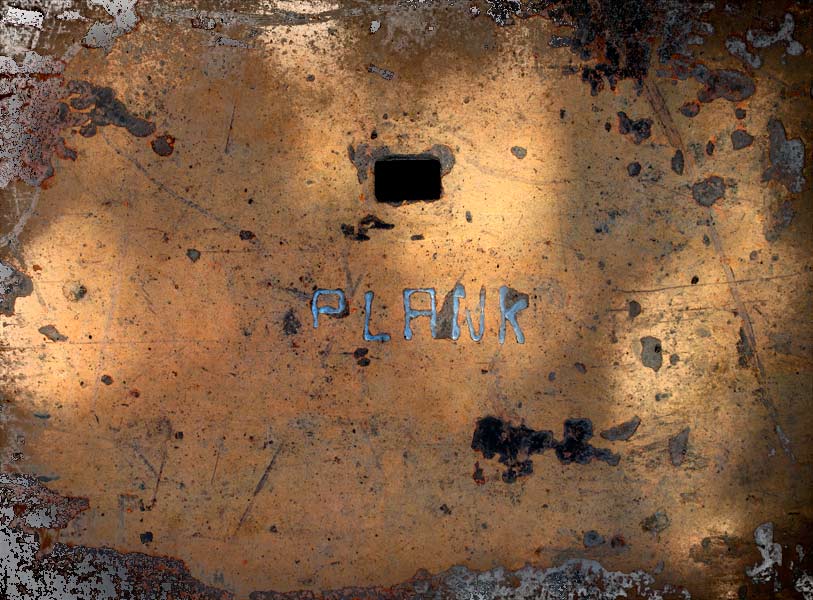
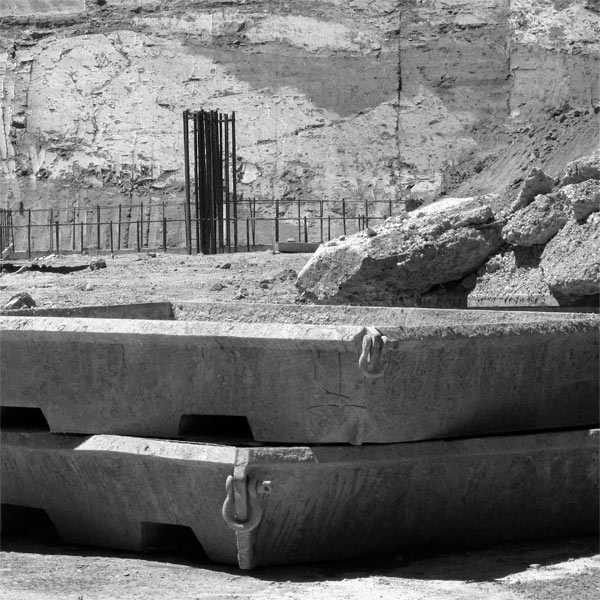
Plank
Plank, © Iskra Johnson

See more at: Construction Site Photography

Filed Under: Construction/Reconstruction, Photography Tagged With: architectural landscape, architectural photography, building photographs, construction site photography, construction sites, industrial photography, site documentation, wabi sabi in photography

“Drive-By”: The Alaska Way Viaduct at the Golden Hour

July 2, 2013 by Iskra 1 Comment

One of Seattle’s soon to be lost treasures is the Alaskan Way Viaduct. I had my office next door to it for eight years and learned to love and hate its noise and dirt and it’s hulking and fundamental “in-the-way-ness.” However, when one is not eye level from an office window cursing the dust and noise but rather on it or driving right next to it, perhaps at the golden hour, there are few more intoxicating sights than the Port and the great cranes and Elliott Bay glimpsed between its pillars.

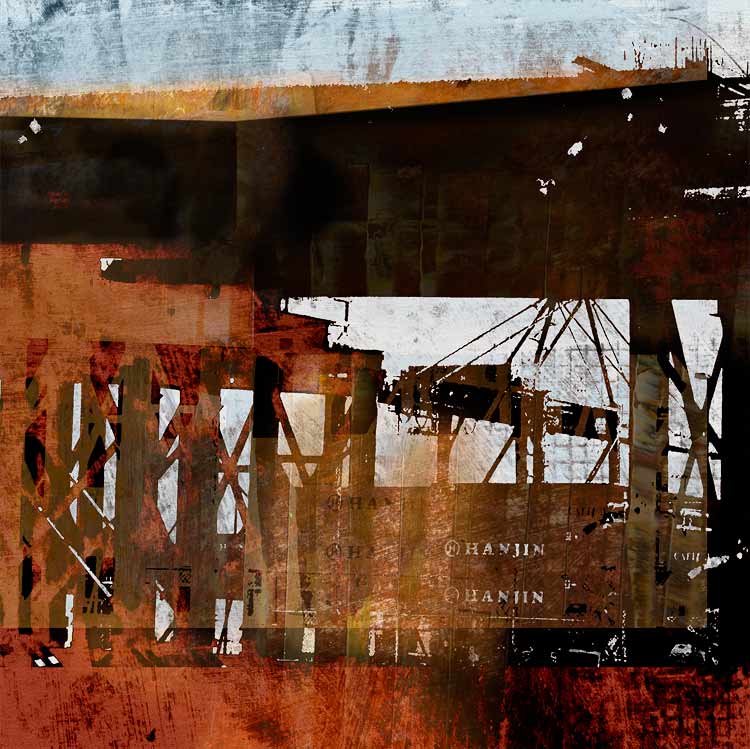
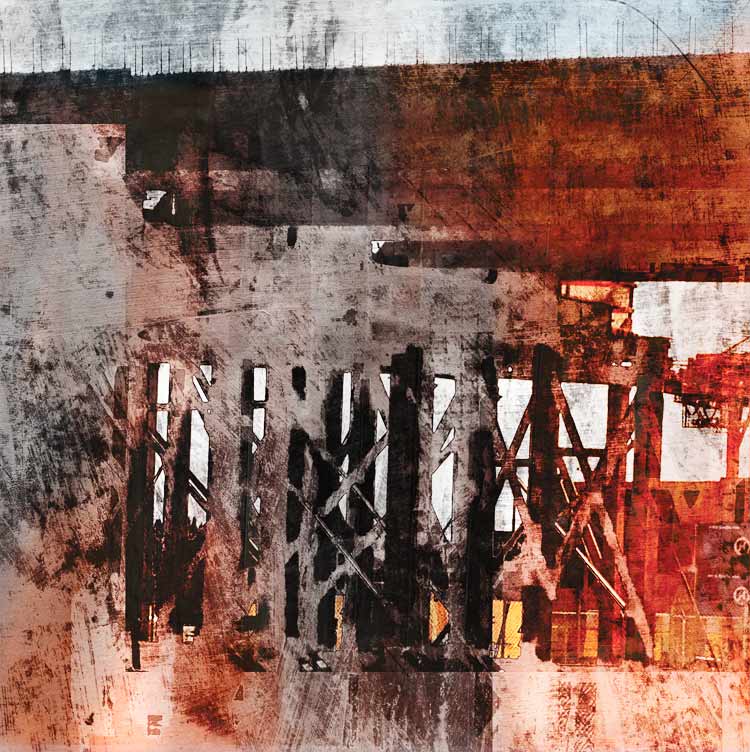
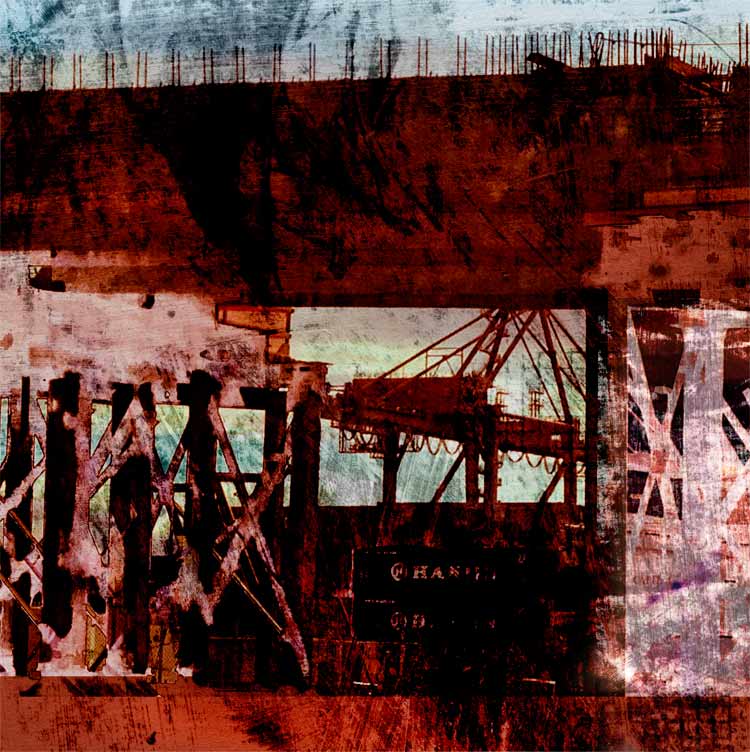
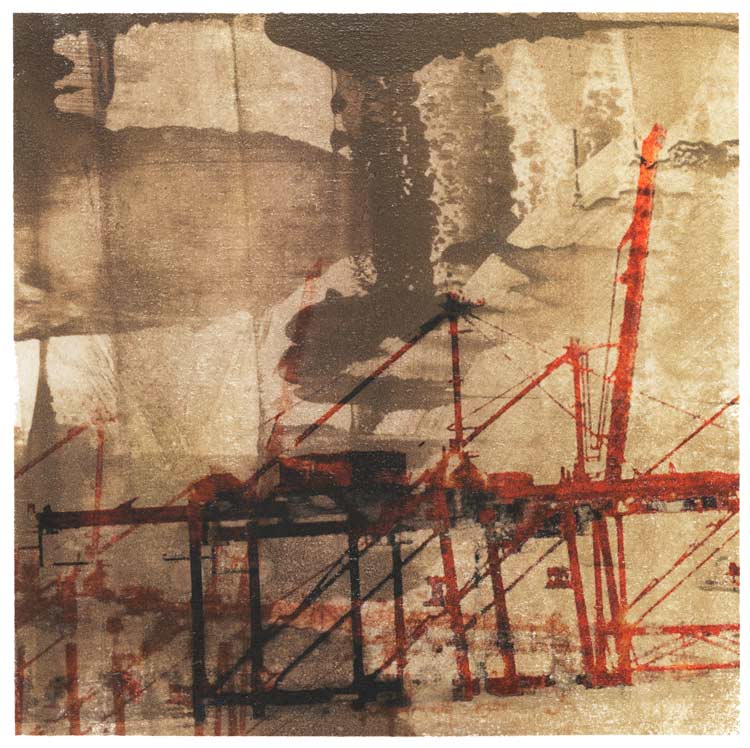
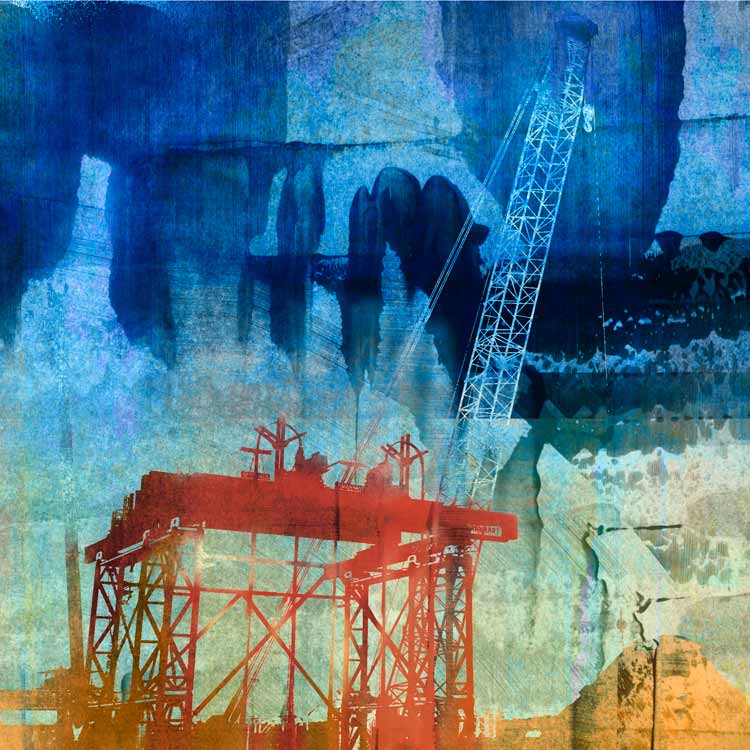
This view is now complicated with additional intrigue by the Big Dig. If you love structures and infrastructure and seeing the bones of things, this is the place to be. I have taken hundreds of cellphone pictures on the drives to West Seattle and back, and have begun a project using these images called, quite literally, “Drive-By.” I am using digital media combined with painting to create what feel to me very much like old fashioned monoprints. I made monoprints for years using oil based ink on zinc, and I love the technique. It is a wonderful challenge to use digital technology with the same sense of play and spontaneity, using masks and layer effects to “wipe” the plate, and to print plates (translated as Photoshop layers) over each other, with infinite ability to adjust density and color.

Photography and print making are ideal ways to capture the sense of time flashing, of the way reality exposes itself on the retina and how then memory overlays one image onto another, like tissue paper through which color and a sense of the sky bleed through. In this case of course it is not just memory but motion itself creating the layers.

Three glimpses:

Drive By At Dusk The Port arachival pigment print
“Drive-by at Dusk: Hanjin” archival pigment print © iskra Johnson
Drive By 2 The Port archival Print
“Drive-by 2,” archival pigment print, © Iskra Johnson
Drive-By-In-Pink:Hanjin
“Drive-by in Pink,” archival pigment print, © Iskra Johnson

Drive-By Day Two: Cellphone Transfer Prints

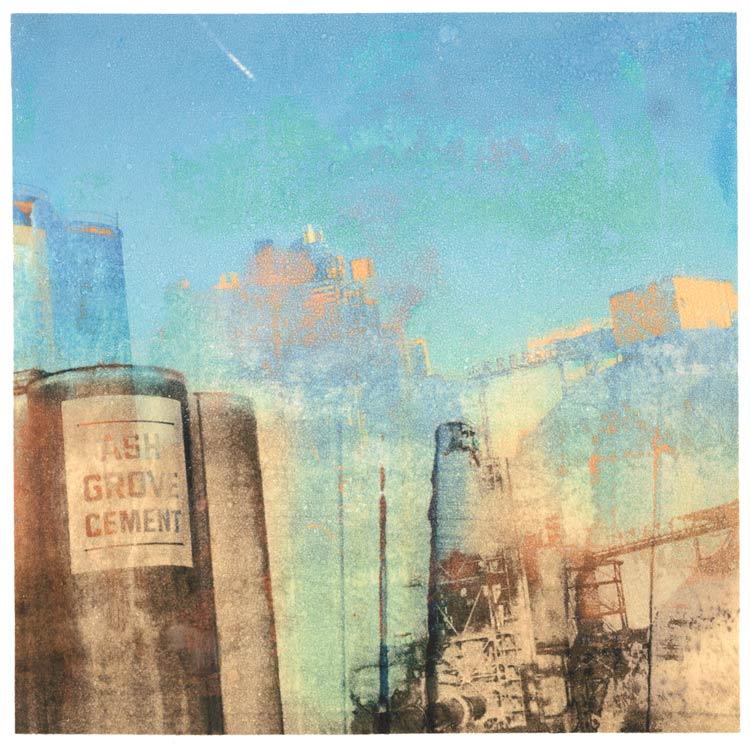
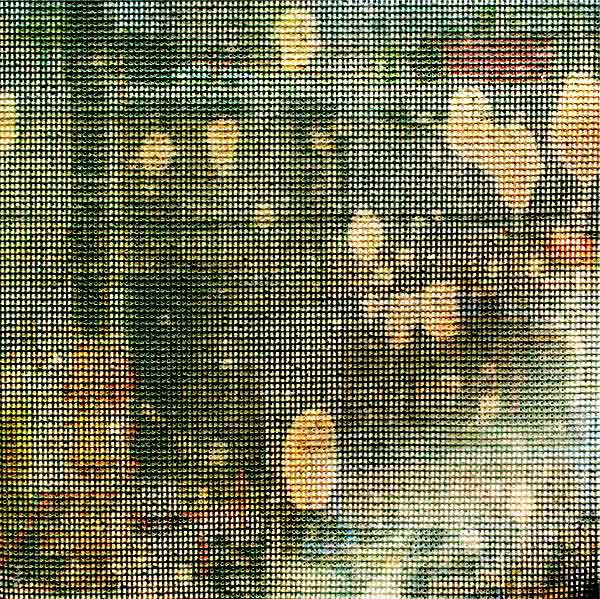
I have not made any transfer prints in awhile, and it occurred to me that it might be the next step for these images. Cell phone resolution can be frustratingly chunky when printed large, but the transfer process takes natural advantage of soft blurs and ambiguities, and these images lend themselves to a tactile surface and intimate scale. On these two I used Apollo transfer film on hot press watercolor with spray alcohol (92%). It’s counter-intuitive, but for some reason the temperature today in the studio, which nearly matched that of the alcohol, seemed to help the process along.

It feels wonderful to surrender to color. I fell in love with Maxfield Parrish’s clouds in a junk shop when I was in the sixth grade. Ash Grove Cement might as well be a neo-Greek column, and that shape in the middle could be a neo-nymph looking up in reverie at plumes of steam. Who says industry isn’t romantic? And who can resist a name like “Ash Grove?”

Ash Grove Cement (For Maxfield Parish) transfer print
“Ash Grove Cement, for Maxfield,” transfer print on watercolor paper 7″ x 7″ © Iskra Johnson


"To Avalon," transfer print on watercolor paper, 7" x 7", © Iskra Johnson
“To Avalon,” transfer print on watercolor paper, 7″ x 7″, © Iskra Johnson


Terminal 5
“Terminal 5 ,” © Iskra Johnson

(Not yet printed, but I thought I would include it here to show the surface difference between the native image and prints with similar imagery.)

See more artwork on industrial themes at the print portfolios for Construction/Reconstruction and Infrastructure.

Filed Under: Construction/Reconstruction, Photography, The Alaska Way Viaduct Tagged With: Alaska Way Viaduct art, Ash Grove Cement, cellphone art, drive-by photography, industrial art, Maxfield Parrish Clouds, memory in art, monprinting with a computer, printmaking and digital process, Terminal 5 print, the Big Dig, the golden hour

Impermanence Study No.17: The Dragonfly

June 20, 2013 by Iskra 2 Comments

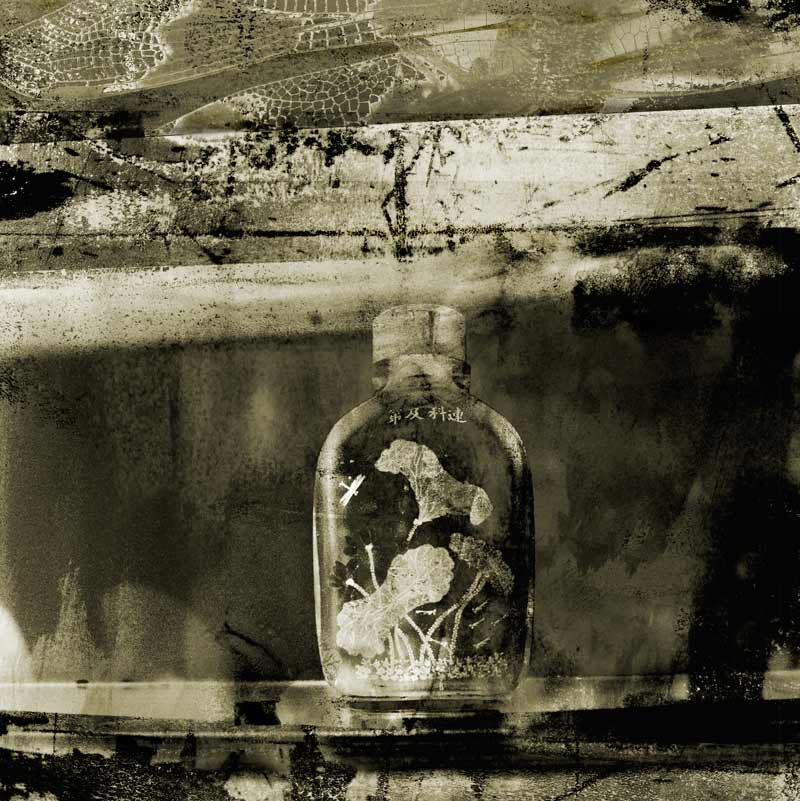
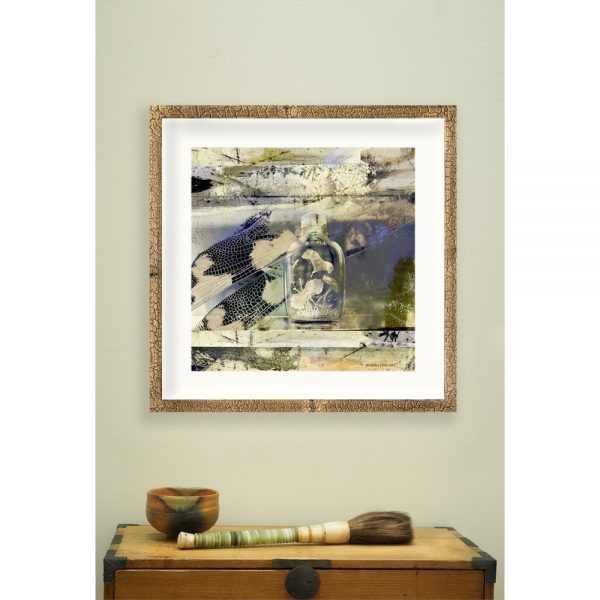
Impermanence Study No.17 (Dragonfly)
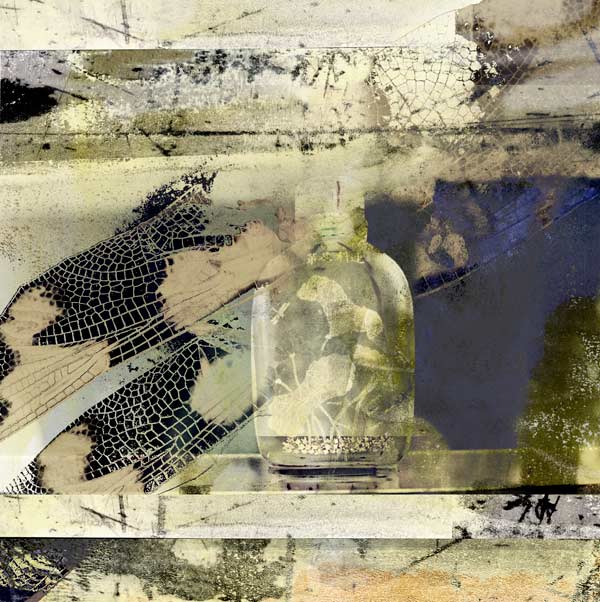
Impermanence Study No.17 (Dragonfly), © Iskra Johnson, Archival Pigment print, 16″ x 16″

This time of year the pond is dizzy with dragonflies. They hover in a cloud of iridescent blue, migrating from the waterlilies to the yellow poppies, and I have even seen them in the house, poised over the threshold of the front door. When I found the body of a checkered dragonfly on a lily pad last July I started this piece, which is now in its 17th iteration. Maybe you call that a …..”series.” Collage is the art of decision– and indecision. It is the ultimate practice of impermanence, as any element can be moved at any time to create a new shift in perception. If, in your own dragon-fly hovering, you begin to doubt and become anxious for resolution, you lose sight of the wonder that illuminates the process. I am influenced lately by a provocative book by Leonard Koren, Wabi-Sabi for Artists, Designers, Poets and Philosophers. I read this when it first came out in 1994, but had not consciously thought about it for years. The new edition includes black and white photographs that elucidate each premise with quiet and subversive elegance. This passage uses the garden as metaphor, but could as easily refer to making art or any other creative endeavor: All things are incomplete. All things, including the universe itself, are in a constant, never-ending state of becoming or dissolving. Often we arbitrarily designate moments, points along the way, as “finished” or “complete.” But when does something’s destiny finally come to fruition? Is the plant complete when it flowers? When it goes to seed? When the seeds sprout? When everything turns into compost? The notion of completion has no basis in wabi-sabi. Of course, Edna St. Vincent Millay also said, “To create one must decide.” And the challenge is to hold both truths and not go crazy. I find it helps to work until midnight, when things get very quiet, to a certain kind of music. The artist of the snuff bottle, on the other hand, had not the luxury of indecision. Bottles like this one were painted with tiny brushes from the inside of the bottle. Ponder that feat of execution next time you think you have a technical challenge.

Through A Glass Darkly Dragonfly Snuffbottle print
Through a Glass Darkly (Impermanence Study No. 12), ©Iskra Johnson, archival pigment print, 16″ x 16″


Soundtrack: Darshan Ambient, anything by Michael Allison. Or Catching Up to You. Or Sidney Ji’s meditative Water Sines.

Filed Under: Photocollage, Prints, The Garden, The Spiritual in Art Tagged With: art about impermanence, art about wabi-sabi, Chinese snuff bottle print, collage process, dragonfly print, Edna St. Vincent Millay on art, Leonard Koren, photocollage in nature

Finding the Fourth Leaf

May 31, 2013 by Iskra Leave a Comment

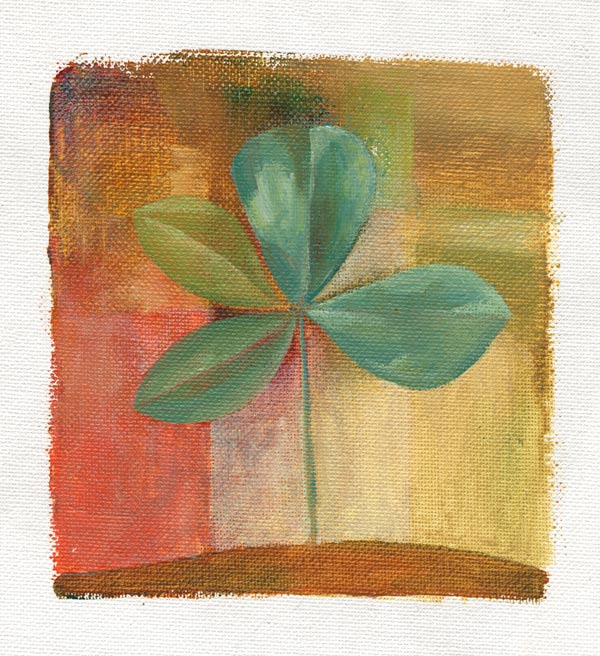
Four Leaf Clover Painting
Four Leaf Clover Painting, Acrylic on Canvas, 4″ x 4″, © Iskra Johnson

One of the advantages of growing up on a farm is that you spend a lot of time being just a few feet tall and eye-level with the field. Later, but slowly, you grow a bit and look down, and all the tops of things come into view. Your sense of wonder at that age is matter-of-fact and practical, scaled for harvest. Everything fits in your fist or your back pocket or between your teeth. If you develop the habit of looking down, soon you find four-leaf clovers everywhere.

For years if I opened books from my shelf at random, in particular, books like Black Beauty, or The Wind in the Willows, clovers would scatter onto the floor. The knack of finding them stayed with me for years, and then one day I forgot about it. I gave books away, whole shelves full, without remembering to open them first. My luck, I would have to say, was not exceptional, and there were times I would look around me and feel that some intangible thing was missing. Who knows how the fourth leaf, of grace, comes into one’s life? Last week I visited Fernwoodsy, a magical place of dappled light and bees and meadow. And for just a moment I looked down…..

Pressed Four Leaf Clover

Filed Under: Painting Tagged With: Fernwoodsy, finding luck, fourleaf clover, painting as talisman, painting of four leaf clover, shamrock painting, the fourth leaf

  • « Previous Page
  • 1
  • …
  • 30
  • 31
  • 32
  • 33
  • 34
  • …
  • 58
  • Next Page »

Join Iskra’s Mailing List

Don't miss a thing! Subscribe to receive show announcements, first peek at new work and my semi-monthly blog by email. I primarily use the blog for news and updates but by signing up you will also receive the occasional newsletter and special offers for items in my shop.

Iskra Fine Art Blog

the creative process | conversations with artists | the contemplative impulse in art

Instagram

Today’s mood, from the morning walk. Today’s mood, from the morning walk.
A metaphysical idea waiting to become a drawing. A A metaphysical idea waiting to become a drawing. All day I have been studying graphite, the most evanescent of mediums. Fragility. Once you break the egg, scatter the nest, leave the children without family on an abandoned beach, what then? 

I have spent the day drawing. In the background, which becomes foreground with one click, is the news of the rounding up of another thousand or so human beings by bounty hunters given a quota, thrown into concrete cages and disappeared because someone decided that America is no longer the home of the #huddledmasses.

The plaque on the Statue of Liberty says:

“Here at our sea-washed, sunset gates shall stand
A mighty woman with a torch, whose flame
Is the imprisoned lightning, and her name
Mother of Exiles. From her beacon-hand
Glows world-wide welcome; her mild eyes command
The air-bridged harbor that twin cities frame.
“Keep, ancient lands, your storied pomp!” cries she
With silent lips. “Give me your tired, your poor,
Your huddled masses yearning to breathe free,
The wretched refuse of your teeming shore.
Send these, the homeless, tempest-tost to me,
I lift my lamp beside the golden door!”

Noem and Holman have not, apparently, run their hands over these words.

How do you continue making art at a time like this? You chase the metaphor. There is always a constant truth beneath the chaos.
Media studies. Addition and subtraction. Media studies. Addition and subtraction.
Somehow, between checking the news and the usual d Somehow, between checking the news and the usual distractions I managed to complete a drawing. Going back to the beginning: drawings in dust. 9.5 x 12” Charcoal powder, compressed charcoal, charcoal pencil on Moleskine. I feel peaceful for the first time in weeks.
The train tracks that go along Golden Gardens and The train tracks that go along Golden Gardens and pause briefly at the locks create a rupture in the city landscape. When the trains go by, the roar and squeal is like a thousand wild animals let out of their cage, and the ducks in the pond at the edge of the park shudder and dive under the water. A little farther north at Carkeek there is someone every year who steps in front of the train and whoever witnesses that is never the same. 

Sometimes the cargo containers are filled with coal, uncovered, and I have been part of demonstrations, which included polar bears and Orcas, objecting to that. Now, as we are being asked to casually accept nuclear reactors on every block as the price of having artificial intelligence, coal and its simple visible dust might look a little more friendly. The train brings with it economics and politics and life and death and class and all the people on the beach are just trying to have a moment in the sun. And the boaters at the marina, if they have finished polishing and descaling and mending the sails are lying back with a guitar and getting lost in the mountains. If you are willing to live right next to the train tracks, you can pay a much lower price for your home, but your dreams will change. I have lived next to the train tracks when I was very, very small and every night I woke up screaming and ran across the floor in the beams of the streetlight looking for safety. I have woken up in a train yard on a bed of cardboard and gotten on the train in the dark. Only when you do that, do you know just how hard metal is.

I’ve been drawing recently from life and this study was done from a photograph. It drove me crazy trying to see details that I couldn’t really see and feel them with the pencil. I’ve abandoned the drawing for now, but I learned a great deal about perseverance and obliteration and re-perseverance. Also how machines pretend that they are perfectly symmetrical and are not. And when you don’t draw them with perfection, they look just plain wrong so you have to make them more perfect than they are, at least when they are in perspective.
Tonight’s abandoned bird. The next one will be bet Tonight’s abandoned bird. The next one will be better. I’ve never tried to draw a Robin before. I’ve been obsessed with them since David Lynch sent them over to my childhood house, where they spent day and night getting drunk on the holly berries outside the kitchen window. And if you don’t know what I’m talking about google Laura Dern, Blue Velvet. And the Robin. It’s a hymnal to the good and the normal, done absolutely abnormally. I am learning all kinds of amazing things about how Robins build their nests. They start with mud. I did not know this. And in a drought, they will drag straw into a birdbath to get it wet and then drag the straw over a wormhole. Robins build their nests in the most unlikely places: drain spouts, highway overpasses, really bad motel parking lots. It’s kind of like how people find third place in community, even in the bleakest places. A franchise McDonald’s where people become regulars and always get the fries and just the fries because that’s all they can afford is a similar statement of naive valor: people talking to strangers and becoming known and taking shelter where they can. And if they leave a shredded napkin out there by their car, it will end up woven in with the straw and the leaves and the cigarette butts perched up there in the nest on the backside of the billboard.

Featured Posts

  • Book Launch! The Water Tower Project from Iskra Fine Art
  • How to Purchase Artwork from Iskra Fine Art
  • About This Blog
  • New Directions in Contemplative Art: Conversations with Artists
  • What is a Transfer Print? (Artist Statement)

Categories

  • Abstract Calligraphy
  • Architecture & Sense of Place
    • Construction/Reconstruction
    • The Alaska Way Viaduct
    • The Water Tower Project
  • Art Reviews
  • Artist Studio Visits
    • The Mystic Muse: Artists Working in the Contemplative Traditions
  • Botanical Art
    • Botanical Art Cards
  • Collage
    • Digital Collage
  • Commissioned Art
  • Drawing
  • Essays
    • Object Lessons: Essays and images inspired by "A History of the World in 100 Objects."
  • Iskra Shows, Upcoming and Past
  • Iskra Sketchbooks & Journals
  • Living With Art
  • Meditation & Buddhism
  • Mixed Media
  • Painting
  • Photocollage
  • Photography
    • American West Landscape Photography
  • Print Sale
  • Prints
    • Transfer Prints
  • Seattle Iconic Landscape Prints
  • Social Media for Artists
    • The 100 Day Projects
  • The Garden
    • The Gardener's Almanac of Irreproducible Phenomena
  • The Spiritual in Art
  • Travel
    • Road Trips
  • Uncategorized

Archives

Search

Connect on Facebook

Iskra Fine Art Facebook Page

Creative Inspiration

  • Alternative Photography
  • An Artist's Retreat
  • Anonymous Chinese Textile Genius: Moo Won
  • Chocolate Is A Verb
  • Contemplative Art Process: Danila Rumold
  • Eva Isaksen
  • Old Industrial Japan
  • The Altered Page
  • The Heart Sutra Loop
  • The Patra Passage

Galleries for Contemplative Art

  • ArtXchange Gallery
  • Seattle Asian Art Museum

Links

  • CollageArt.org
  • Iskra at SAM Gallery
  • Iskra Fine Art on Houzz
  • Seattle Art Museum Blog
  • Seattle Artist League
  • Seattle Print Arts
  • Seeing Fresh: Contemplative Photography
  • The Painter's Keys

What I'm Reading: Online Magazines and Books I Love

  • 16 mi.
  • Essays by David Whyte
  • Evening Will Come: Poetry
  • Hyperallergic
  • Painter's Table
  • Shu: Reinventing Books in Contemporary Chinese Art
  • Streetsy
  • The Original Van Gogh's Ear Anthology
  • Tricycle Magazine
  • Unincorporated Persons in the Late Honda Dynasty
  • Vanguard

Let’s Connect

  • Contact Iskra
  • How to purchase artwork
  • Iskra Fine Art Blog : The creative process, conversations with artists, the contemplative impulse in art
  • Facebook
  • Instagram
  • Pinterest
  • Twitter

All Images Copyright © 2026  Iskra Johnson · Site by LND · WordPress