Iskra Fine Art

  • Prints
    • The Tarmac Residency: Airport Landscapes
    • Immersions | At The Shore
    • ColorBath: Images of the Harbor
    • The Floating World
    • Industrial Strength | Urban Industrial Landscape
    • The Scaffold
    • Industrial Pastorale: The Rural/Urban Landscape
    • Botanical Prints | The Natural World
    • Construction | Reconstruction : Urban Landscape
    • Infrastructure
  • Drawings
    • Pencil Drawings: Pandemic Pause
    • Drawings in Dust 1
    • Signs & Symbols (Archive)
    • Botanical Drawings (Archive)
  • Photography
    • New Work Inspired by England
    • Seattle Waterfront Park Photography
    • Architectural Photography | Construction Sites
    • American West Landscape Photography
  • Mixed Media
    • Modern Botanical | Mixed Media on Plaster
    • From the Sea | Water Paintings
    • Sleep Studies
  • Wabi Sabi Abstract
    • Minimalist Modern
    • Ink Painting Abstractions
  • Shop
    • The Water Tower Project
  • About
    • Contact
  • Blog
You are here: Home / Archives for Essays

Object Lessons: The Patra Passage

February 8, 2014 by Iskra 1 Comment

“The word patra refers to the name of alms bowls that monks carry in various cultures to receive their portion for the day, an act that creates an understanding of interdependence with community and openness to the cycle of receiving and giving. The word’s origin in Sanskrit translates as “the vessel that never goes empty”. Whatever is received in the bowl is enough for the day, a reminder of the offerings of the present moment.” –The Patra Passage
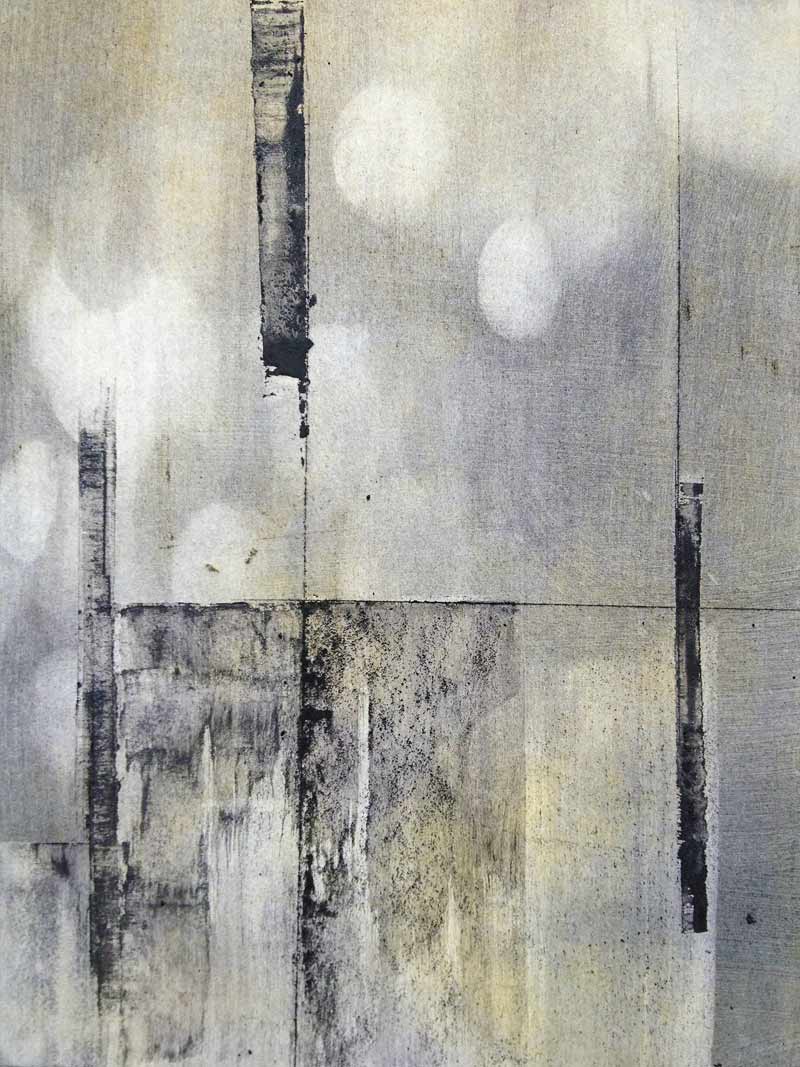
Patra, Imagined © Iskra Johnson, charcoal dust and pigment on paper

You don’t see a vessel here. You must imagine it, as I did, leaving it in its box for the first month it came into my possession as part of the Patra Passage. I was honored to be part of the project.  I thought the vessel was very beautiful.  And yet I wanted to leave it in the dark for awhile, parked almost casually by the door, as though poised between coming and going. In fact, inherent in the Patra Passage is the idea of impermanence: yes, you take “possession” of this beautiful object for four months, but then you let it go and pass it on, and at the end of the year it will be sold and the proceeds contributed to charity. As much as I am someone who loves objects, and devotional objects in particular, I found myself resistant. I didn’t want to fall in love, and I didn’t want to give up an object of love. I would rather close my eyes in the morning and imagine it.

I would sit and start my meditation thinking of gold light, and the gold leaf within the bowl. I would run my fingers along the torn clay edge, and marvel at the indecipherable language placed flawlessly on its burnt arc. And then I would exhale and think about my email and how many dolphins had washed up on the shore of the Huffington Post and the sweater that had pilled after one washing and the annoyance of whether I should join the Cloud and why the milk kept going bad.  The usual non sequitur burden of having a mind that has a mind of its own and never wants to be truly empty. When I took the bowl out of its box and placed it where I sit each morning it made no difference. My attention was not on the bowl. I tried. I thought about generosity and giving and monks and alms and having and not-having and I concluded that I am selfish. I lived with that thought like a very annoying fly. It is still there, and I cannot say that I have become in any noticeable way more sainted.

What I carried with me from the very first moment of the project was not the vessel, but a sentence, rather not even a sentence, just the phrase: “enough for the day.” In those four simple words is a [Read more…]
Filed Under: Meditation & Buddhism, Object Lessons: Essays and images inspired by "A History of the World in 100 Objects." Tagged With: alms bowl, Don Quixote, gift economy, Lewis Hyde, Lynda Lowe, modern ritual, Patra Passage, The Gift

Rachel Maxi’s ‘Little Made Big’ at Sugarpill: Painted Wonders and Apothecary Dreams

November 16, 2013 by Iskra 1 Comment

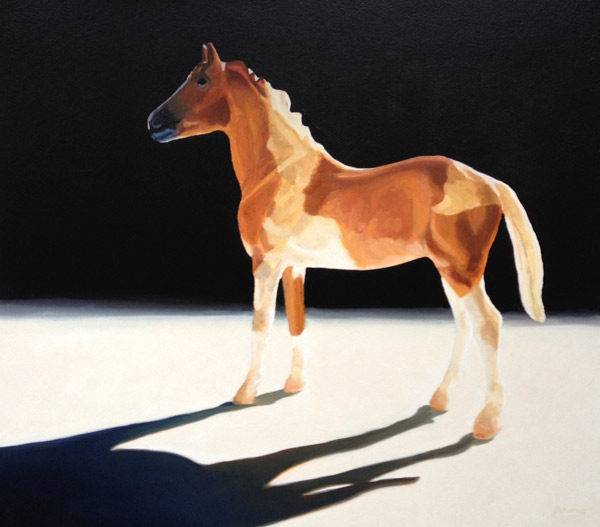
I could say that the reason I like Rachel Maxi’s work is that she paints objects that I love too. But the truth is that whatever Maxi paints becomes one of my favorite things, even if I wasn’t planning on it. Plastic toy horses? Or for that matter, horses of any kind? Ever since The Red Pony broke my heart at age 11 I have been immune. Yet here I am, smitten.

Breyer Paint Horse ©Rachel Maxi
Breyer Paint Horse, 16″ x 18″, Oil on Panel, 2013 ©Rachel Maxi

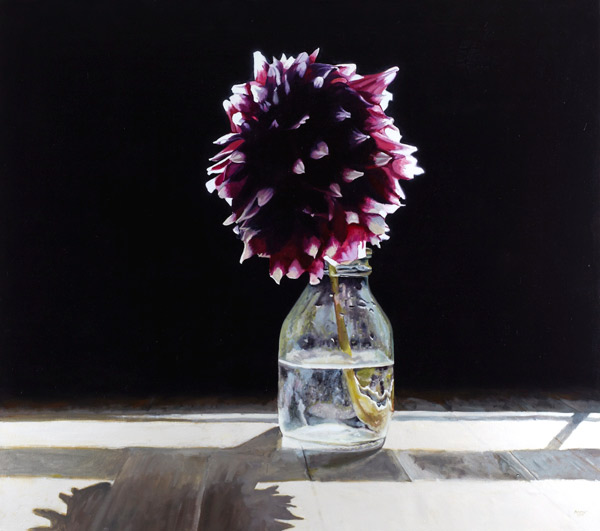
Or, to take another hard sell, the dahlia? The word has always offended me: like “dhaling.” Overblown, old-lady-ish, the kind of flower you can only love when you are part of the Dahlia Society and enjoy tying plants up on sticks and telling people not to pick them. Except now not only am I in love with a dhalia, I want it in that very ordinary jar, because it’s just plain beautiful.  The word is covet:

Dhalia_Rachel Maxi
Dhalia, 46″ x 52″, Oil on Canvas, 2013 © Rachel Maxi

Check out Maxi’s work at Sugarpill on Capitol Hill, and do it fast, because this show is only up until November 19th. While you are there revel in the sensory magic of this one-of-a-kind shop: apothecary, culinary, mercantile…….mystery. Cures for whatever ails you and pleasures to keep you well.

(900 E. Pine St. Seattle, WA 98122 • T 206.322.7455 • MON + TUES 11AM – 5PM / WED + THU 11AM-7PM / FRI + SAT 11AM-6PM / SUN 11AM-4PM)

Filed Under: Art Reviews, Object Lessons: Essays and images inspired by "A History of the World in 100 Objects." Tagged With: little made big, northwest oil painter, Rachel Maxi, Sugarpill, toy horse

Deconstruction Sites: Thinking About the Gaza Strip

November 18, 2012 by Iskra 1 Comment

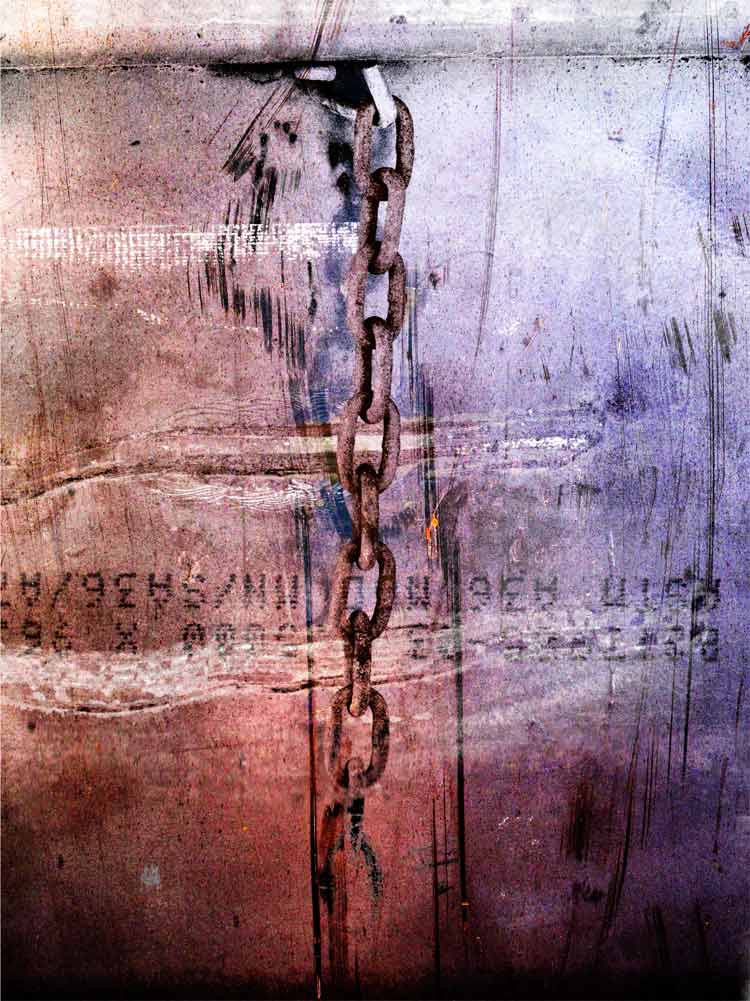
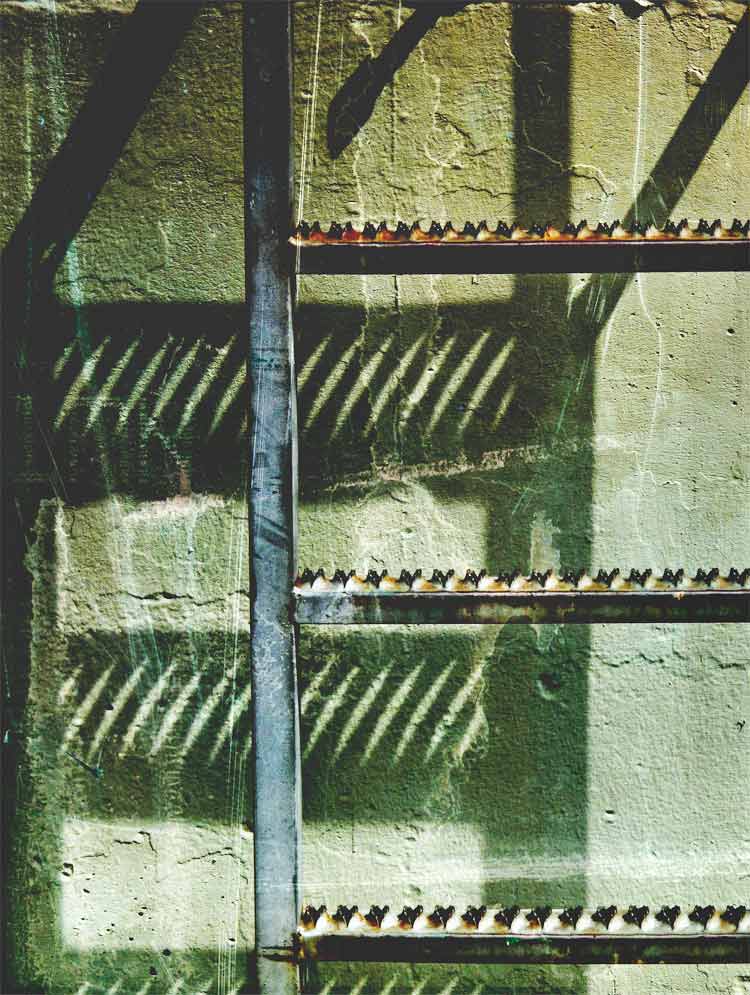
These two images cross categories. Politics. Construction Sites. Object Lessons. It is a rainy Saturday and the news is seeping in along the edges affecting what I do. I think of ladders as aspirational. But a ladder with teeth. That changes the story.

The Chain
The Chain, Photocollage © Iskra Johnson
The Toothed Ladder
The Toothed Ladder, Photocollage, © Iskra Johnson


Filed Under: Object Lessons: Essays and images inspired by "A History of the World in 100 Objects.", Photocollage Tagged With: emblematic images, gaza strip, iconic images, Photocollage chain, photocollage ladder

Living in Metaphor (And Surviving the Worldwide Web)

October 29, 2012 by Iskra 3 Comments

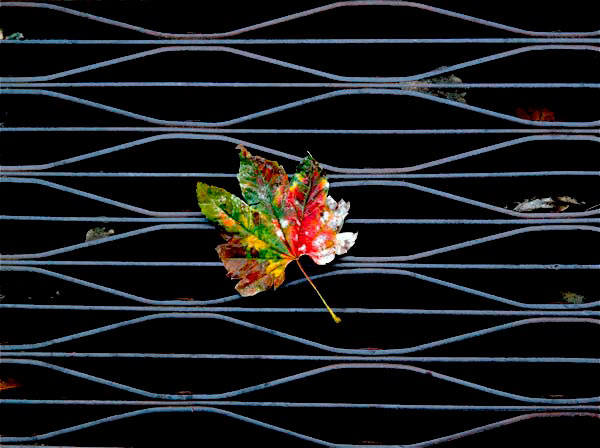
Leaf_On_Grille

Twenty years ago I wrote a story in which a man in San Francisco leaves his lover’s bed at 3 AM to go into his basement and talk to a woman in Denmark “on the Web.” My readers frowned and asked, “The Web? What is that? You’ll have to footnote that because no one will know what you’re talking about—we certainly don’t.” It may be difficult to believe, but there was such a quaint and innocent time and I was privileged to be, for ten minutes, ahead of the curve. I did not know, as I put the story away unfinished, that the footnote was in fact the story.

When that man “logged on” he entered the beginnings of a metaphor most of the modern world lives in now. He looked transfixed at the picture of a woman’s bare shoulder and the pink and black tattoo winding down her back. He wrote sentences, and sentences came back. He was “here” and he was simultaneously over there in a way he had never experienced before. He went back to bed just before sunrise.

Sunrise, coincidentally, is when the original prototype of the Web becomes most visible. The highwire paths run from hydrangea to pine, from the fern to the apple tree; the circular weavings hang briefly intact. A friend told me of waking on an August morning in a fugue state, trying to puzzle out a difficult problem. She walked into the garden and the sight of spider webs strung with dew and shimmering like shields stunned her with beauty. She walked a few paces to the left, and they vanished. She walked to the right and they reappeared. And so for a long while she walked back and forth observing as the webs came and went depending on the light. And then she turned around and walked right into one she could not see, and it broke.

This struck me as metaphorically accurate on many levels, and stayed with me so strongly that when, a few weeks later I walked into my own spider web, even though I am a confirmed arachnophobe and shrieked hysterically, I did not immediately wipe the web off my glasses. Instead I took my glasses off and marveled, for the web had transferred perfectly to the lens. If I wanted to I could let the pattern remain indefinitely, and walk around the world quite literally seeing “through” the web.

Since that moment I have been thinking about the way we live in metaphor, and how, depending on whether or not we actually see it, our world changes in response. Words shape our consciousness and visa versa. They are neither incidental nor random. When we go on the Web it offers us a choice of roles: we navigate, following threads; we get lost, falling through the spaces; or we are “caught in the Net,” prey just as the fly that hangs in a pale skein outside my backdoor. The words are not innocent. A “net” is only welcome to the hunter or the trapeze artist or the person dangling from a bridge. The butterfly and the fish have quite a different perspective. [Read more…]

Filed Under: Essays Tagged With: coping with digital life, freedom through metaphor, living in metaphor, surviving the worldwide web, the net, the space between, the web, writing on social media

Object Lessons: The Television Buddha

August 15, 2012 by Iskra 1 Comment

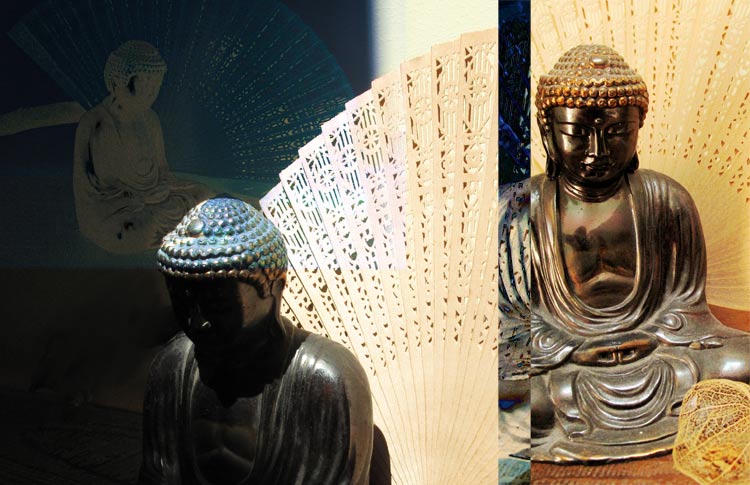
Television_Buddha_Digital_Collage
The Television Buddha © Iskra Johnson

The Black Buddha, otherwise known as the “television Buddha” sat for years on my step-grandmother’s TV, his head unironically posed between two silver antennae. Even as a child who had not yet been taught the niceties of good taste I could tell that this statue, although hollow like my milk chocolate Easter bunny, was a Prince among objects. Where the black paint had rubbed away copper glinted. His robes had the sharp cast and sheen only found in metal, and when I picked him up and set him down I could tell he belonged to a different family of dolls.

At some point in my late teens, after reading a book or two by Alan Watts and becoming instantly hip and knowing, which I eagerly confused with being enlightened, it occurred to me that this object belonged in my life. Did I steal it? Did I stand in front of the television as though mesmerized by the cheap print of VanGogh sunflowers and off-handedly tuck the Buddha into my coat? I have a vague memory of light on a dusty window, of the pine tree outside, of family noise and clatter and a moment of rationalization. I hope I asked.

This Buddha has gone with me to every room I have lived in, presided over my inkstone and rice paper and the copying of sutras and 4 AM yoga sessions and detours into Gurdjieff, Guru Mai, and Yogananda. He has never gained or lost weight, or criticized me for being delusional, or asked for water, or offered a word of advice. For years at a time I have not actually looked at him; I’ve even lost him on occasion– buried in a box under the bed. Then I will find him and the fact of him starts all over again. The Buddha is a resonant object, and my mind changes when I look at him.

I puzzle over this quite a bit. What is this alchemy of the object? The historical and real person of Siddhartha, who became the Buddha, never asked to be made into a figurine. In fact the Buddha himself discouraged this as dangerous close-cousin to the worship of idols. Only the image of his footsteps was allowed or perhaps the trace of a wave on the shore, or a hand.  Yet today I doubt that any Buddhist anywhere meditates without some image in their mind of –not the breathing, sweating actual human being — but the statue.  Leave it to the Greeks to ruin a good thing, the void and the imagination, and to supplant it with idealized form. And now you can buy a guy in a robe with snails on his head anywhere, online next to blinking ads for a flat belly, or in an import store or from a catalogue full of clocks that wake you up with the sound of the ocean.

Through hundreds of years and thousands of places of manufacture, the significant details of the sitting Buddha rarely change. The graceful sloping of the shoulders, the relaxed ease and the simultaneous sense of absolute focus, the circuit of small spheres along the head. And form is important. The shape of the saints is common, but it is not ordinary. The power of shape is a mystery, devotional practice equally so.

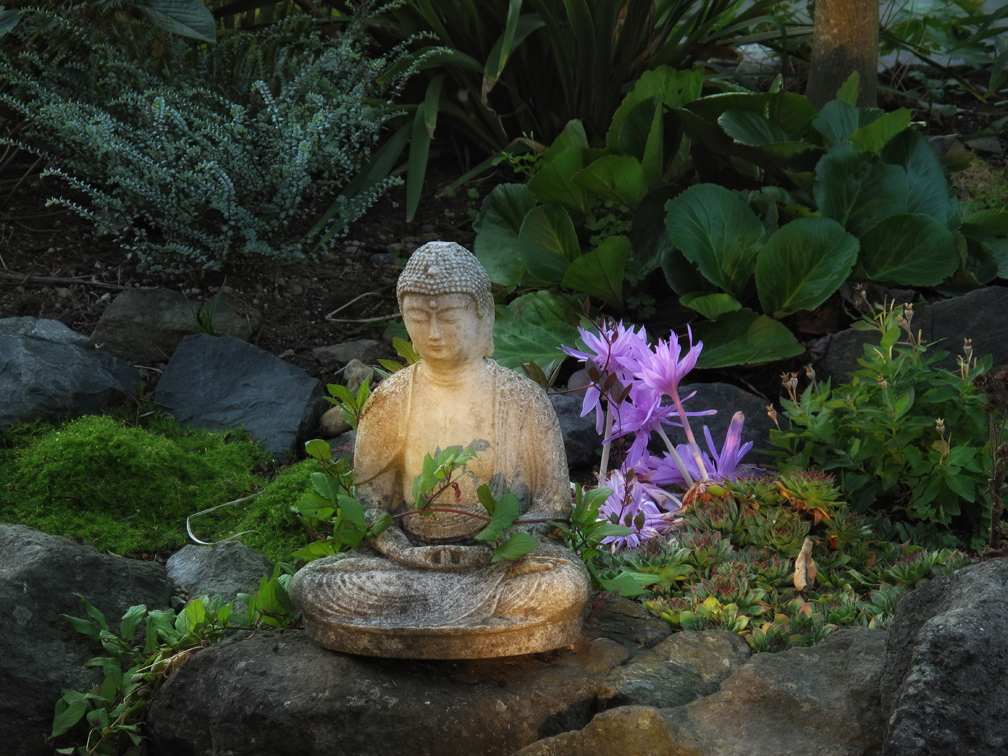
Buddha_Garden_Statue
The Standard Concrete Garden Buddha

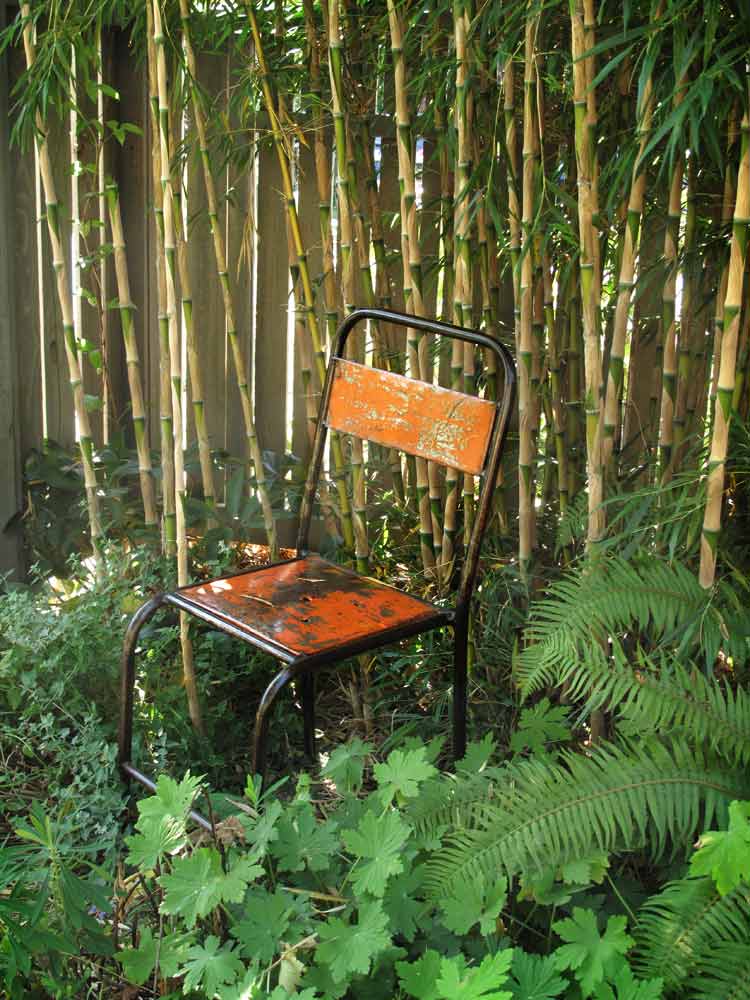
I have a second Buddha, a pale gray version mass produced and bought at a nursery twenty years ago. He has sat long enough in my garden to acquire the iridescent sheen of actual snails across his knees. Together both statues, indoor and outdoor, do a fine job of gentle reproach as I plunder time and waste it in mindless daily orbit. You would think two would be enough. However, I was seized this spring with a sudden overwhelming desire for a new Buddha, something life-size. I became completely obsessed with the idea that a statue was waiting for me and I had to find it right now. So abandoning my other obligations for a day I scoured every Asian import store in the city. The closest I came to my imagined find was a graceful, stupefyingly beautiful Thai god (god of what, I’m not sure) made of fragile wood and $15,000.87 out of my price range. As I started to leave the shop, my obsession defeated, I noticed the chairs. Simple, magnetically so, projecting a deadpan stoic humor and covered with the patina of decades in an outdoor cinema. If one wanted a reminder to “sit” what could be more potent than a chair, after all? I sat. In spite of the barracks-style severity the chair was surprisingly comfortable. And you can bargain for chairs, although you would never bargain for a Buddha.

The-Sitting-Chair
The Sitting Chair © Iskra Johnson

This is my new garden statue, for now. It lives in the bamboo reminding me to be still, to just sit.

__________________________________________

This is the first in an upcoming series of essays on Buddhist iconography in art and daily life. I will be featuring interviews with artists who work in a variety of contemplative paths, ranging from traditional devotional art to contemporary improvisations, in media ranging from painting and drawing to sculpture, music and video. If you are interested in the subject of the object as a source of contemplation you may want to visit the section of my blog that focuses on response to the book “A History of the World in 100 Objects.”

Filed Under: Meditation & Buddhism, Object Lessons: Essays and images inspired by "A History of the World in 100 Objects.", The Garden, The Spiritual in Art Tagged With: Buddha statues, devotional practice, devotional statues, objects of meditation, the Black Buddha, The Television Buddha

  • « Previous Page
  • 1
  • 2
  • 3
  • 4
  • Next Page »

Join Iskra’s Mailing List

Don't miss a thing! Subscribe to receive show announcements, first peek at new work and my semi-monthly blog by email. I primarily use the blog for news and updates but by signing up you will also receive the occasional newsletter and special offers for items in my shop.

Iskra Fine Art Blog

the creative process | conversations with artists | the contemplative impulse in art

Instagram

Subtractive painting study and ground experiment: Subtractive painting study and ground experiment: I added baking soda to my gesso. Pretty wild texture here, not sure yet how stable it is. You can see the test of the edges in the second piece— the rugged edge only works if I get a pristine background and unfortunately the tape I used to mask it did not work consistently. Hello tape, my old friend and nemesis. You work differently on every surface. These little barn structures give me great comfort as the bigger structures of our government and nation seem to be crumbling.
Today’s landscape to quiet the mind. Out in the fi Today’s landscape to quiet the mind. Out in the fields somewhere, on the road to Edison. Acrylic on prepared ground, sketchbook.
MUST SEE! Ai, Rebel: The Art and Activism of Ai We MUST SEE! Ai, Rebel: The Art and Activism of Ai Weiwei at Seattle Art Museum.
I am thinking this morning about the phrase Americ I am thinking this morning about the phrase American Heartland. Learning to paint a barn means studying the neutrals. Our political discourse has pitted the barn people against the city people and there are no neutrals, just shouting. But if you walk out into the horizon lands, all you hear is the wind and a kestrel. Walk in boots, hard-pressed against your toes, walk on stubble barefoot and get acupuncture for a lifetime. Study the intervals: how the clouds can be in the upper one third neatly or one sixth, precarious, the future disappearing with the sun as it falls making the barn your whole world if you’re three years old and looking up; one big triangle with a square in the center, and so many mysteries inside the square. 

There is also the question of what kind of light seeps between the verticals and is the light coming in the evening or at midday when you can finally begin to make out all the other tiny squares within the big square, which would be called hay. Reach for the rope and swing out over the canyon, that great big canyon from bale to bale.

Collage studies: painting neutrals
A hybrid study, mixed process. Reading the New Yor A hybrid study, mixed process. Reading the New Yorker this morning, about the global population crash. This will upend urbanism, for sure, though it will very good for veterinarians and dog groomers:
“Only two communities appear to be maintaining very high fertility: ultra-Orthodox Jews and some Anabaptist sects. The economist Robin Hanson’s back-of-the-envelope calculations suggest that twenty-third-century America will be dominated by three hundred million Amish people. The likeliest version of the Great Replacement will see a countryside dotted everywhere with handsome barns.”
First Thursday. Such a beautiful night. First Thursday. Such a beautiful night.

Featured Posts

  • Book Launch! The Water Tower Project from Iskra Fine Art
  • How to Purchase Artwork from Iskra Fine Art
  • About This Blog
  • New Directions in Contemplative Art: Conversations with Artists
  • What is a Transfer Print? (Artist Statement)

Categories

  • Abstract Calligraphy
  • Architecture & Sense of Place
    • Construction/Reconstruction
    • The Alaska Way Viaduct
    • The Water Tower Project
  • Art Reviews
  • Artist Studio Visits
    • The Mystic Muse: Artists Working in the Contemplative Traditions
  • Botanical Art
    • Botanical Art Cards
  • Collage
    • Digital Collage
  • Commissioned Art
  • Drawing
  • Essays
    • Object Lessons: Essays and images inspired by "A History of the World in 100 Objects."
  • Iskra Shows, Upcoming and Past
  • Iskra Sketchbooks & Journals
  • Living With Art
  • Meditation & Buddhism
  • Mixed Media
  • Painting
  • Photocollage
  • Photography
    • American West Landscape Photography
  • Print Sale
  • Prints
    • Transfer Prints
  • Seattle Iconic Landscape Prints
  • Social Media for Artists
    • The 100 Day Projects
  • The Garden
    • The Gardener's Almanac of Irreproducible Phenomena
  • The Spiritual in Art
  • Travel
    • Road Trips
  • Uncategorized

Archives

Search

Connect on Facebook

Iskra Fine Art Facebook Page

Creative Inspiration

  • Alternative Photography
  • An Artist's Retreat
  • Anonymous Chinese Textile Genius: Moo Won
  • Chocolate Is A Verb
  • Contemplative Art Process: Danila Rumold
  • Eva Isaksen
  • Old Industrial Japan
  • The Altered Page
  • The Heart Sutra Loop
  • The Patra Passage

Galleries for Contemplative Art

  • ArtXchange Gallery
  • Seattle Asian Art Museum

Links

  • CollageArt.org
  • Iskra at SAM Gallery
  • Iskra Fine Art on Houzz
  • Seattle Art Museum Blog
  • Seattle Artist League
  • Seattle Print Arts
  • Seeing Fresh: Contemplative Photography
  • The Painter's Keys

What I'm Reading: Online Magazines and Books I Love

  • 16 mi.
  • Essays by David Whyte
  • Evening Will Come: Poetry
  • Hyperallergic
  • Painter's Table
  • Shu: Reinventing Books in Contemporary Chinese Art
  • Streetsy
  • The Original Van Gogh's Ear Anthology
  • Tricycle Magazine
  • Unincorporated Persons in the Late Honda Dynasty
  • Vanguard

Let’s Connect

  • Contact Iskra
  • How to purchase artwork
  • Iskra Fine Art Blog : The creative process, conversations with artists, the contemplative impulse in art
  • Facebook
  • Instagram
  • Pinterest
  • Twitter

All Images Copyright © 2025  Iskra Johnson · Site by LND · WordPress